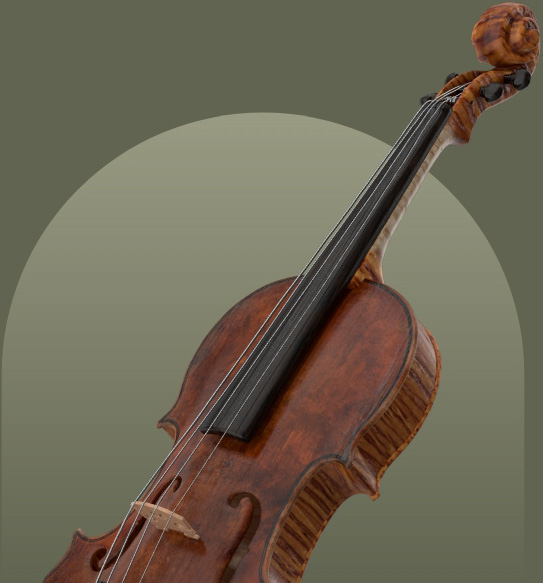
Adolf Romer
Freiburg, b. 1863
Adolf Romer (Born 1863) was a highly skilled German luthier who began his career as a musician before dedicating himself to violin making. After apprenticeships with Schünemann and Hörlein, he established his own workshop in Freiburg in 1892. Known for his meticulous craftsmanship, use of fine materials, and copies of Stradivari and Guarneri models, he also specialized in "Ritterbratschen" and devised a new peg form. He received several exhibition medals and was appointed luthier to the Freiburg court in 1899, working until approximately 1933.
Auction Price History
Highest auction price
4 results
| Type | Details | Auction house | Sold | Price |
|---|---|---|---|---|
| Violin | 35,8 cm Freiburg, 1930 | — | October 2009 | £1,560 |
| Violin | 1913 | — | November 2004 | £2,151 |
| Violin | 1917 | — | March 1993 | £4,620 |
| Cello | 1890 | — | November 1991 | £1,980 |
No results match those filters.
Maker Overview
Life
Adolf ROMER (Born 1863) w as one of the most skilled German violin makers of his time. He moved to Freiburg with his parents as a child, where his passion for violin playing emerged early. At the age of six, lacking a violin, he attempted to construct one himself. These efforts continued for years with such success that the royal choirmaster, Joh. Diebold, noticed the then 12-year-old boy and offered him free violin lessons. Romer made rapid progress in music, leading him to pursue a musical career after leaving school. From 1880 to 1887, he traveled throughout Germany and Switzerland as a musician, always seeking opportunities to learn from violin makers, even if he couldn't immediately apprentice with one. Eventually, he was able to apprentice with Schünemann in Schwerin. He then moved to Hörlein in Würzburg. Equipped with good prior knowledge and innate manual dexterity, and working diligently, he became an assistant after just two years. He subsequently worked in various reputable violin making workshops, continually perfecting his skills. In 1892, he established his own business in Freiburg. Starting modestly, his meticulous work and dedication to crafting every part of his violins himself quickly brought him success and widespread recognition., he was appointed luthier to the Freiburg court in 1899 and worked until approximately 1933.
Characteristics
- Workmanship
- Adolf Romer was known for his extremely careful work, crafting every part of his violins himself.
- Models
- He imitated the models of Stradivari and Guarneri.
- Materials
- He utilized beautiful wood and oil varnish.
- Specialties
- He possessed strong theoretical knowledge and was particularly well-versed in the construction of the "Ritterbratschen" (Viola alta), possibly being Hörlein's only student in this area. He also made small-sized instruments and devised a new form of peg.
- Adolf Romer
Hof-Geigenmacher
Frieburg i. B.
No. 92 faciebat anno 1911John Dilworth - Adolf Romer
Freiburg i B.
fecit 1894John Dilworth
Influence and legacy
- Early Instruction: He received free violin lessons from the royal choirmaster, Joh. Diebold.
- Apprenticeship: He apprenticed with Schünemann in Schwerin.
- Mentorship: He worked with Hörlein in Würzburg, where he became an assistant after two years.
- Awards: He was the recipient of several exhibition medals.
- Appointments: He was appointed luthier to the Freiburg court in 1899.
- Recognition: His meticulous work and dedication earned him widespread recognition and success.
Biographies
The overview above is drawn from the following published accounts. Read them in the original:
John Dilworth+
ROMER, Adolf Born 1863 Ettenheim, Worked circa. 1892-1933 Freiburg Germany. Musician and luthier. Appointed luthier to the Freiburg court 1899. Recipient of several exhibition medals. Copies of Stradivari and Guarneri. Good materials and oil varnish. Also made small sized instruments and devised a new form of peg. Adolf Romer / Hof-Geigenmacher / Frieburg i. B. / No. 92 faciebat anno 1911 Adolf Romer / Freiburg i B. / fecit 1894
Willibald Leo Lütgendorff+
Einer der geschicktesten deutschen Geigenmacher der Gegenwart. Er kam schon als Kind mit seinen Eltern nach Freiburg, wo seine Vorliebe für das Geigenspiel frühzeitig zu Tage trat. Da er keine Geige besass, machte er schon als sechsjähriger Knabe den Versuch, sich selbst eine solche zusammenzuzimmern. Er setzte diese Versuche Jahre lang fort, und schliesslich mit solchem Erfolg, dass der kgl. Chordirigent Joh. Diebold auf den damals 12jährigen Knaben aufmerksam wurde und sich erbot, ihn unentgeltlich im Violinspiel zu unterrichten. Auch hierin machte er schnelle Fortschritte, und es war eine natürliche Folge derselben dass er, nachdem er die Schule verlassen hatte, in die Musiklehre kam. Je vertrauter er mit seinem Instrument wurde, desto lebhafter interessirte ihn dasselbe auch in seinem Bau. Er war aber zunächst Musiker geworden und lernte von 1880—1887 Künstlers Erdenwallen im Guten und Bösen kennen. Er kam in ganz Deutschland und der Schweiz herum, und überall, wo er Gelegenheit fand, von Geigenmachern etwas zu lernen, hat er es, wenn er auch seine Absicht, bei einem solchen in die Lehre zu treten, zunächst nicht verwirklichen konnte. Endlich aber ward es ihm möglich, bei Schünemann in Schwerin einzutreten. Freilich blieb er dort nicht lange, weil er Gelegenheit fand, zu Hörlein nach Würzburg zu kommen. Da er mit guten Vorkenntnissen und einer angeborenen Handgeschicklichkeit ausgerüstet war und sehr fleissig arbeitete, wurde er schon nach zwei Jahren Gehilfe, arbeitete als solcher in verschiedenen besseren Geigenmacherwerkstätten und vervollkommnete sich mehr und mehr. Im Jahre 1892 machte er sich in Freiburg selbstständig Er fing sehr klein an; da er jedoch äusserst sorgfältig arbeitet und Alles an seinen Geigen selbst macht, gelang es ihm bald, sein Geschäft in Aufnahme zu bringen und die Anerkennung weiter Kreise zu erlangen. Er besitzt mehrere Medaillen und ist, denn er dürfte wohl der einzige Schüler Hörlein’s sein, jetzt wohl am besten in den Bau der »Ritterbratschen« (Viola alta) eingeweiht. Er besitzt tüchtige theoretische Kenntnisse, ahmt die Modelle Stradivari’s und Guarneri’s nach und verwendet schönstes Holz und Öllack.
Sell your instrument with Amati
Get started by uploading photos of your instrument for our experts to review.
Sell your instrument with Amati
Get started by uploading photos of your instrument for our experts to review.