Aberdeen School
Joseph. Ruddiman
Aberdeen, 1729–1810
RUDDIMAN, Joseph. Born 1729 Monquhitter, died 1810 Aberdeen, Scotland UK. Most prolific maker of the Aberdeen School. Probably a pupil of R. Duncan. Prolific output of all types of stringed instruments is similar to that of Perry in Dublin. Active in Aberdeen from 1757. Amati/Stainer model, unpurfle\u{2026} — John Dilworth
Auction price history
Highest auction price
| Type | Details | Sold | Price |
|---|---|---|---|
| Violin | 35.7 cm Aberdeen, 1768 | May 2011 | £2,185 |
| Violin | 36.0 cm Aberdeen | March 2011 | £312 |
| Violin | 35.6 cm Aberdeen, | March 2011 | £960 |
| Viola | 38.1 cm 1783 | October 1995 | £1,380 |
| Cello | 1772 | June 1989 | £1,540 |
| Viola | 38.1 cm 1785 | November 1988 | £550 |
| Violin | 1753 | June 1980 | £234 |
Maker Overview
Life
Joseph. RUDDIMAN (1729-1810)., he was born in 1729 in Monquhitter and died in 1810 in Aberdeen, Scotland UK. Willibald Leo Lütgendorff states that he was the son of a carpenter and likely learned the same trade in his youth, but turned to violin making early, becoming the best Scottish violin maker before Matthew Hardie. He was active in Aberdeen from 1757. Cecie Stainer records that he was working in Aberdeen in 1769.
Characteristics
- Models
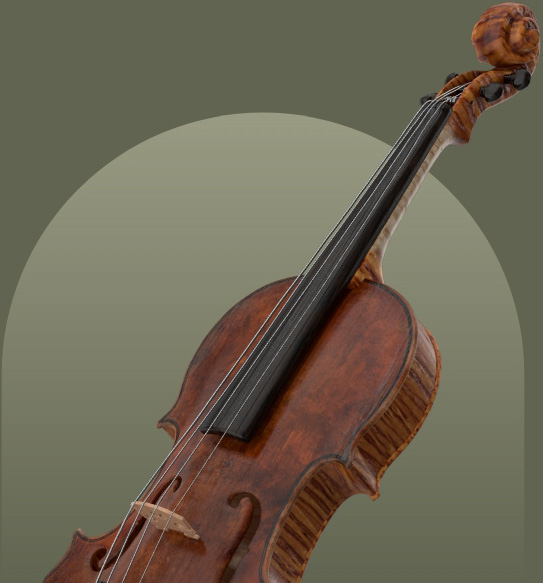
- His early violins were made after Stainer; later, he freely imitated a large Stradivari model. John Dilworth describes his instruments as often following an Amati/Stainer model and being unpurfled, featuring an idiosyncratic head with a small volute and an extended throat.
- Later Work
- John Dilworth adds that his later work was slightly more sophisticated, exhibiting an appearance similar to Duke or early Forster instruments, with red varnish, a flatter arch, and more often purfled.
- Materials
- Willibald Leo Lütgendorff observed that his wood was good, but the varnish was poor, appearing dark grey or almost black and no longer allowing the wood to shimmer through.
- Workmanship
- Lütgendorff also noted that while he often deviated from Italian prototypes in wood thicknesses, the work was quite good, and the tone was usually fine.
- Instruments Produced
- He made violins, violas, cellos, zithers, and guitars.
- Labeling
- His label was surrounded by emblems depicting musical instruments.
- Branding
- Some instruments were branded 'J.R.F.A.' Ruddiman / 17 Maker 76 / Aberdeen, citing Rattray.
- Inscriptions
- Cecie Stainer mentions a cither with inlaid wood ornamentation bearing the inscription: "Rudiman, A. B. Dn, D. G."
- Some instruments branded: ‘J.R.F.A.’ Ruddiman
17 Maker 76
AberdeenJohn Dilworth
Influence and legacy
- Training: John Dilworth suggests he was probably a pupil of R. Duncan.
- School: He is identified by John Dilworth as the most prolific maker of the Aberdeen School.
Biographies
The overview above is drawn from the following published accounts. Read them in the original:
John Dilworth+
RUDDIMAN, Joseph. Born 1729 Monquhitter, died 1810 Aberdeen, Scotland UK. Most prolific maker of the Aberdeen School. Probably a pupil of R. Duncan. Prolific output of all types of stringed instruments is similar to that of Perry in Dublin. Active in Aberdeen from 1757. Amati/Stainer model, unpurfled; idisosyncratic head with small volute and extended throat. Later work is slightly more sophisticated and has a Duke or early Forster appearance, with red varnish, flatter arch, and more often purfled. Some instruments branded: ‘J.R.F.A.’ Ruddiman / 17 Maker 76 / Aberdeen [Rattray]
Cecie Stainer+
Was working in Aberdeen in 1769. A cither, with inlaid wood ornamentation, had the inscription: “Rudiman, A. B. Dn, D. G.”
William Meredith Morris+
I regret that I have never succeeded in coming across a single specimen of this maker’s work. It would be easy, but not to the purpose, to rewrite what others have written about him.
Willibald Leo Lütgendorff+
Er war der Sohn eines Zimmermanns und hat wahrscheinlich in seiner Jugend dasselbe Handwerk gelernt, sich aber frühzeitig dem Geigenmachen zugewandt und war vor Matthew Hardie der beste schottische Geigenmacher. Seine ersten Geigen waren nach Stainer gemacht; später ahmte er ein grosses Stradivari-Modell frei nach. Sein Holz war gut, aber der Lack schlecht, der jetzt dunkelgrau oder fast schwarz aussieht und das Holz nicht mehr durch schimmern lässt. In den Holzstärken weicht er von italienischen Vorbildern oft ab, aber die Arbeit ist recht gut und der Ton gewöhnlich schon. Ruddiman hat ausser Violinen und Violen auch Violoncelli, Zithern und Guitarren gemacht. Sein Zettel ist von Emblemen mit Musikinstrumenten umgeben.
Sell your instrument with Amati
Get started by uploading photos of your instrument for our experts to review.
Sell your instrument with Amati
Get started by uploading photos of your instrument for our experts to review.