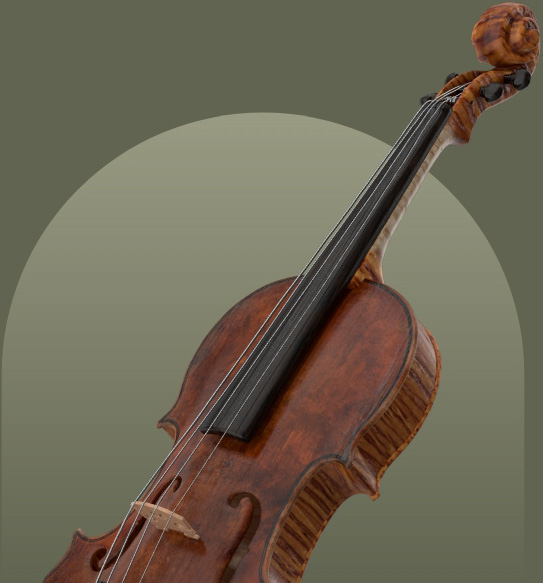
Peter Schulz
1808–1871
Peter SCHULZ (1808-1871) was a highly regarded German violin maker from Regensburg, a pupil of J. Fischer. He was known for his precise and beautiful workmanship, using fine materials and shaded oil varnish in the style of Vuillaume. He crafted violins primarily after Stradivari, Guarneri, and Maggini models, and was also skilled in making guitars and zithers. His workshop, located at Pfarrergasse E. 149 II, continued for 73 years through his successor and pupil, X. Kerschensteiner. Schulz received numerous medals for his work between 1854 and 1869.
Maker Overview
Life
Peter SCHULZ (1808-1871) was a maker in Ratisbon (Regensburg), Germany. Born in 1808, he died in 1871 in Regensburg., he exhibited three excellent violins in Munich in 1854, which were made more after a German than Italian pattern. John Dilworth confirms his birth and death dates and location. Willibald Leo Lütgendorff states that Schulz was the successor to his teacher's business, operating it in the same house (Pfarrergasse E. 149 II), ensuring the violin making tradition continued there for 73 years. He is considered one of the outstanding German violin makers.
Characteristics
- Workmanship
- Cecie Stainer noted one of his exhibited violins had especially beautiful workmanship, though its tone was not as clear and pure. John Dilworth describes his workmanship as very precise. Willibald Leo Lütgendorff highlights his splendid wood (Prachtvolles Holz) and impeccable work (tadellose Arbeit).
- Models
- He worked primarily after Stradivari, Guarneri, and Maggini models. John Dilworth also mentions copies of Stradivari and Guarneri.
- Varnish
- John Dilworth describes his varnish as shaded, in the style of Vuillaume, with appropriate colors and good soft consistency. Willibald Leo Lütgendorff notes he applied a rich oil varnish (fetten Öllack).
- Materials
- John Dilworth mentions fine materials. Willibald Leo Lütgendorff emphasizes his splendid wood (Prachtvolles Holz).
- Instrument Types
- Besides violins, he was also considered one of the best guitar and zither makers.
- Branded below back button: ‘P. Schulz’ Petrus Schulz, fecit
Ratisbonae anno 1830John Dilworth - Petrus Schulz Ratisbonensis
faciebat anno 18..John Dilworth - Petrus Schulz, Chittar- und Gei
genmacher in Regensburg
anno 18..John Dilworth
Influence and legacy
- Teachers: He was a pupil of J. Fischer in Regensburg.
- Work Experience: Willibald Leo Lütgendorff states he worked with Vauchel in Würzburg, Bausch in Dessau, and in Rotterdam, probably with the Coenen brothers.
- Mentorship: He took on X. Kerschensteiner as a pupil and later partnered with him in 1865.
- Succession: He partnered with his pupil X. Kerschensteiner in 1865, who became his successor.
- Workshop Continuity: His business continued in the same house (Pfarrergasse E. 149 II) for 73 years, ensuring an uninterrupted tradition of violin making.
- Recognition: He received many medals between 1854 and 1869.
- Preservation: His best instruments were still in the possession of his pupil and successor, X. Kerschensteiner.
Biographies
The overview above is drawn from the following published accounts. Read them in the original:
John Dilworth+
SCHULZ, PETER Born 1808, died 1871 Regensburg Germany. Pupil of J. Fischer in Regensburg. Very fine maker. Copies of Stradivari and Guarneri. Very precise workmanship. Fine materials with shaded varnish in the style of Vuillaume, in appropriate colours and good soft consistency. Branded below back button: ‘P. Schulz’ Petrus Schulz, fecit / Ratisbonae anno 1830 Petrus Schulz Ratisbonensis / faciebat anno 18.. Petrus Schulz, Chittar- und Gei / genmacher in Regensburg / anno 18..
Cecie Stainer+
A maker in Ratisbon. In 1854 he exhibited at Münich three excellent violins, made more after a German than Italian pattern, one was of especially beautiful workmanship, but its tone was not so clear and pure.
Willibald Leo Lütgendorff+
Schüler von Jos. Fischer. Er arbeitete bei Vauchel in Würzburg, Bausch in Dessau und in Rotterdam (wahrscheinlich bei den Brüdern Coenen), wurde der Nachfolger seines Lehrmeisters im Geschäfte und betrieb dasselbe im gleichen Hause (Pfarrergasse E. 149 II) weiter, so dass die Geigenmacherei hier 73 Jahre lang ununterbrochen betrieben wurde. Schulz gehört zu den hervorragenden deutschen Geigenmachern, und seine besten Instrumente, die sich noch im Besitze seines Schülers und Nachfolgers Kerschensteiner befinden, sind Meisterwerke ersten Ranges. Er arbeitete vorzugsweise nach Stradivari, Guarneri und Maggini und wendete fetten Öllack an. Ausserdem galt er auch für einen der besten Guitarren- und Zithernmacher. Prachtvolles Holz und tadellose Arbeit sind Kennzeichen seiner Geigen. Er verband sich 1865 mit seinem Schüler X. Kerschensteiner und erhielt von 1854 – 1869 viele Medaillen.
Sell your instrument with Amati
Get started by uploading photos of your instrument for our experts to review.
Sell your instrument with Amati
Get started by uploading photos of your instrument for our experts to review.