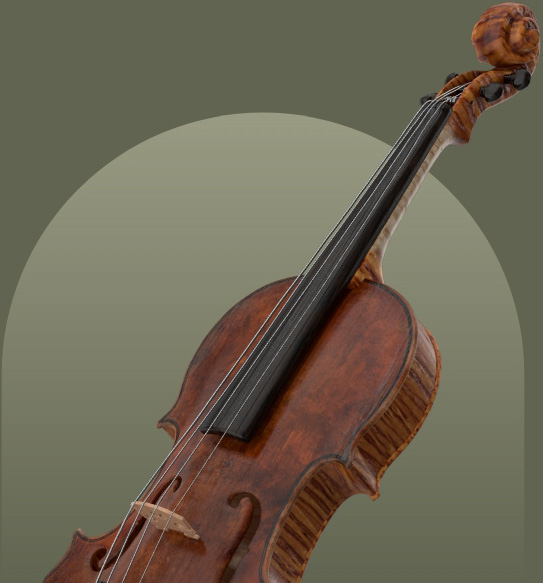
Henry James Shrosbree
b. 1858
Henry James Shrosbree (born 1858 in London) was a highly regarded Australian violin maker and repairer, established in Adelaide from 1880. Initially trained as a taxidermist, he became a self-taught luthier around 1895, gaining significant recognition for his exceptional craftsmanship. His instruments, known for their fine rich Italian tone and brilliant oil amber varnish, earned multiple first prizes at the Adelaide Exhibitions of Art and Industry in 1895 and the Century Exhibition in 1900. Shrosbree also invented a 'relieving bar system' for violin repair and specialized in bridges made from old wood, commanding high prices for his work.
Maker Overview
Life
Henry James SHROSBREE (1858-) was born in London in December 1858. From 1872 until the end of 1880, he followed a seafaring life, voyaging to Adelaide for the second time in the latter year. Upon his arrival in Adelaide, he entered the service of Sir E. T. Smith and remained with him until Sir Smith's retirement from business. Mr. Shrosbree's father was a taxidermist, an art in which Henry James Shrosbree also duly qualified. After leaving Sir Edwin Smith's employ, Mr. Shrosbree worked for Mr. Lawrence, a well-known Adelaide taxidermist, who attested to his understanding of all branches of the work. In 1891, he was awarded a first prize and certificate of merit for a very fine taxidermy exhibit at the Adelaide Exhibition of Art and Industry., he was established in Adelaide from 1880 and became a violin maker from approximately 1895. An article written in the April 1897 number of Music, an Adelaide monthly, provides an account of his life and work. Mr. Shrosbree is recognized as a practical musician and a good violinist, holding testimonials from many leading musicians of Adelaide, eminent artists, and well-known members of the profession.
Characteristics
- Ability
- Henry James Shrosbree is known as a maker and repairer of violins of exceptional ability, recognized by the profession as a skillful repairer and a maker unrivalled in Australia.
- Dedication
- He spent all his spare time for years studying music and the mechanism of the violin.
- Awards
- His excellent violin specimens were awarded first prize and a certificate of merit for workmanship, model, and tone at the 1895 Exhibition of Art and Industry in Adelaide, a competition noted as the largest yet held in Australia. At the Century Exhibition in Adelaide in 1900, his exhibit, comprising his Nos. 7 and 8 violins, a recently constructed viola, and assorted bridges, earned him first prize for violins, first for viola, first for musical appliances (bridges), and a special prize for the best exhibit in its group.
- Tone Quality
- His instruments produce a fine, rich Italian tone. An eminent critic noted that his violins possess a sonorous tone-quality, with lower strings resembling the rich qualities of the clarinet and the A and E strings being particularly clear and brilliant.
- Repair System
- He invented a 'relieving bar system' for repairing violins, which requires the bars to be located with mathematical accuracy.
- Varnish
- After years of labor and considerable cost, Mr. Shrosbree discovered the varnish he uses on his violins, which experts pronounce to be second to none. His instruments at the 1900 exhibition featured brilliant coatings of oil amber varnish.
- Workmanship
- An eminent critic described one of his latest violins as 'a more perfect or finely-finished instrument it would seem almost impossible to possess'. The archings are beautifully worked out, and the art of purfling is remarkably clever, laid in so finely as to appear almost impossible to accomplish by hand.
- Materials
- He uses fine wood, specially imported for him by Messrs. S. Marshall & Sons.
- Specialty
- He makes a speciality of bridges crafted from very old wood.
- Pricing
- Mr. Shrosbree charges, and reportedly receives, the high price of £50 for a violin.
- Henry James Shrosbree, faciebat
Adelaide. S. Australia. Anno 1899John Dilworth
Influence and legacy
- Awards: Henry James Shrosbree was a medal winner at the Century Exhibition in Adelaide. He received multiple first prizes and a special prize at the 1900 Century Exhibition, and a first prize and certificate of merit at the 1895 Exhibition of Art and Industry in Adelaide.
- Recognition: He is recognized by the profession as a maker unrivalled in Australia.
Biographies
The overview above is drawn from the following published accounts. Read them in the original:
John Dilworth+
SHROSBREE, Henry James Born 1858 London UK, Worked from 1895 Adelaide Australia. Established in Adelaide from 1880. Violin maker from c.1895. Medal winner at the Century Exhibition, Adelaide. Good work with fine amber varnish. Henry James Shrosbree, faciebat / Adelaide. S. Australia. Anno 1899 H.J.S
William Meredith Morris+
In the opinion of Australian experts, this maker produces work which is of quite an exceptional character. I am not in a position to either endorse or dispute that claim, and I therefore reproduce here an article written in the April number of Music (an Adelaide monthly), 1897, giving an account of the life and work of this maker : — ” Mr. H. J. Shrosbree, of Adelaide, known as a maker and repairer of violins of exceptional ability, was born in London in December 1858. From 1872 till the end of 1880 he followed a seafaring life, voyaging to Adelaide for the second time in the latter year, when he entered the service of Sir E. T. Smith, and remained with him till his retirement from business. Mr. Shrosbree does not claim to belong to a family of violin-makers, as his father was a taxidermist, in whose art the subject of this notice also duly qualified. On leaving Sir Edwin Smith’s employ, Mr. Shrosbree entered that of Mr. Lawrence, the well-known Adelaide taxidermist, who says of him that he understands all branches of this work. Ample proof of this was seen in 1891, when he was awarded first prize and certificate of merit for a very fine exhibit at the Adelaide Exhibition of Art and Industry. But the violin, Mr. Shrosbree’s favourite musical instrument, has had a great charm for him through life, and all his spare time for years was spent in the study of music and the mechanism of the violin. He has made some excellent specimens, which were awarded first prize and certificate of merit for workmanship, model, and tone at the 1895 Exhibition of Art and Industry in Adelaide. That year’s competition in violins was the largest yet held in Australia. Mr. Shrosbree is a practical musician and good violinist, and as an expert on model and tone is able to tell at a glance the method to adopt for restoring an old instrument. The profession recognise him both as a skilful repairer and a maker unrivalled in Australia, and as a self-taught man he is to be congratulated on his success. His instruments produce a fine rich Italian tone. ” He has invented a ‘ relieving bar system ‘ for repairing violins, by which the bars must be located with mathematical accuracy. After years of labour and considerable cost Mr. Shrosbree has discovered the varnish which he uses on his violins, and which is pronounced by experts to be second to none. Besides a valuable testimonial signed by many of the leading musicians of Adelaide, in which Mr. Shrosbree is recognised as a practical musician and first-class violin-maker, he holds others from a number of eminent artists and well-known members of the profession.” An eminent critic writes of one of Shrosbree’s violins as follows: “A severe trial of Mr. Shrosbree’s latest violin reveals the fact that a more perfect or finely-finished instrument it would seem almost impossible to possess. It is fuller in model than any of his previous ones, giving to it that sonorous tone-quality which is all the more surprising when on playing in the different positions (even to the highest of them) it does not affect that gentle refinement of tone when any delicacy is required. This important feature is not generally the case with new violins. The archings are most beautifully worked out, pronouncing it by its appearance a product of art. In quality of tone the lower strings resemble the rich qualities of the clarinet in all its power and endurance, while the notes throughout the A and E strings are particularly clear and brilliant. In fact, it seems difficult to believe when playing upon it that the tones produced are not those from a well-matured instrument. The art of purfling has always been a time of anxiety to a maker when finishing his work. But in this Mr. Shrosbree is remarkably clever, laying it in so finely as to make it almost impossible to believe that such delicate work can be accomplished by hand. The wood is of the finest, specially imported for Mr. Shrosbree by Messrs. S. Marshall & Sons, and when varnished should look very handsome.” The editor of Music, referring to Mr. Shrosbree’s success at the Adelaide Exhibition, 1900, spoke of the award as follows : — ” The commendatory references we have from time to time made to Mr. H. J. Shrosbree’s skill as a luthier, have been very amply confirmed by the judges for musical instruments, &c., at the Century Exhibition (Messrs. Hermann Schrader, A. C. Quin, and Thos. Grigg). Mr. Shrosbree’s exhibit comprised his Nos. 7 and 8 violins, his recently constructed viola, and some assorted bridges. With their brilliant coatings of oil amber varnish the instruments certainly make a splendid show, and the awards given Mr. Shrosbree are as follow : First for violins, first for viola, first for musical appliances (bridges), and a special prize for the best exhibit in its group.” Mr. Shrosbree charges, and, it would appear, receives readily, the high price of £50 for a violin. He makes a speciality of bridges, made of very old wood. I use one of these, and I like it very much.
Sell your instrument with Amati
Get started by uploading photos of your instrument for our experts to review.
Sell your instrument with Amati
Get started by uploading photos of your instrument for our experts to review.