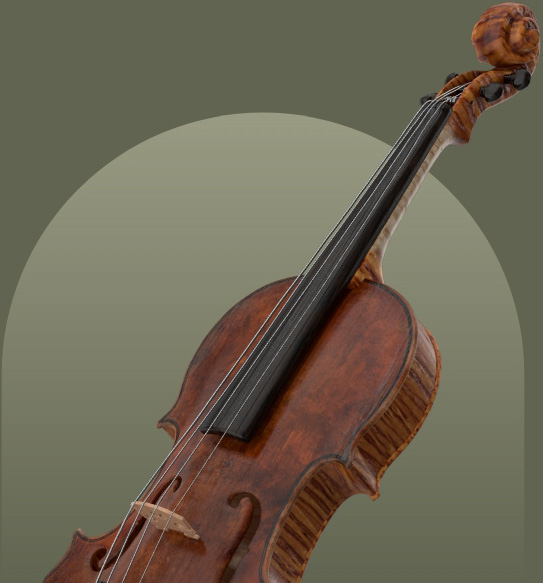
Frantisek Spidlen
Prague, 1867–1916
Frantisek SPIDLEN (1867-1916) was a distinguished Czech luthier who worked in Prague, Kiev, and Moscow. He trained with Metelka and Vitacaek and became luthier to the imperial court, opera house, and conservatoire in Moscow. Known for refining his techniques from basic Bohemian models to sophisticated work, he produced approximately 400 violins, primarily based on Stradivari and Guarneri models, using fine materials and deeply coloured varnish. He received numerous international medals, including those from Prague (1895), Kiev (1897), Paris (1900), St Petersburg (1906), and Lille (1909).
Auction Price History
Highest auction price
4 results
| Type | Details | Auction house | Sold | Price |
|---|---|---|---|---|
| Violin | 35.8 cm Prague, 1912 | — | July 2011 | £6,978 |
| Violin | 1913 | — | March 2001 | £2,350 |
| Violin | 1913 | — | March 1996 | £6,900 |
| Violin | 1910 | — | July 1993 | £8,280 |
No results match those filters.
Maker Overview
Life
Frantisek SPIDLEN (1867-1916) was born in 1867 and died in 1916 in Prague, Czech Republic. He worked for Metelka and Vitacaek in Prague before establishing himself independently in Kiev, Ukraine, from 1894, where he was briefly assisted by his nephew J. Vitachek. From 1897, he succeeded E. A. Salzard in Moscow as luthier to the imperial court, opera house, and conservatoire. During his time in Moscow, he refined his techniques as a maker through his experience with classical instruments in his care, developing his originally basic and slightly unorthodox Bohemian models into fully refined and sophisticated work. He returned to Bohemia in 1907 and, following the death of K. B. Dvorak in 1909, established himself on Krizovnicka Street, Prague. He completed about 400 violins.
Characteristics
- Models
- Frantisek SPIDLEN generally worked to Stradivari and Guarneri models.
- Materials & Varnish
- He used fine materials and a deeply coloured varnish, which was said to have been a commercial formula. Willibald Leo Lütgendorff notes he used Öllack (oil varnish).
- Workmanship
- His originally basic and slightly unorthodox Bohemian models evolved into fully refined and sophisticated work.
- Marking
- He applied his name to the back of his works by brand stamp.
- Franciskus F. Špidlen
fecit Prague Anno 1912John Dilworth
Influence and legacy
- Training: He was a talented pupil of Metelka and Vitacaek, for whom he also worked in Prague.
- Mentorship: His nephew, J. Vitachek, briefly assisted him in Kiev.
- Awards: Frantisek SPIDLEN won medals in Frankfurt, Prague 1895, Kiev 1897, Paris 1900, St Petersburg 1906, and Lille 1909.
- Appointments: He served as luthier to the imperial court, opera house, and conservatoire in Moscow.
Biographies
The overview above is drawn from the following published accounts. Read them in the original:
John Dilworth+
SPIDLEN, Frantisek Born 1867, died 1916 Prague Czech Republic. Worked for Metelka and Vitacaek in Prague. Established independently in Kiev, Ukraine from 1894, where he was briefly, assisted by his nephew J. Vitachek. Succeeded E. A. Salzard in Moscow as luthier to the imperial court, opera house and conservatoire from 1897. Refined his techniques as a maker there through his experience with classical instruments in his care, developing his originally basic and slightly unorthodox Bohemian models into fully refined and sophisticated work. Won medals in Frankfurt, Prague 1895, Kiev 1897, Paris 1900, St Petersburg 1906, and Lille 1909. Returned to Bohemia 1907, and following the death of K. B. Dvorak (the dominant luthier in Prague) in 1909, established himself on Krizovnicka Street, Prague. Generally worked to Stradivari and Guarneri models. Fine materials and deeply coloured varnish; said to have been a commercial formula. About 400 violins completed. Franciskus F. Špidlen / fecit Prague Anno 1912
Willibald Leo Lütgendorff+
Talentvoller Schüler von Metelka und Vitá?ek. Im Jahre 1894 liess er sich in Kiew in Russland als Geigenmacher nieder. Nach E. Salzard’s Tode übernahm er dessen Werkstatt in Moskau, wo er jetzt Geigenmacher des Conservatoriums ist. Er besitzt bereits verschiedene Ausstellungsmedaillen, darunter solche aus Prag 1895, Kiew 1897 und Paris 1900. Er ahmt das Stradivari- und Guarneri-Modell nach, verwendet Öllack und bringt auf dem Boden seiner Arbeiten seinen Namen durch Brandstempel an.
Sell your instrument with Amati
Get started by uploading photos of your instrument for our experts to review.
Sell your instrument with Amati
Get started by uploading photos of your instrument for our experts to review.