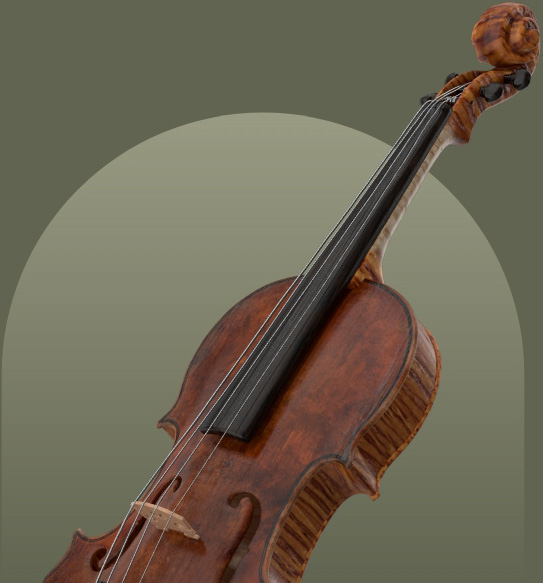
H.C. Stumpel
c.1838–1900
H.C. Stumpel (1838-c.1900) was a German violin maker, son and successor to C.H. Stümpel. He was known for his conscientious work, personal research, and the development of a unique plate graduation method. He produced a prolific number of instruments in various models and arching styles, including 'Façon Bagatella', 'Façon Joachim', and 'Faust', and invented specialized calipers for measuring wood thickness.
Auction price history
Highest auction price
| Type | Details | Sold | Price |
|---|---|---|---|
| Violin | 1881 | May 1998 | £247 |
Maker Overview
Life
H.C. Stumpel (1838-c.1900) was born in 1838 in Minden, Germany, and died around 1900. He was the son, pupil, and successor of C. H. Stümpel, taking over his father's workshop in 1861. in The Brompton's Book of Violin & Bow Makers, Stumpel was a conscientious maker who conducted extensive personal research. He was a prolific worker who, despite selling some instruments very cheaply, maintained a generally precise and professional standard of work. Willibald Leo Lütgendorff, in Die Geigen- und Lautenmacher vom Mittelalter bis zur Gegenwart, also notes his diligence and the varied pricing of his instruments, some of which are highly praised.
Characteristics
- Innovation
- H.C. Stumpel developed a unique method for graduating the plates of his instruments, which he applied to various models and arching styles.
- Models
- His models included high-arched 'Façon Bagatella', medium-arched 'Façon Joachim', and flat-arched 'Faust'. Lütgendorff further lists 'Guarnerius', 'Stradivariuss', and 'Sarasate' models.
- Materials
- He initially showed a preference for balsam pine for instrument fronts, though Lütgendorff notes he quickly moved away from this material.
- Tools
- He invented two types of calipers for violin makers to measure wood thickness, one of which allowed measurement even when the violin was not open.
- Various models and names cited on labels, beneath a diagram of his plate graduation method: H. C. Stümpel M. i.
W.
1893
Façon Pablo de SarasateJohn Dilworth
Influence and legacy
- Mentorship: H.C. Stumpel was the pupil and successor of his father, C. H. Stümpel.
Biographies
The overview above is drawn from the following published accounts. Read them in the original:
John Dilworth+
STÜMPEL. H. C. Born 1838, d.c.1900 Minden Germany. Son, pupil, and successor of C. H. Stümpel, above. A conscientious maker who carried out much personal research and developed a method for graduating the plates applicable to his various models and styles of arching. These range from high-arched ‘Façon Bagatella’ medium-arched ‘Façon Joachim’ to flat-arched ‘Faust’. Prolific worker who sold his instruments very cheaply, but the work is generally precise and professional. Preference for balsam pine for fronts. Various models and names cited on labels, beneath a diagram of his plate graduation method: H. C. Stümpel M. i./ W. / 1893 / Façon Pablo de Sarasate [Lütgendorff]
Willibald Leo Lütgendorff+
Schüler und seit 1861 Nachfolger seines Vaters. Ein sehr fleissiger Geigenmacher, der sich ein besonderes System ausgearbeitet und nach diesem verschiedene Modelle construirt hat, die er »Façon Bagatella« (hochgewölbt), »Guarnerius«, »Stradivariuss«, »Faust« (sehr flach), »Joachim« (mittlere Wölbung) und »Sarasate« nennt. Auch er liess sich seinerzeit bestimmen, das Holz der Balsamfichte zu verwenden, kam aber sehr schnell davon ab. Er hat billige und theure Geigen gemacht, und darunter sind solche, die sehr gelobt werden. Gegen wärtig macht er keine Violinen mehr. Er hat u. A. auch zwei Tasterzirkel für Geigenmacher erfunden, um die Holzstärken zu messen; der eine ermöglicht dieses Messen auch wenn die Geige nicht geöffnet ist. Er verwandte verschiedene Zettel, auf manchen fehlt, dem Wunsche seiner Abnehmer entsprechend, sein Name.
Sell your instrument with Amati
Get started by uploading photos of your instrument for our experts to review.
Sell your instrument with Amati
Get started by uploading photos of your instrument for our experts to review.