
Milan School
Carlo Giuseppe Testore
Milan, 1660–1738
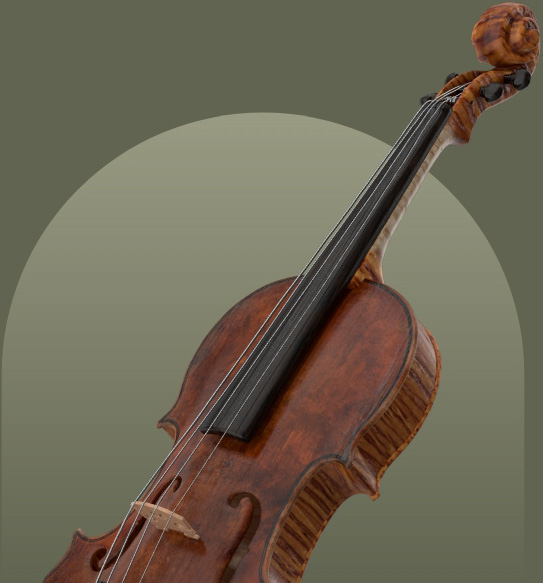
Carlo Giuseppe Testore (1660-1738) was a prominent Milanese luthier and pupil of Giovanni Grancino, considered the finest maker of his family. Active from around 1683 in Milan's Contrada Larga, his work displayed influences from Amati, Stradivari, and Guarneri, characterized by a fine low arching and distinctive oval scrolls. While his violins were often plain in appearance, his violoncellos and double-basses were particularly esteemed for their powerful tone and quality, despite sometimes utilizing pear or willow wood for backs. His instruments are occasionally misattributed to Grancino or Cappa, and he was succeeded by his sons, Carlo Antonio and Paolo Antonio.
Auction price history
Highest auction price
| Type | Details | Sold | Price |
|---|---|---|---|
| Violin | Labelled Carlo Giuseppe Testore in Contrada Larga di Milano al Segno dell'Aquila 1712 | March 2025 | £82,026 |
| Violin | October 2011 | £49,250 | |
| Violin | 35.4 cm Milan, 1730 c. [Attributed to] | October 2011 | £49,250 |
| Violin | 35.5 cm Milan, 1700 c. | October 2010 | £120,000 |
| Violin | 35.7 cm Milan, 1701 c. | April 2010 | £143,654 |
| Cello | 75.5 cm Milan, 1710 c. | October 2009 | £150,000 |
| Violin | 35.3 cm Milan, 1710 c. | October 2006 | £20,700 |
| Violin | 35.5 cm Milan (the top later) [Probably by] | May 2006 | £19,928 |
| Cello | Milan, 1690 c. [Possibly made with his son] | November 2005 | £108,795 |
| Cello | Milan, 1697 (sold with "Lamy" bow) | November 2005 | £288,000 |
| Cello | Italy 18C. [Ascribed to] | November 2004 | £18,000 |
| Violin | 1710 | November 2000 | £26,450 |
| Cello | 1699 | April 1998 | £95,000 |
| Violin | 17-- | December 1994 | £30,962 |
| Violin | 1690 | November 1993 | £26,014 |
| Violin | 17-- | October 1993 | £23,000 |
| Violin | 1720 c. | November 1991 | £23,100 |
| Cello | 1690 c. | November 1989 | £126,500 |
| Violin | 1705 | November 1989 | £30,800 |
| Violin | 1720 c. | June 1989 | £23,100 |
| Violin | 1690 c. | November 1988 | £24,199 |
| Violin | 1704 | March 1988 | £10,450 |
| Violin | 1705 | July 1985 | £15,400 |
| Violin | 1705 c. | April 1985 | £29,700 |
| Cello | 1700 | January 1984 | £12,222 |
Maker Overview
Life
Carlo Giuseppe Testore (1660-1738) was born in Novara and became active in Milan from approximately 1683. He settled in Milan around 1687, residing and working in the Contrada Larga, where his shop was identified by the sign 'al segno dell’aquila' (at the sign of the eagle). Sources contain conflicting information regarding his death date, with Karel Jalovec indicating 1737. He worked in Milan until about 1720 and was succeeded by his son, Carlo Antonio, who also became a violin maker.
Characteristics
- Workmanship
- He is considered the best maker of his family, with work that could rival that of his teacher, Giovanni Grancino. George Hart describes the work in his best instruments as highly finished, while Cecie Stainer notes that his violins, though showing good strong work, were not highly finished and were plain in appearance. Karel Jalovec states that each specimen is distinguished by a peculiar touch of its own, and that the wood, while not always fine-looking, was always finished with care.
- Models & Arching
- He worked on various models, including those of Nicolo Amati, Guarneri, Gofr. Cappa, and Ant. Stradivari. His arching is described as fine and low, characteristic of the Milanese school, and reminiscent of Nicolo Amati.
- Scrolls
- A distinguishing feature of the Testore scroll is its oval form, elongated along the line of the neck, contrasting with the vertically rotated oval tendency of Grancino's scrolls. Henri Poidras notes that the scroll is not graceful, and Karel Jalovec describes his delicately carved scrolls as often too small. Scrolls were made of beech or maple.
- Purfling
- The purfling was often quite broad, sometimes with a core of beech wood.
- Materials
- Materials were generally of good quality, sometimes featuring beautifully regular flame in the backs. For his violoncellos, he often used plain backs of willow or pear wood, and for the bellies, very fine wood.
- Varnish
- His varnish is described as rich yellow with a fine texture by John Dilworth. Other descriptions include brown-yellow, golden-yellow, red-yellow, pale red, or dry brownish-yellow. His contrabasses and 'cellos were coated with a red-brown or hard red varnish.
- Soundholes
- Henri Poidras notes that his sound holes were elongated but of a regular design and cut.
- Tone
- The tone of his instruments is generally described as good, noble, and far-carrying, sometimes very powerful and penetrating. His violoncellos and contrabasses are particularly noted as outstanding concert instruments with powerful tone.
- Carlo Giuseppe Testore allievo
di Gio. Grancino in Contrada
Larga di Milano, 1690John Dilworth - Carlo Giuseppe Testore in Con
trada larga di Milano, al
segno dell’aquila, 1710John Dilworth
Influence and legacy
- Mentorship: He was a pupil of Giovanni Grancino, and Willibald Leo Lütgendorff suggests he may also have been a pupil of Cappa.
- Stylistic Influences: His work shows the influence of both Amati and Stradivari, and he copied Guarneri with singular ability. He worked on the models of Nicolo Amati, Guarneri, Gofr. Cappa, and Ant. Stradivari.
- Family Continuity: He was succeeded in his craft by his sons, Carlo Antonio and Paolo Antonio, both of whom became violin makers.
- Notable Instruments: A double-bass made by Carlo Giuseppe Testore was famously played by the celebrated Bottesini at concerts, noted for its splendid tone. The well-known Lindley 'Grancino' violoncello, when repaired in 1844 by Andreas Engleder of Münich, revealed an original label identifying it as a work by Testore.
- Attribution Issues: Despite being considered the best maker in his family, not many violins by him are known, as his instruments are often mistaken for those of Giovanni Grancino or even Cappa.
Biographies
The overview above is drawn from the following published accounts. Read them in the original:
John Dilworth+
TESTORE, Carlo Giuseppe Born 1660 Novara, died 1738 Milan Italy. Active in Milan from c.1683. Pupil of G. Grancino. The best maker of the family, his work can rival that of Grancino, and shows the influence of both Amati and Stradivari, with a fine low arching characteristic of the Milanese school. The most obvious distinguishing feature of the Testore scroll is its oval form, elongated along the line of the neck. The Grancino scroll also shows a tendency towards the oval, but rotated vertically. Purfling often quite broad with a core of beech wood. Materials generally of good quality, sometimes with beautifully regular flame in the backs. Rich yellow varnish with fine texture. Succeeded by his son Carlo Antonio, below. Cellos very fine, if oversized, often with plain backs of willow or pear. Scrolls of beech or maple. Carlo Giuseppe Testore allievo / di Gio. Grancino in Contrada / Larga di Milano, 1690 Carlo Giuseppe Testore in Con / trada larga di Milano, al / segno dell’aquila, 1710
Cecie Stainer+
b. at Novara; settled at Milan about 1687, and worked there till about 1720. He was a pupil of Giovanni Grancino, for whose work his instruments are often mistaken. He was the best workman in this family, but did not make many instruments. His violins, of excellent wood, show good strong work, but not highly finished, and are plain in appearance. The pattern varies; it is moderately arched , the varnish is dry and of a brownish-yellow colour; the tone is good, sometimes very powerful and penetrating. For his violoncellos he generally used pear-tree wood for the backs and very fine wood for the bellies ; the tone was very powerful. When the well-known Lindley “Grancino” violoncello was repaired in 1844, by Andreas Engleder of Münich, the original label, in good preservation, read as follows : ” Carlo Giuseppe Testore allievo di Gio. Gran-cino in Contrada Larga di Milano, 1690.” A double-bass of his was played on by the celebrated Bottesini at concerts; it had a splendid tone. Label: “Carlo Giuseppe Testore in Contrada larga di Milano al segno deir aquila, 1700.” He had two sons, Carlo Antonio and Paolo Antonio, both violin makers.
George Hart+
He copied Guarneri with singular ability. The work in his best instruments is highly finished.
Willibald Leo Lütgendorff+
Ein Schüler Giov. Grancino’s und vielleicht auch Cappa’s, liess sich 1687 in Mailand nieder, wo er in der Contrada larga wohnte und das Ladenschild »all’ aquila« hatte. Er war der Bedeutendste aus seiner Familie, doch kommen nicht viele Geigen von ihm vor. Entweder hat er nur wenige gemacht, oder es gehen jetzt viele unter dem Namen Grancino’s oder gar Cappa’s, in welch letzterem Falle es nicht schwer ist, ihm seine Arbeit zurückzugeben Er arbeitete nach verschiedenen Modellen und nahm vortreffliches Holz. Der Lack ist braungelb, der Ton meist edel und weittragend. Seine Violoncelli und Bässe sind gleichfalls recht gut, obwohl er den Boden meist aus Birnbaumholz hergestellt hat. Dass er auch in Cremona gearbeitet hat, wie behauptet wird, ist unerwiesen.
Henri Poidras+
Pupil of Grancino. After the Guarnerius model, this make is well finished. Pale red or yellow-brown varnish. His ‘cellos are particularly fine, some made of poplar or pear-tree wood. The scroll is not graceful: the sound holes elongated, but of a regular design and cut. Carlo Giuseppe Testore allievo di Gio Grancino in Contrada Larga di Milano. 16..
Karel Jalovec+
Milan. Born 1660, died 1737. Pupil of Giovanni Grancino. Worked on the models of Nicolo Amati, Guarneri, Gofr. Cappa and Ant. Stradivari. Each specimen, however, is distinguished by a peculiar touch of its own; the arching reminds of Nicolo Amati. The wood is not always fine-looking; the back is often of pear wood, but always finished with care. The purfling is rather broad, the delicately carved scrolls often too small. The faultlessly applied varnish is golden-yellow, brown-yellow or red-yellow. As far as the tone is concerned, his works constitute outstanding concert instruments, particularly his contrabasses and ‘cellos which are coated with a red-brown or hard red varnish. Price 40 —75.000 Kc.
Sell your instrument with Amati
Get started by uploading photos of your instrument for our experts to review.
Sell your instrument with Amati
Get started by uploading photos of your instrument for our experts to review.
Family
Working in Milan at the same time
Antonio Compostano worked 1693–1710
Antonio Maria Battiazza worked 1705–1707
Capo worked 1710–1725
Carlo Antonio Testore 1693–1765
Cristofaro Posta worked 1666
Domenico Gianoli worked 1710
Ferdinando Alberti worked 1735–1760