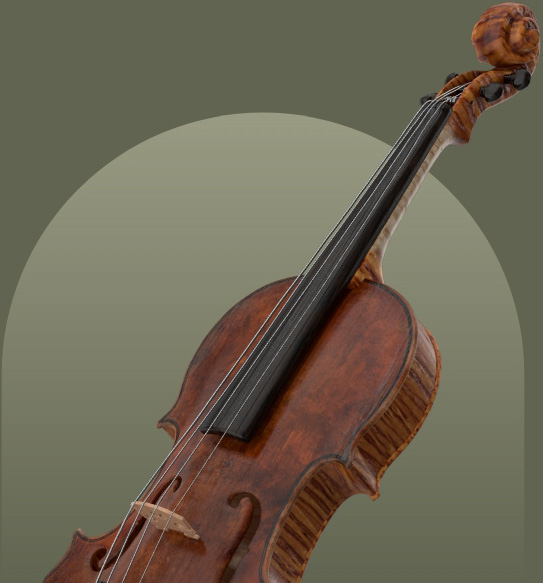
Michele Todini
c.1616–1700
Michele Todini, born in Saluzzo in either 1616 or around 1625, and active in Rome until at least 1676 or c.1700, was a multifaceted individual known as an inventor, musician, and instrument maker. He specialized in mechanical musical contrivances, including an elaborate harpsichord known as the 'Machine of Polyphemus and Galatea'. A professional contrabassist, Todini is credited with pioneering a four-string method for the Violono or Double Bass. He also established a musical museum in his home, documenting its contents in a published pamphlet.
Maker Overview
Life
Michele Todini (born 1616 or c.1625, died after 1676 or c.1700) was a native of Saluzzo who lived for many years in Rome. Sources contain conflicting information regarding his birth and death dates, with some indicating he was born around 1625 and died after 1676, while others state he was born in 1616 and died around 1700. He was known as an inventor and maker of numerous musical contrivances, often incorporating clockwork mechanisms. Todini dedicated several years to this manufacture, transforming his house into a type of musical museum. He also authored a pamphlet describing its contents. He was a professional musician, specifically a contrabassist, and is credited by George Hart with adopting a new method of stringing the Violono or Double Bass with four strings, and playing the instrument himself at oratorio performances in Rome. John Dilworth notes that Todini was also the founder of possibly the first museum collections of musical instruments at his home.
Characteristics
- Inventions
- Todini was an inventor and maker of a great number of musical contrivances, frequently utilizing clockwork.
- Instruments
- He built violins, lutes, organs, and a double bass. He is chiefly known as the architect of the 'Machine of Polyphemus and Galatea', an extravagant harpsichord that incorporated an organ, violin, viola, and various other mechanical instruments, all governed by the same keyboard.
- Innovation
- His work is described as mechanical and often 'over-burdened with eccentric innovations' by John Dilworth. He is credited with introducing a new mode of stringing the Violono or Double Bass with four strings, which led to the conversion of old Violonos into Double Basses suitable for modern requirements.
Influence and legacy
- Museum: Todini established a musical museum in his home, which he described in a pamphlet. John Dilworth suggests this may have been one of the first museum collections of musical instruments.
- Exhibits: His 'Machine of Polyphemus and Galatea' now survives only as a terracotta model housed in the National Museum of Musical Instruments in Rome.
- Controversy: While George Hart credits Todini with introducing a new method of stringing the double bass, Cecie Stainer notes that he has been called the inventor of the double-bass, but 'there is apparently nothing to support this assertion'.
Biographies
The overview above is drawn from the following published accounts. Read them in the original:
John Dilworth+
TODINI, Michele Born 1616 Saluzzo, d.c.1700 Rome Italy. Chiefly known as the architect of the ‘Machine of Polyphemus and Galatea’: an extravagant harpsichord incorporating an organ, violin, viola, and various other mechanical instruments governed by the same keyboard. It now survives only in the form of a terracotta model in the National Museum of Musical Instruments, Rome. Todini himself was a musician, and also the founder of possibly the first museum collections of musical instruments at his home in Via dell’Arco della Ciambella. He is also known to have built violins and a double bass, but in general his work appears to be mechanical and over-burdened with eccentric innovations. [Lebet]
Cecie Stainer+
b. in Saluzzo about 1625. He lived in Rome, where, in 1676, he published his “Dichiarazione della galleria armonica eretta in Roma.” He made a few violins, but is chiefly known as the maker of very ingenious mechanical musical instruments. He has been also called the inventor of the double-bass, but there is apparently nothing to support this assertion.
George Hart+
A native of Saluzzo, lived for many years at Rome, about 1625. Todini was the inventor and maker of a great number of musical contrivances, in which clockwork played an important part. He occupied himself with this manufacture for several years, and turned his house into a kind of musical museum. He wrote a pamphlet describing its contents. His name is associated with our subject in having adopted a new mode of stringing the Violono or Double Bass, by using four strings, and playing himself upon the instrument at oratorio performances in Rome. I have mentioned in Section I. that the Violono was originally used with several strings—five, six, or seven—and with frets. Todini is therefore credited with having introduced the method of stringing the Double Bass which led to the conversion of the old Violonos into Double Basses fitted for modern requirements.
Willibald Leo Lütgendorff+
Ein piemontesischer »Tausendkünstler«. Er kam aus Saluzzo nach Rom, wo er nächst dem Arco della Ciambella sein Haus hatte, und war mehr Mechaniker als Geigenmacher, vor Allem aber ein tüchtiger Musiker. Er soll der Erste gewesen sein, der im römischen Streichorchester den Contrabass eingeführt hat. Er versuchte sich in allerlei Erfindungen an Lauten und Geigen, baute Orgeln und kunstvolle Uhren und gab eine kleine Schrift heraus unter dem Titel: Dichiaratione della galleria armonica eretta nella sua habitatione posta all’ arco della Ciambella. (In Roma, per Francesco Tirroni 1676. 12°. 12 S.) Vgl. auch A. Bertolotti: »Un musico meccanico« (Artisti subalpini in Roma S. 56 ff.).
Karel Jalovec+
Rome. Born at Saluzzo in 1625, died after 1676. He was a professional musician, a contrabassist. Quite a good hand at violin and lute making, nevertheless chiefly performer.
Sell your instrument with Amati
Get started by uploading photos of your instrument for our experts to review.
Sell your instrument with Amati
Get started by uploading photos of your instrument for our experts to review.