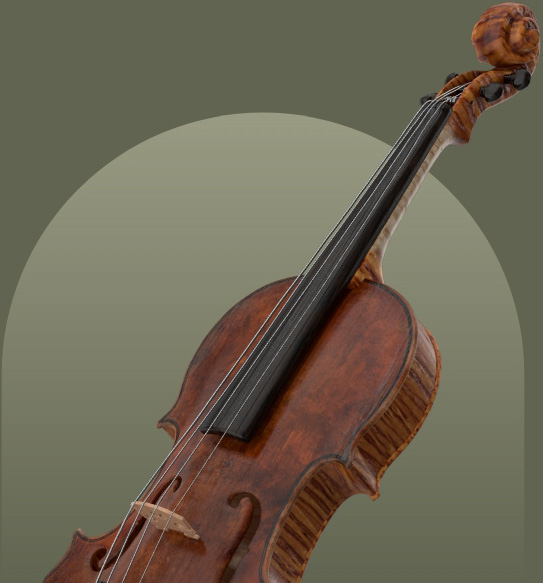
Donald Urquhart
b. 1859
Donald Urquhart (b. 1859) was a self-taught amateur violin maker from Balblair, Scotland, active from 1874, who crafted approximately 20 violins. Despite lacking formal training, he was noted for his masterly deftness with tools and a highly developed sense of beauty. Urquhart was particularly recognized for his unique, self-prepared oil varnish, which he produced in three permanent shades and meticulously dried under strong sunlight. His instruments, based on a full-sized Stradivari model with original scrolls and modified sound-holes, featured strong construction, fine wood, and a sweet, mellow tone, especially on the D and A strings.
Auction Price History
Highest auction price
| Type | Details | Auction house | Sold | Price |
|---|---|---|---|---|
| Violin | 1886 | — | September 1988 | £264 |
No results match those filters.
Maker Overview
Life
Donald Urquhart (1859-Unknown) was born at Balblair, near Invergordon, on August 17, 1859, and received his education at Jaminaville Free Church school in the parish of Resolis. He was a self-taught amateur maker, active from 1874, and, he completed approximately 20 violins. William Meredith Morris notes that Urquhart began making fiddles and experimenting with varnish fifteen years prior to the publication of British Violin Makers, demonstrating a highly developed sense of beauty and masterly deftness with tools despite having no formal training in violin-making.
Characteristics
- Varnish
- Urquhart developed his own self-prepared oil varnish, which was noted for its great beauty and lustre.
- Varnish Characteristics
- This varnish was produced in three shades: dark yellow, light orange, and deep orange red. Its color was absolutely permanent, even under the strongest sunlight, and it became more lustrous after prolonged exposure. The varnish"s toughness and elasticity made it exceedingly difficult to polish and required months to dry, even in strong sunlight, yet Urquhart successfully achieved a perfectly polished surface.
- Model and Outline
- The outline and arching of his instruments were based on a full-sized Stradivari model, characterized by broad edges.
- Sound-holes
- The sound-holes on his violins were modified from traditional designs.
- Scroll
- His scrolls were entirely original and considered a most graceful piece of work, distinguished by a deep scooping of the volute and a consequent boldness of its axis.
- Wood
- The wood used for the back was of the usual description and good quality, while the belly wood was particularly fine, with the "reed" of the pine being fully one-seventh of an inch wide and consistently even.
- Construction
- The edges of his instruments were strong, with a full margin. The thicknesses were carefully graduated, and the instruments were left strong in wood. The interior finish was so fine that the wood had a polish, with no suspicion of glue lines.
- Tone
- The tone of his violins, while not powerful, was described as sweet and mellow. It was particularly fine on the D and A strings, and the first octave on the third string possessed the juicy richness reminiscent of the chalumeau in a clarinet.
- Donald Urquhart
Tain. N.B. 1897John Dilworth
Biographies
The overview above is drawn from the following published accounts. Read them in the original:
John Dilworth+
URQUHART, Donald Born 1859 Balblair, Invergordon, Scotland UK. Self taught amateur maker active from 1874. About 20 violins completed. Large Stradivari model with his own amber varnish in various shades. Broad edges. Head concentric and deeply cut. Local materials. Manuscript label: Donald Urquhart / Tain. N.B. 1897 [Rattray]
William Meredith Morris+
He was born at Balblair, near Invergordon, on Aug. 17, 1859, and educated at Jaminaville Free Church school, in the parish of Resolis. He has received no training in violin-making, but his highly developed sense of the beautiful, and masterly deftness in the handling of keen-edged tools, have enabled him to overcome the difficulties of the art. He commenced to make fiddles fifteen years ago, and also to experiment in varnish. Since then the varnish question has occupied a great deal of his attention, and it must be said that he has succeeded in producing an oil varnish of great beauty and lustre. This is made in three shades, dark yellow, light orange, and deep orange red. The colour is absolutely permanent in the strongest sunlight. During the varnishing the instruments are exposed to the full blaze of the sun from April to September in a conservatory window, where the thermometer on sunny days registers 125 degrees (Fahr.). The colour is not affected in the least — if anything, it becomes more lustrous after this fiery ordeal. The one drawback of the varnish is that, being so tough and elastic, it is exceedingly difficult to polish, and takes months to dry even in the strongest sunlight, but Mr. Urquhart succeeds in giving it a perfectly polished surface. The outline and arching are those of a full-sized Strad. The sound-holes are modified. The scroll is altogether original and a most graceful piece of work. Its chief differentiating characteristic is the deep scooping of the volute and the consequent boldness of its axis. In no other maker have I observed this peculiarity turned to advantage. The wood of the back is of the usual description and of good quality, whilst that of the belly is really fine. The ” reed ” of the pine in the two specimens I examined is fully one-seventh of an inch wide, and is even throughout. The edges are strong, and the margin full. The thicknesses are carefully graduated and the instruments are left strong in wood. The inside is finished so finely that the wood has a polish, and there is not a suspicion of the presence of glue lines. The tone, although not powerful, is sweet and mellow. On the D and A strings it is fine. The first octave on the third string has the juicy richness of the Chalumeau in the clarionet. Had Urquhart succeeded in getting power along with this characteristic, he would have created something new in violin tone, which is about as possible, perhaps, as the existence of a pair of contradictories which are compatible with regard to both truth and falsehood.
George Hart+
Er hat aus Liebhaberei zwar nur eine kleine Anzahl, aber gute Violinen gemacht. Besonders schön ist der von ihm selbst zubereitete Öllack.
Sell your instrument with Amati
Get started by uploading photos of your instrument for our experts to review.
Sell your instrument with Amati
Get started by uploading photos of your instrument for our experts to review.