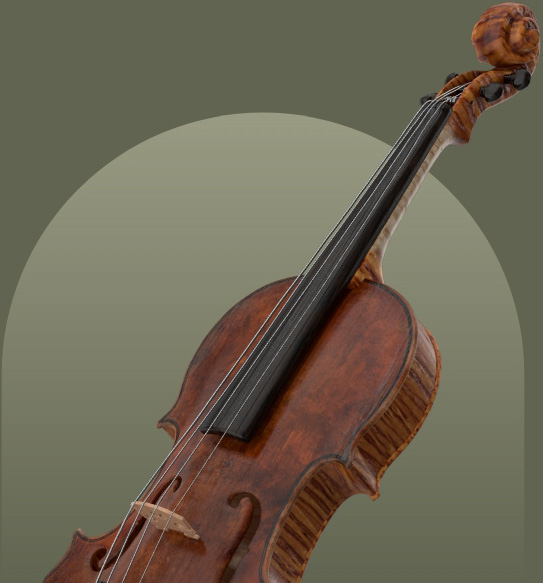
Karl Otto Zimmer
1865–1919
Karl Otto Zimmer (1865-1919) was a German-born luthier who established a significant workshop in Budapest, Hungary. A pupil of his brother Karl Zimmer, he trained with Jüling and Weichold in Dresden before moving to Budapest to work for W. J. Schunda, eventually opening his own business in 1896. He was known for his fine professional work, initially using Brescian patterns and later developing models based on Stradivari, Guarneri, and Guadagnini, applying his own oil varnish. Zimmer received medals in Paris in 1900 and in Hungary, and his business was later continued by his son, Oliver.
Auction price history
Highest auction price
| Type | Details | Sold | Price |
|---|---|---|---|
| Violin | 1913 | November 2003 | £3,360 |
| Violin | 1859 | March 2000 | £6,900 |
| Violin | 1900 c. | March 1992 | £802 |
Maker Overview
Life
Karl Otto Zimmer (1865-1919) was born in 1865 in Erlbach, Germany, and died in 1919 in Budapest, Hungary. He was the brother and pupil of Karl Zimmer. His training included working for Jüling and Weichold in Dresden from 1885. He briefly worked in Leipzig and Ostpreussen before being called to Budapest in 1892, where he was employed by W. J. Schunda., he made some violins independently in Dresden as early as 1887, which were praised by connoisseurs. By 1896, he established his own independent workshop in Budapest. Later in his career, he concentrated on pianos and guitars. His son, Oliver, succeeded him.
Characteristics
- Workmanship
- Karl Otto Zimmer produced fine professional work. His early instruments were often made on Brescian patterns, and he later developed models based on Stradivari, Guarneri, and fine Guadagnini. His instruments were accurately observed and well finished, with particular care given to their elaboration. He primarily made violins and violoncellos.
- Varnish
- He used his own oil varnish in appropriate shades, described as red, yellow, or brown. Willibald Leo Lütgendorff specifically notes it as a self-made amber-oil varnish (Bernstein-Öllack) that proved effective.
Influence and legacy
- Mentorship: Karl Otto Zimmer was a pupil of his brother, Karl Zimmer.
- Employment: He worked for Jüling and Weichold in Dresden from 1885. He was also employed by W. J. Schunda in Budapest from 1892.
- Awards: Karl Otto Zimmer was awarded medals in Paris in 1900, specifically a silver medal at the Paris World Exhibition (Pariser Weltausstellung). He also received awards in Hungary, including a first prize at the Millennium Exhibition in Budapest while still an assistant.
- Succession: He was succeeded by his son, Oliver Zimmer.
Biographies
The overview above is drawn from the following published accounts. Read them in the original:
John Dilworth+
ZIMMER, Karl Otto Born 1865 Erlbach Germany, died 1919 Budapest Hungary. Brother and pupil of Karl Zimmer, above. Worked for Jüling and Weichold in Dresden from 1885. Briefly in Leipzig, then employed by W. J. Schunda in Budapest from 1892. Established independently there from 1896. Awarded medals in Paris 1900 and in Hungary. Later concentrated on pianos and guitars. Succeeded by his son Oliver, below. Fine professional work; early instruments on Brescian patterns. Later developed Stradivari, Guarneri and fine Guadagnini models. Accurately observed and well finished. Own oil varnish in appropriate shades. Branded internally ‘Zimmer K.O. Budapest’. Zimmer, K. Otto Langszer Koazito Budapest VI. Terez-Korut 4 sz. [Benedek]
Willibald Leo Lütgendorff+
Schüler seines Bruders Karl Z. Zu seiner weiteren Ausbildung ging er zunächst nach Dresden, wo er bei Jühling und Weichold arbeitete, später nach Leipzig und Ostpreussen, von wo er 1892 nach Budapest gerufen wurde. Schon in Dresden machte er 1887 selbstständig einige Geigen, die von Kennern gelobt wurden, so dass er nichts unversucht liess, was ihm die Möglichkeit gewährte, seine Fähigkeiten besser zu entwickeln. Im Jahre 1896 eröffnete er in Budapest seine eigene Werkstatt und macht, zumeist nach Stradivari, sowohl Geigen als Violoncelli. Besondere Sorgfalt verwendet er auf die Ausarbeitung seiner Instrumente, die er mit einem von ihm selbst hergestellten Bernstein-Öllack in Roth, Gelb oder Braun lackirt, der sich bewährt hat. Er hat auf der Millenniums-Ausstellung in Budapest schon als Gehilfe einen ersten Preis, auf der Pariser Weltausstellung 1900 die silberne Medaille erhalten.
Sell your instrument with Amati
Get started by uploading photos of your instrument for our experts to review.
Sell your instrument with Amati
Get started by uploading photos of your instrument for our experts to review.