
Berlin School
Carl Ludwig Bachmann
Berlin, 1743–1809
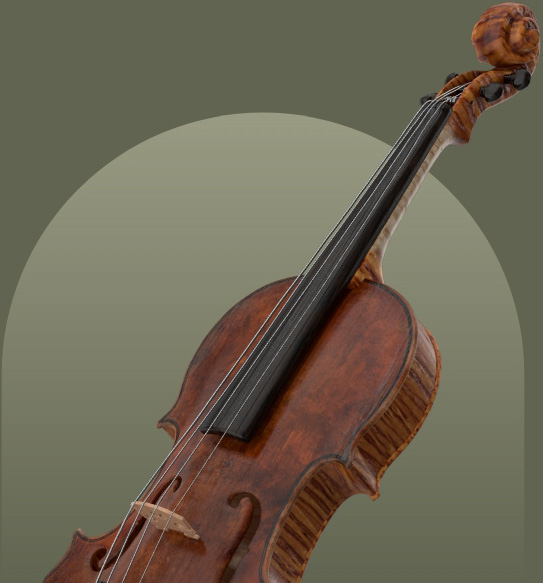
Carl Ludwig Bachmann (1743-1809) was a prominent German luthier and musician, born in Berlin. The son and pupil of Anton Bachmann, he initially trained as a virtuoso viola player before becoming Court instrument maker and Chamber musician to the King of Prussia in 1765. He founded the Amateur Concerts in Berlin in 1770 and increasingly focused on lutherie after 1785. Bachmann crafted instruments, including violins, basses, and cellos, on both Stradivari and Stainer models, noted for their golden-coloured oil varnish and excellent proportions. His violas are particularly esteemed. He is also credited with innovating the use of screw pegs for double-bass tuning around 1778.
Maker Overview
Life
Carl Ludwig Bachmann (1743-1809) was born in Berlin, Germany. Sources contain conflicting information about his birth year, with John Dilworth stating 1743 and Cecie Stainer stating 1748. He was the son and pupil of Anton Bachmann. Originally trained as a musician, he was a virtuoso viola player. In 1765, he was appointed Court instrument maker and Chamber musician to the King of Prussia, taking over his father's court position. In 1770, he founded the Amateur Concerts in Berlin in conjunction with Ernest Benda, which he continued until 1797. He married Charlotte Caroline Stowe, a respected pianist and singer, in 1785. She died on August 19, 1817. Bachmann increasingly turned his attention to lutherie, concentrating on it after 1785.
Characteristics
- Models
- He made instruments on both Stradivari and Stainer models.
- Varnish
- His instruments featured a golden-coloured oil varnish, also described as amber varnish.
- Instruments Produced
- He produced violins, basses, plucked instruments, altos, and violoncellos. His violas are considered his best work.
- Construction
- Bachmann was more careful in his choice of wood than his father, and his violins are more regularly built, though sometimes a little thick in the wood. Amateurs often mistook his instruments for genuine Cremona work due to their excellent proportions and choice of wood.
- Innovation
- Around 1778, he began to tune the long, thick strings of double-basses by means of screw pegs, a method that has been in use ever since.
- Carl Ludwig Bachmann
Hof instrumentenmacher
Berlin 1766John Dilworth - Carl Bachmann
in Berlin, 1773John Dilworth
Influence and legacy
- Training: He was the son and pupil of Anton Bachmann.
- Musical Education: He was originally trained as a musician and was a virtuoso viola player.
- Collaborations: He collaborated with Ernest Benda in founding the Amateur Concerts in Berlin.
Biographies
The overview above is drawn from the following published accounts. Read them in the original:
John Dilworth+
BACHMANN, Carl Ludwig Born 1743, died 1809 Berlin Germany. Son and pupil of Anton, above. Took over Anton’s court position in 1765. Leader of the Court orchestra. Concentrated on lutherie after 1785. Both Stradivari and Stainer models with golden coloured oil varnish. Also produced basses and plucked instruments. Carl Ludwig Bachmann / Hof instrumentenmacher / Berlin 1766 Carl Bachmann / in Berlin, 1773
Cecie Stainer+
b. 1748 at Berlin ; d. there 1809. Made excellent violins, altos, and violoncellos on the Stradivari pattern with amber varnish; the proportions were good, the choice of wood excellent; amateurs often mistook his instruments for genuine Cremona work. He was a skilful viola player. 1765. was appointed Court instrument maker and Chamber musician to the King of Prussia ; 1770, founded the Amateur Concerts in Berlin, in conjunction with Ernest Benda, which he continued till 1797. About 1778 began to tune the long thick strings of double-basses by means of screw pegs, a method in use ever since.
Willibald Leo Lütgendorff+
Sohn von Anton B. und ursprünglich zum Musiker ausgebildet. Er war
ein Virtuose auf der Viola und trat 1765 in die kgl. Kapelle in Berlin als
Kammermusikus ein und errichtete 1770 mit Benda zusammen ein sehr geschätztes
Liebhaberkonzert, wobei er bis zu Benda’s Tod freilich nur als
Geschäftsführer hervortrat. Mehr und mehr wandte er sich mit der Zeit dem
Geigenbau zu. Im Jahre 1785 verheirathete er sich mit der als Klavierspielerin
und Sängerin geschätzten Charlotte Caroline Stowe († 19. Aug. 1817). Er war
sorgfältiger in der Wahl des Holzes als sein Vater, auch sind seine Geigen
regelmässiger gebaut, nur etwas zu dick im Holz. Am besten sind jedenfalls
seine Bratschen.
Sell your instrument with Amati
Get started by uploading photos of your instrument for our experts to review.
Sell your instrument with Amati
Get started by uploading photos of your instrument for our experts to review.
Working in Berlin at the same time
Anton Bachmann 1716–1800
Carl Davro Kursch worked 1803–1815
Johann Bachmann worked 1783
Johann Friedrich Mattstadt worked 1760–1795
Wilhelm Paulus worked 1800