
Lille School
Gerard J. Deleplanque
Lille, worked 1754–1790
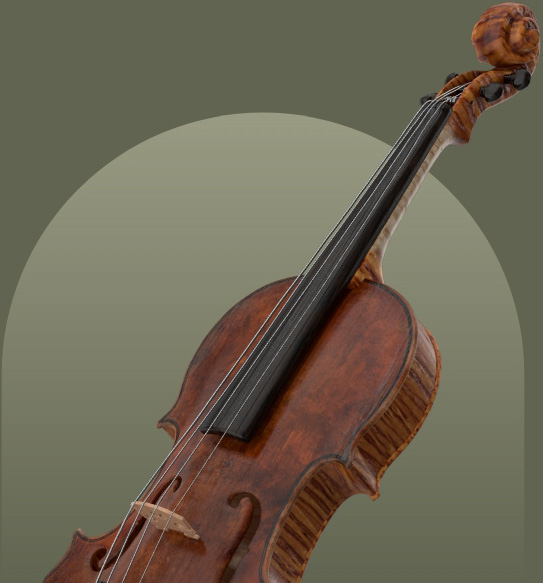
Gerard J. Deleplanque was a prominent luthier active in Lille, France, from the mid-18th century until around 1790. He was known for producing a wide array of bowed and plucked stringed instruments, including viols, guitars, violins, and cellos. His work, though sometimes described as having awkward workmanship for violins and cellos, was generally considered skillful and diligent, often featuring well-chosen wood and distinctive varnishes. Deleplanque's instruments are preserved in notable collections such as the Paris Conservatoire and the Conservatories in Brussels, reflecting his significant contribution to instrument making during his era.
Auction price history
Highest auction price
6 results
| Type | Details | Auction house | Sold | Price |
|---|---|---|---|---|
| Small Violoncello | Labelled Gerard J. Deleplanque, luthier ..., bearing its original neck and possibly an original fingerboard Lot 16 | Tarisio | October 2024 | £11,800est. £ 10,000-15,000 |
| Violin | 1784 | — | March 1998 | £1,552 |
| Viola | 40.0 cm 17-- | — | November 1996 | £2,070 |
| Violin | 1776 | — | March 1996 | £3,680 |
| Violin | 17-- | — | March 1992 | £770 |
| Violin | 1776 | — | March 1991 | £1,650 |
No results match those filters.
Maker Overview
Life
Gerard J. Deleplanque (circa 1754-1790) was a viol maker and luthier active in Lille, France. Sources contain conflicting information regarding his active period; Cecie Stainer indicates he worked from 1760 to 1788, while John Dilworth suggests a broader period from circa 1754 to 1790. Willibald Leo Lütgendorff notes his activity from 1768 to around 1790. He was initially established at the "Marche aux poulets," near the "Marche aux poissons." Around 1766, he transferred his business to the rue de la Grande-Chaussee, specifically at the corner of the rue des Dominicains. Later, around 1790, he was located at the Place de Ribour, near the Hôtel-de-Ville in Lille.
Characteristics
- Instrument Types
- Deleplanque was a prolific maker of various bowed and plucked stringed instruments, including viols, guitars, violins, cellos, Pandoren, Lauten, and Zithern.
- Workmanship
- He left some excellent specimens of his work, characterized by careful and diligent craftsmanship. His violins and cellos are described by John Dilworth as having awkward workmanship and high arches, but with well-chosen wood and good orange-brown varnish. Lütgendorff notes his skill and diligence, stating his works are quite common.
- Materials and Varnish
- His instruments often featured beautiful wood. A five-stringed viol from 1766 had a yellow varnish tinged with red. His violins and cellos utilized a good orange-brown varnish, and Lütgendorff describes his lacquer as reddish-yellow. A magnificent guitar from 1775 was made of tortoiseshell, inlaid with mother-of-pearl and ivory.
- Specific Instruments
- Notable examples include a five-stringed viol dated 1766, a very beautiful guitar dated 1768, and another magnificent guitar from 1775. Other guitars are dated 1770 and 1777. A peculiar eleven-stringed guitar from 1772 featured a back shaped like a lute or mandoline.
- Finely worked and decorated guitar of 1768 in Musée de la Musique, Paris. Gérard J. Deleplanque
Luthier, rue de la grande
chaussée, coin de celle des
Dominicains à Lille. 1788John Dilworth - Au Violon de Crémone
Gérard J. Deleplanque
Luthier, Place de Ribour, près
l’ Hôtel-de-Ville, à Lille, 1790John Dilworth
Influence and legacy
- Collections: Several of Deleplanque's instruments are preserved in significant collections, including the Paris Conservatoire Collection (also referred to as the Musée de la Musique, Paris by John Dilworth) and the Conservatories in Brussels. Instruments are also found in the collections of Snoeck and Heuckart.
- Exhibitions: A five-stringed viol made by Deleplanque in 1766 was exhibited in 1878.
Biographies
The overview above is drawn from the following published accounts. Read them in the original:
John Dilworth+
DELEPLANQUE, Gérard J. Worked circa. 1754-1790 Lille France. Maker of many and various bowed and plucked stringed instruments. Violins and cellos of awkward workmanship, high arched but with well-chosen wood and good orange-brown varnish. Finely worked and decorated guitar of 1768 in Musée de la Musique, Paris. Gérard J. Deleplanque / Luthier, rue de la grande / chaussée, coin de celle des / Dominicains à Lille. 1788. Au Violon de Crémone / Gérard J. Deleplanque / Luthier, Place de Ribour, près / l’ Hôtel-de-Ville, à Lille, 1790
Cecie Stainer+
A viol maker in Lille, 1760-88. He was at first established at ” Marche aux poulets,” near the ” Marche aux poissons,” but about 1766 transferred his business to the rue de la Grande-Chaussee. He has left some excellent specimens of his work ; a five-stringed viol, dated 1766, with yellow varnish tinged with red, was exhibited in 1878; a very beautiful guitar, dated 1768, is in the Paris Conservatoire Collection; also another magnificent one made of tortoiseshell, inlaid with mother-of-pearl and ivory, dated 1775. Two other guitars are dated 1770 and 1777. The label “Gerard J. Deleplanque, luthier, rue de la Grande-Chaussee coin de celle des Dominicains a Lille, 1788,” was found in a guitar; the same, dated 1772, in a guitar of eleven strings, which was peculiar in having the back of the lute or mandoline shape.
Willibald Leo Lütgendorff+
Ein sehr geschickter Lauten- und Geigenmacher. Er wohnte erst Marché
aux poulets, près le Marche aux poissons, seit 1768 in der Grande Chaussée au
coin de celle des Dominicains und gegen 1790 Place de Ribour, près 1’Hôtel de Ville. Er war sorgfältig in der Arbeit und fleissig, so dass seine Werke
ziemlich häufig vorkommen, freilich häufiger Pandoren, Lauten und Zithern,
als Geigen. Verschiedene Instrumente von ihm finden sich in den Sammlungen
der Conservatorien in Paris und Brüssel, sowie bei Snoeck und bei Heuckart.
Das Holz ist meist sehr schön, der Lack röthlichgelb. Er gebrauchte verschiedene
Zettel und führte erst in seinen letzten das Schild »Au violon de
Crémone« an.
Sell your instrument with Amati
Get started by uploading photos of your instrument for our experts to review.
Sell your instrument with Amati
Get started by uploading photos of your instrument for our experts to review.
Working in Lille at the same time
Henri Joseph Delannoy worked 1740–1775
L. Delannoy worked 1774–1835