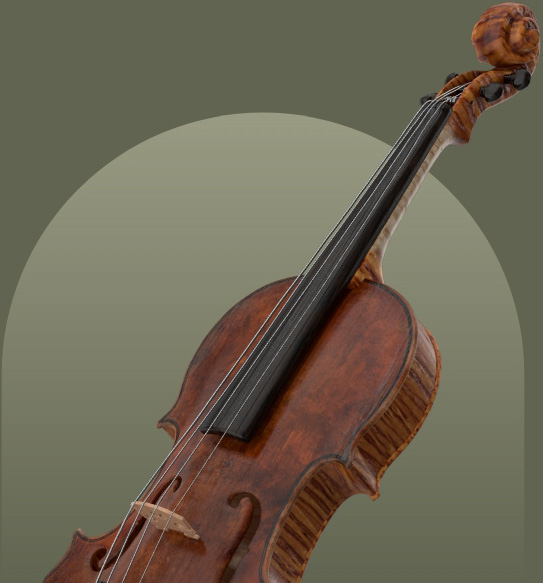
Paris School
Antoine Despont
Paris, worked 1634–1669
Antoine Despont was a 'Maître d'instruments de musique' working in Paris, France, from a workshop at 'The Royal Lute'. His active period is subject to conflicting dates, with sources suggesting activity around 1610 and between 1634-1669. He followed Italian patterns, but the quality of his instruments is debated among historians, with some describing them as poorly made and varnished, while others suggest he made excellent instruments. Authentic instruments by Despont are very rare, and he has been a victim of significant falsification, leading to a diminished reputation due to later, inferior works bearing his name.
Auction price history
Highest auction price
| Type | Details | Auction house | Sold | Price |
|---|---|---|---|---|
| Violin | 1650 c. | — | May 2000 | £1,467 |
No results match those filters.
Maker Overview
Life
Antoine Despont worked in Paris, France, with sources providing conflicting information regarding his active period. Cecie Stainer notes him as a maker in Paris about 1610, while John Dilworth states he worked circa 1634-1669. Willibald Leo Lütgendorff mentions his involvement in the Médard process in 1636. He was known as 'Maître d'instruments de musique' and operated from a workshop at the sign of 'The Royal Lute'. was held in good regard during his own time, but the poor work subsequently attributed to him through falsification has diminished his later reputation. Dilworth notes that has been the victim of much falsification and misrepresentation. George Hart, however, states that Despont is said to have made excellent instruments of various patterns.
Characteristics
- Patterns
- Antoine Despont followed Italian patterns closely.
- Tone
- Cecie Stainer states that Despont failed to obtain a good tone in his instruments.
- Workmanship & Varnish
- Sources contain conflicting information regarding the quality of his instruments. Cecie Stainer describes one known instrument as 'badly made and badly varnished'. John Dilworth references Henley's highly critical description of a coarse instrument of 'slip-shod' workmanship attributed to Despont. Conversely, Willibald Leo Lütgendorff notes that various good instruments by him are said to still exist, although Vidal was unable to locate any. Lütgendorff also mentions that violins superficially made after Italian models, with poor wood and poor varnish, bearing his name, are clearly later forgeries.
- Rarity
- Authentic instruments by Antoine Despont are very rare.
- Antoine Despont demeurant
A Paris
Sur le Pont Notre. Dame
Au Luth Royale
1634John Dilworth
Biographies
The overview above is drawn from the following published accounts. Read them in the original:
John Dilworth+
DESPONT, Antoine Worked circa. 1634-1669 Paris France. ‘Maître d’instruments de musique’ working at the sign of ‘The Royal Lute’. Authentic instruments very rare, and, according to Vannes, he has been the victim of much falsification and misrepresentation. Held in good regard in his own time, the poor work that has since been given his labels has tended to reduce his later reputation. Henley, for example, gives a highly critical description of a coarse instrument of ‘slip-shod’ workmanship. Antoine Despont demeurant / A Paris / Sur le Pont Notre. Dame / Au Luth Royale / 1634
George Hart+
Is said to have made excellent instruments of various patterns.
DIEULAFAIT, ———, 1720,
Viol-maker. A Viol da Gamba of this maker is at the Conservatoire, Paris.
Cecie Stainer+
A maker in Paris about 1610. He followed the Italian patterns closely, but failed to obtain a good tone. His instruments, now very rare, are much sought after, although one that is known is said to be badly made and badly varnished.
Willibald Leo Lütgendorff+
trat 1636 im Processe Médard auch als Sachverständiger auf. Von ihm sollen
noch verschiedene gute Instrumente vorhanden sein, obwohl es selbst Vidal nicht
gelang, eines derselben ausfindig zu machen. Urkundlich wird der Name
D’Hespont geschrieben, Vidal schreibt »Despont« und Fétis »Despons«. Geigen,
die oberflächlich nach italienischem Vorbild gemacht sind, schlechtes Holz
und schlechten Lack haben und seinen Namen tragen, sind offenbar spätere
Fälschungen
Sell your instrument with Amati
Get started by uploading photos of your instrument for our experts to review.
Sell your instrument with Amati
Get started by uploading photos of your instrument for our experts to review.