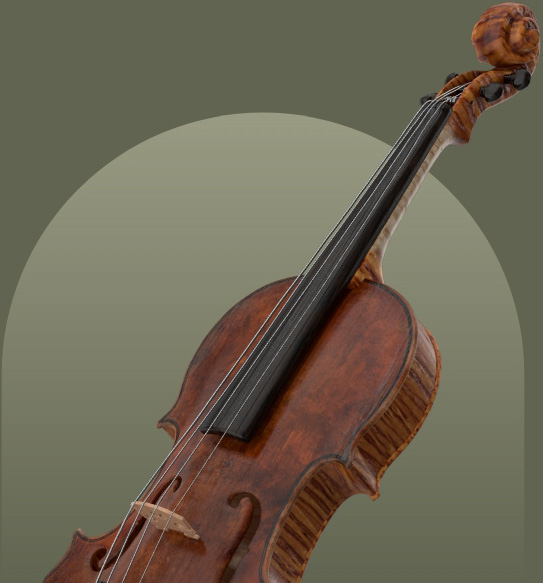
Italy School
Nicolo Gusetto
Nicolo Gusetto is a highly controversial figure in lutherie history, with significant doubt cast upon his actual existence by modern scholars like John Dilworth, who describes him as "presumably fictional." Despite this, earlier dictionaries by Henley, Vannes, and Stainer, along with Lütgendorff, attribute instruments and biographical details to him, suggesting he worked in Florence and Cremona between the early 18th and early 19th centuries. Descriptions of his supposed instruments detail features such as protruding corners, wide purfling, uneven top wood, high ribs, and a peculiar scroll, often noting a brown spirit varnish.
Maker Overview
Life
Nicolo Gusetto is a figure whose historical existence is highly debated among luthier historians. in The Brompton's Book of Violin & Bow Makers, there is "No biographical evidence for his existence has yet been unearthed, nor are any instruments currently traceable." Dilworth explicitly states that Gusetto is "presumably fictional," despite earlier works like those by Henley and Vannes providing "significantly different dates" and "generous descriptions implying the existence of a significant body of work." Sources contain conflicting information about his working locations and dates; labels reproduced in dictionaries suggest he was a native of Florence, working in Cremona from as early as 1701 to as late as 1813, with some later examples possibly finished by followers after his death. Cecie Stainer's A Dictionary of Violin Makers states he "Worked in Florence, 1730. Was later in Cremona." Willibald Leo Lütgendorff's Die Geigen- und Lautenmacher vom Mittelalter bis zur Gegenwart also describes him as "Aus Florenz stammend" (originating from Florence).
Characteristics
- Models
- Descriptions given of both Tyrolean and Stradivari models.
- Corners
- The corners are described as "sehr hervorstehend" (very protruding).
- Purfling
- The purfling is noted as "sehr breite (nicht besonders geschickt gemachte) Einlage" (very wide, not particularly skillfully made).
- Top Wood
- The top is made of "ungleichmässiges Holz mit engen und weiten Jahren" (uneven wood with narrow and wide grain).
- Archings
- The arching is described as "nicht sonderlich schön" (not particularly beautiful).
- Ribs
- The ribs are "hohe Zargen, oben und unten 32 mm hoch" (high ribs, 32 mm high at the top and bottom).
- Linings
- The linings are "schmale Reifchen" (narrow).
- Back Wood
- The back is made of "sehr wenig geflammtes Ahornholz mit vielen Spiegeln" (very little flamed maple with many mirrors).
- Scroll
- The scroll is characterized as an "Eigenartige hübsche Schnecke mit kühn durchlaufendem Mittelpunkt" (peculiar beautiful scroll with a boldly continuous center).
- F-holes
- The F-holes are described as "sehr gewöhnliche F-Löcher" (very ordinary).
- Varnish
- The varnish is a "brauner Spirituslack" (brown spirit varnish).
- Nicolaus Gusetto Fiorentinus
Musicus Instrumentalis
a Cremona Ao 1785John Dilworth - Nicol. Gusetto Fiorentino
Fabbricante di violini, CremonaeJohn Dilworth
Biographies
The overview above is drawn from the following published accounts. Read them in the original:
John Dilworth+
GUSETTO, Nicolò Henley and Vannes give significantly different dates for this supposed maker with generous descriptions implying the existence of a significant body of work. No biographical evidence for his existence has yet been unearthed, nor are any instruments currently traceable. According to the labels reproduced in these dictionaries he was a native of Florence, working in Cremona from as early as 1701 to as late as 1813 (although it is suggested that these later examples were finished by followers after his death). Descriptions given of both Tyrolean and Stradivari models. Presumably fictional. Nicolaus Gusetto Fiorentinus / Musicus Instrumentalis / a Cremona Ao 1785. Nicol. Gusetto Fiorentino / Fabbricante di violini, Cremonae
Cecie Stainer+
Worked in Florence, 1730. Was later in Cremona.
Willibald Leo Lütgendorff+
Aus Florenz stammend. Seine Arbeit erinnert fast mehr an deutsche als an italienische Vorbilder. Die Ecken sehr hervorstehend, sehr breite (nicht besonders geschickt gemachte) Einlage, Decke ungleichmässiges Holz mit engen und weiten Jahren, Wölbung nicht sonderlich schön, hohe Zargen, oben und unten 32 mm hoch, schmale Reifchen, Boden sehr wenig geflammtes Ahornholz mit vielen Spiegeln. Eigenartige hübsche
Schnecke mit kühn durchlaufendem Mittelpunkt. Die Seiten ziemlich flach, aber sehr gewöhnliche F-Löcher, brauner Spirituslack.
Sell your instrument with Amati
Get started by uploading photos of your instrument for our experts to review.
Sell your instrument with Amati
Get started by uploading photos of your instrument for our experts to review.