George (I) Hart
London, 1839–1891
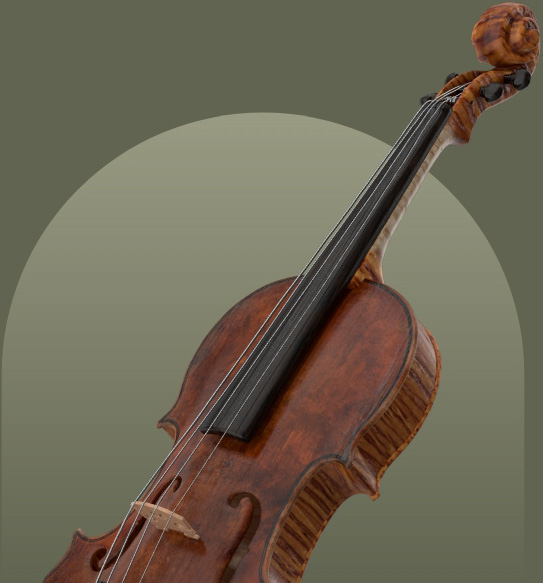
George (I) Hart (1839-1891) was an English connoisseur, expert, and author on violins. He was born in 1839 and died in 1891 in London, UK. The son of John Hart, he studied violin with Prosper Sainton at the Royal Academy of Music, London, and later succeeded his father in business. Although not a maker himself, he was highly regarded as an expert and authored significant works including The Violin its Famous Makers and their Imitators (1875) and The violin and its music (1881). In his later years, he opened a violin making workshop with his son.
Auction Price History
Highest auction price
82 results
| Type | Details | Auction house | Sold | Price |
|---|---|---|---|---|
| Violin | 35.7 cm 1900 c. | — | November 2011 | £1,034 |
| Violin Bow | S/E 60 g. | — | October 2011 | £1,610 |
| Violin | 35.3 cm London, 1929 n°267 | — | September 2011 | £3,120 |
| Violin | 35.8 cm | — | March 2011 | £5,400 |
| Violin Bow | S/E 60.0 g. Firm of | — | December 2010 | £570 |
| Violin Bow | S/E 61 g. | — | October 2010 | £480 |
| Violin Bow | S/E 58 g. | — | October 2009 | £600 |
| Violin Bow | S/E 56 g. | — | June 2009 | £3,120 |
| Violin | 35.4 cm London, 1926 n°269 | — | March 2009 | £2,530 |
| Viola Bow | S/E 80 g. London, 1930 c. | — | October 2008 | £1,625 |
| Cello Bow | G/E 76.5 g. London, 1920 c. made by "W.E. Hill & Sons" | — | March 2008 | £2,000 |
| Violin Bow | S/E 56 g. whalebone lapping | — | March 2008 | £1,729 |
| Cello Bow | S/E 87 g. London, 1900 c. | — | October 2007 | £1,229 |
| Violin | 35.9 cm London | — | July 2007 | £1,121 |
| Violin Bow | S/E 60 g. | — | July 2007 | £1,140 |
| Violin Bow | G/E 55.5 g. London, early 20th C. | — | July 2006 | £840 |
| Violin | 35.9 cm London | — | July 2006 | £1,249 |
| Violin Bow | N/E 60 g. | — | May 2005 | £480 |
| Bass | London, 1921 | — | May 2005 | £3,956 |
| Cello Bow | S/E 80 g. made by "W.E. Hill & Sons" | — | November 2004 | £1,955 |
| Cello Bow | S/E 79.5 g. | — | March 2004 | £2,160 |
| Cello Bow | S/E 69 5 g. | — | March 2004 | £1,613 |
| Cello Bow | S/E 77 g. | — | November 2003 | £1,560 |
| Violin Bow | S/E 55 g. | — | October 2003 | £555 |
| Violin Bow | S/E 56 g. | — | July 2003 | £800 |
| Viola Bow | S/E 65 g. | — | May 2003 | £736 |
| Violin Bow | G/T 58 g. | — | November 2001 | £1,876 |
| Cello Bow | S/E 80 g. | — | March 2001 | £1,898 |
| Violin Bow | G/T 55 g. | — | March 2000 | £1,495 |
| Violin Bow | S/E 57 g. | — | November 1999 | £1,265 |
| Violin | 1894 | — | March 1999 | £2,645 |
| Violin Bow | S/E 65 g. | — | November 1998 | £1,150 |
| Violin Bow | S/T 59 g. | — | September 1998 | £479 |
| Cello Bow | S/E 78 g. | — | June 1998 | £1,035 |
| Violin Bow | S/E 59 g. | — | June 1998 | £1,035 |
| Violin | 1928 | — | May 1998 | £2,046 |
| Violin | 1890 c. | — | June 1997 | £2,300 |
| Violin Bow | S/E 60 g. | — | November 1996 | £976 |
| Violin | 1910 c. | — | November 1996 | £1,150 |
| Violin Bow | S/E 57 g. | — | June 1996 | £460 |
| Violin | 1900 c. | — | February 1996 | £1,668 |
| Violin | 1899 | — | June 1995 | £2,990 |
| Violin Bow | G/E 62 g. | — | March 1995 | £1,495 |
| Cello Bow | S/E 86 g. | — | December 1994 | £736 |
| Violin Bow | S/E 58 g. | — | November 1994 | £299 |
| Violin Bow | S/T 62 g. | — | November 1994 | £1,840 |
| Viola Bow | S/E 68 g. | — | May 1994 | £1,706 |
| Viola | 40.5 cm | — | March 1994 | £1,495 |
| Violin Bow | S/E 58 g. | — | March 1994 | £1,380 |
| Cello | — | May 1993 | £3,483 | |
| Violin Bow | S/E 59 g. | — | April 1993 | £1,265 |
| Violin Bow | S/E 57 g. | — | April 1993 | £805 |
| Violin Bow | S/E 62 g. | — | March 1992 | £1,540 |
| Violin Bow | S/E 60 g. | — | March 1992 | £880 |
| Violin | 1886 | — | January 1992 | £1,210 |
| Cello Bow | S/E 88 g. | — | November 1991 | £495 |
| Violin | 1860 c. | — | November 1991 | £3,520 |
| Cello Bow | S/E 73 g. | — | September 1991 | £484 |
| Cello Bow | S/E 75 g. | — | June 1991 | £880 |
| Viola | 41.3 cm 1887 | — | June 1991 | £1,870 |
| Violin | 1896 | — | June 1991 | £660 |
| Violin | 1890 c. | — | March 1991 | £1,980 |
| Violin | 1926 | — | November 1990 | £3,080 |
| Cello Bow | S/E 76 g. | — | October 1990 | £506 |
| Cello Bow | S/E 76 g. | — | September 1990 | £935 |
| Violin | 1890 c. | — | September 1990 | £682 |
| Cello | 1889 | — | March 1990 | £2,200 |
| Violin | 1929 | — | December 1989 | £825 |
| Violin | 1893 | — | November 1989 | £2,860 |
| Violin | 1899 | — | November 1989 | £2,750 |
| Violin | 1928 | — | May 1988 | £2,090 |
| Violin | 1914 | — | May 1988 | £990 |
| Cello Bow | S/E 80 g. | — | November 1987 | £935 |
| Violin | 1899 | — | September 1987 | £880 |
| Violin | 1895 | — | January 1987 | £2,200 |
| Cello Bow | G/E 79 g. | — | May 1986 | £1,045 |
| Cello Bow | S/E 81 g. | — | March 1986 | £990 |
| Violin | 1906 | — | March 1986 | £302 |
| Violin | 1860 | — | March 1986 | £1,512 |
| Violin | 1890 | — | July 1985 | £1,760 |
| Violin | 1860 | — | March 1983 | £1,430 |
| Violin | 1890 | — | May 1981 | £495 |
No results match those filters.
Maker Overview
Life
George (I) Hart (1839-1891) was born in 1839 and died in 1891 in London, UK. He was the son of John Hart. He studied violin with Prosper Sainton at the Royal Academy of Music, London. Hart became his father's business successor. He was a highly regarded connoisseur and expert, but he was not a maker himself. In his later years, he opened his own violin making workshop together with his son.
Influence and legacy
- Training: He studied violin with Prosper Sainton at the Royal Academy of Music, London.
- Literary Contributions: He authored The Violin its Famous Makers and their Imitators (London, 1875), which became a standard reference work, and The violin and its music (1881).
- Business Continuity: He became the business successor to his father, John Hart.
- Family Workshop: In his final years, he established a violin making workshop with his son.
Biographies
The overview above is drawn from the following published accounts. Read them in the original:
John Dilworth+
HART, George (I) Born 1839, died 1891 London UK. Son of John Hart, below. Studied violin with Prosper Sainton at the Royal Academy of Music, London. Author of The Violin its Famous Makers and their Imitators (London, 1875) which became for many years a standard reference work. Highly regarded connoisseur and expert but not a maker himself.
William Meredith Morris+
Mr. George Hart, of 28 Wardour Street, London, W., was born near Warwick on January 4, 1860. He is the son of the late Mr. George Hart, the expert of European reputation, and author of works on the violin, &c., and whose portrait we are able (through the courtesy of the subject of this sketch) to reproduce in the present work. Mr. Hart was educated at Grove House, Highgate, under the tutorship of the Rev. Mr. Tough. This same Mr. Tough was a pupil of the great Dr. Chalmers, of Disruption fame. Having gone the usual round at Highgate, young Hart was sent to Paris to finish his studies. Afterwards he entered the establishment at Wardour Street, where he has since remained worthily maintaining the supreme dignity of the house.
On June 17, 1882, he was married, at Highgate, to Miss Katherine Jepson de Betham, daughter of John de Betham, by whom he has had two daughters, named Katharine and Irene, and one son named Frank, He employs a large number of experienced English and French workmen, and the firm turns out annually a considerable number of instruments. Some of the instruments, in point of tone, workmanship, and varnish, are chefs d’oeuvre and will worthily replace the old classical instruments when Cremona is no longer known save in the dusty pages of history.
The personal supervision and genius of Mr. Hart is evident in every branch of the work. In nothing is this more evident than in the choice of wood.
The late Charles Reade, I think it was, who said that the giants of the forests whence the maestros had their wood are all gone. I doubt the truth of this very much. Some of the wood obtained to-day (and it is not all, or nearly all, obtained from the old Swiss chalets) is equal to that used two centuries ago. One need only examine and try some of Mr. Hart’s finer fiddles to prove the accuracy of my contention.
In saying this I do not depreciate Hero Worship. What I would like to cry down is the narrow cult which would bind a Nessus robe around modern gods, and forbid freedom save to a handful of Cremonese deities. I know that I am talking heresy, and the school to which Mr. Hart belongs will be the first to give my effusions a cosy little corner in their index expurgatorius. Be it so ! My ???????? is the instruments to which I refer.
Mr. Hart makes a feature of facsimile reproductions of classical gems. I recently examined one of these, which was an exact copy of the famous Joseph Guarneri, known as “The D’Egville Joseph,” owned by Mr. Hart. This copy is so close an imitation that it is almost impossible to distinguish it from the original. The imitation, it is pleasing to note, is not merely superficial, the tone also approximates to that of Guarneri in a degree that is bound to astonish the most exacting ear.
The varnish is remarkably like that on the original, both in colour and in pate. The author pointed this out to Mr. Hart, and endeavoured to probe his ” inner consciousness ” on the varnish question, but our subject could not be ” drawn.” He is remarkably reticent, as he is remarkably unostentatious. This is exemplified by the fact that he has never exhibited any of his instruments, and he has never permitted his portrait to be published, though he has been hard pressed to do so by keen admirers and hungry editors. It is beatific in this highly conventional age to come across a genuinely unostentatious person, for even genius has learnt latterly how to wed itself to cant.
The high-class instruments of Hart’s own make (” Hart and Son’s special make”) are sold — violins at twenty-five guineas, violas at thirty guineas, and ‘cellos at fifty guineas. These are of the finest material procurable. Others, which are of a different class in material, but not in work, are sold at various prices (vide catalogue). “Tone determines the price” is Mr. Hart’s rule.
Messrs. Hart have made a great feature of case work in recent years. Many of the cases they have made are of exceptional beauty, some of satin wood, inlaid and exquisitely painted with various designs ; others are richly carved, with silver mountings. The makers themselves have spent as much as £70 and £80 on a single case. Case work has been elevated by Mr. Hart to a fine art. We heard an eminent connoisseur say the other day that it was about as wise to spend a lot of money on grand cases as it was to spend it on grand coffins. We think, however, that it is quite proper that the aristocracy in fiddle life should dwell in fitting mansions.
It is pretty generally known, I think, that the subject of our sketch is a fiddle expert of the highest prestige. His opportunities, though not quite of the Brobdingnagian proportions of those of Tarisio, have been immense. Nearly all the famous instruments of the world have passed through his hands — needless to mention, the ” Dolphin,” ” Betts,” ” Emperor,” “Paganini,” Stradivaris, &c. ; the ” Leduc,” ” Vieuxtemps,” Guarneris, &c., &c. Mr. Hart’s present collection is a very large one, consisting of several fine specimens of all the chief makers. In addition to his vast knowledge gained from personal connoisseurship, he has reaped the benefit of superior wisdom at the start, when, for several years, he was closely associated with his father in every branch of the work.
Mr. Hart has in preparation a new, enlarged, and revised edition of his father’s well-known work on the violin. He also contemplates issuing a work containing coloured plates of the most famous specimens of Stradivari and Guarneri in existence. He recently published a life of Count Cozio di Salabue by Federico Sacchi, edited by his great friend, A. Towry Piper. In this most interesting work, the editor and publisher have committed the fatal blunder of giving an untranslated appendix (which appendix, by the way, is considerably longer than the body of the work), and thus giving what is to all intents and purposes a sealed book to English readers. For, although seventy or eighty per cent, of those interested in fiddle literature can probably read any work with tolerable ease in French or German, we doubt if ten per cent, can manage to wade through the Italian. We hope Mr. Hart will take the hint and give us another edition of Count Cozio.
Willibald Leo Lütgendorff+
Sohn von J. Th. Hart. Er war ein trefflicher Geiger, Schüler von Sainton und wurde der Geschäftsnachfolger seines Vaters. Er machte selbst zwar keine Instrumente, doch war er einer der besten Kenner und hat zwei werthvolle Bücher geschrieben: »The violin, its famous Makers and their imitators« (London 1875 und 1887) und »The
violin and its music« (1881). Mit seinem Sohne zusammen eröffnete er in seinen letzten Lebensjahren eine eigene Geigenmacherwerkstatt.
Sell your instrument with Amati
Get started by uploading photos of your instrument for our experts to review.
Sell your instrument with Amati
Get started by uploading photos of your instrument for our experts to review.