
Leipzig School
Johann Christian Hoffmann
Leipzig, worked 1710–1750
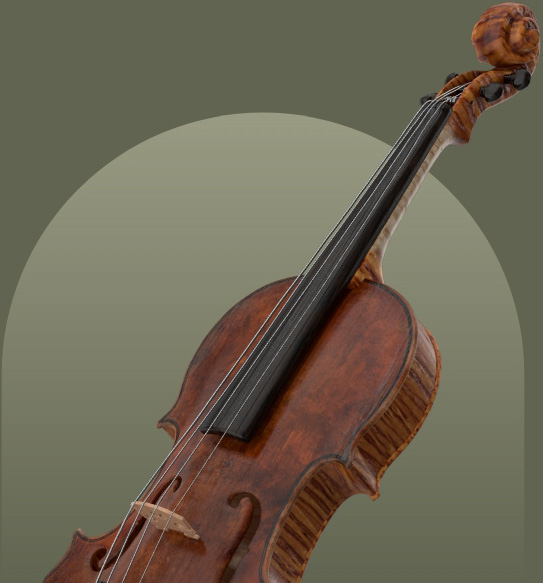
Johann Christian Hoffmann (circa. 1710-1750) was a highly esteemed German luthier from Leipzig, the older son and student of Martin Hoffmann. He served as the Royal Polish and Electoral Saxon Court Instrument and Lute Maker from around 1730. Renowned for his excellent craftsmanship, he produced a wide range of instruments including viols, lutes, violins (often on the Stainer model), violas, double basses, and five-string viola pomposas, some made for his acquaintance J. S. Bach. His instruments were noted for their noble tone, fine golden-brown varnish, and superior construction, particularly his lutes which were celebrated for their playability and proportional beauty.
Maker Overview
Life
Johann Christian Hoffmann (circa. 1710-1750) worked in Leipzig, Germany, and was the older son and student of Martin Hoffmann. He held the esteemed position of "Königl Poln. und Churfürstl. Sächs. Hoff-Instrumenten und Lautenmacher" (Royal Polish and Electoral Saxon Court Instrument and Lute Maker) since approximately 1730. Lütgendorff describes him as one of the best German masters of his time, highly esteemed and famous beyond the borders of his homeland even during his lifetime. He was also well-acquainted with J. S. Bach and was valued as a repairer.
Characteristics
- Instruments Made
- Hoffmann was an important maker of viols and plucked instruments, including lutes, theorbes, and mandolas. He also produced violins and violas, double basses, and several five-string viola pomposas, some of which are said to have been made for J. S. Bach. Other instruments include a guitar-lute and a discant viola da gamba.
- Models
- His violins and violas were often made on the Stainer model.
- Varnish
- He used a fine golden-brown varnish, which Lütgendorff notes reminds one of the Amati school.
- Workmanship
- Cecie Stainer describes him as an "excellent workman." Lütgendorff further elaborates that he understood how to equip his instruments as well as make them well, producing excellent stringed instruments with noble tone and good wood. Regarding his lutes, Baron, as quoted by Lütgendorff, states that Hoffmann achieved "many proportional beauties" and a "good and pure tone."
- Lute Construction
- Baron also observed that Hoffmann surpassed his father in the structure of the lute neck, making them "right for everyone's hand," whereas his father's were often "a little too thick." He was also skilled in dividing and laying out the choirs and strings at their proper distance, making his lutes very easy to handle.
- Johann Christian Hoffmann
Königl Poln. und Churfürstl. Sächs.
Hoff-Instrumenten und Lautenmacher
1730John Dilworth - Joh: Christian Hoffmann
Königl Polnischer u Churfürstl.
Sächs Hof-instrumenten und
Lautenmacher. Leipzig, 1729John Dilworth
Influence and legacy
- Mentorship: He was the older son and student of Martin Hoffmann.
- Family: His younger brother also worked in Leipzig around the same time, making good violins and bass-viols.
- Museum Collections: Examples of his five-string viola pomposas are held in the Leipzig Museum. A viola pomposa, invented by Bach, is also in Paul de Wit's musikhistorisches Museum in Leipzig. The Kgl. Sammlung a. M. (Royal Collection in Berlin) holds two theorbes and a mandola (No. 717, 718, and 733). A guitar-lute is found at Scheurleer, and a discant viola da gamba at de Wit.
- Archival Records: A repair label from him, dated 1741, is found in Th. Körner's lute in the Körnermuseum in Dresden.
Biographies
The overview above is drawn from the following published accounts. Read them in the original:
John Dilworth+
HOFFMANN, Johann Christian Worked circa. 1710-1750 Leipzig Germany. Important maker of viols and plucked instruments. Some violins and violas on Stainer model; also double basses; several five-string viola pomposas (examples in the Leipzig Museum): large violas with additional E string said to have been made for J. S. Bach. Fine golden-brown varnish. Johann Christian Hoffmann / Königl Poln. und Churfürstl. Sächs./ Hoff-Instrumenten und Lautenmacher / 1730 Joh: Christian Hoffmann / Königl Polnischer u Churfürstl. / Sächs Hof-instrumenten und / Lautenmacher. Leipzig, 1729
George Hart+
Son of Martin Hoffman. Lute and Viol maker.
Cecie Stainer+
Son of Martin Hoffmann. A maker of lutes and viols in Leipzig about 1720. He was an excellent workman. His younger brother, who also worked in Leipzig about the same time, made good violins and bass-viols.
Willibald Leo Lütgendorff+
Älterer Sohn und Schüler Martin H.’s. Einer der besten deutschen Meister
seiner Zeit, der seine Instrumente ebenso schon auszustatten als gut zu machen
verstand. Neben trefflichen Lauten hinterliess er auch eine stattliche Anzahl
vorzüglicher Streichinstrumente, edel im Ton und gut im Holz. Sein Lack erinnert
an den der Amatischule. Er war sehr angesehen; seit etwa 1730 sächs.
Hoflautenmacher und schon zu seinen Lebzeiten weit über die Grenzen seines
Vaterlandes hinaus berühmt. Er war mit Bach gut befreundet und machte auch
die von diesem erfundene Viola pomposa (jetzt in Paul de Wits musikhistorischem
Museum in Leipzig). Er war auch als Reparateur geschätzt; ein Reparaturzettel
von ihm aus dem Jahre 1741 findet sich u. A. in Th. Körners Laute
(Körnermuseum in Dresden). Von seinen Instrumenten in öffentlichen Sammlungen
seien noch genannt: zwei Theorben und eine Mandola in Berlin (Kgl.
Sammlung a. M.) No. 717, 718 und 733, eine ebensolche vormals in Dr. Hirth’s Besitz
in München, Guitarre- Laute bei Scheurleer, Diskant-Viola da Gamba bei de
Wit. Vgl. über ihn auch De Wits Ztschr. 1894. No. 5. In Barons Untersuchung
des Instruments der Lauten liest man S. 95, nachdem er erwähnt, dass Martin
Hoffmann bereits gestorben sei: »… doch ist dieser Verlust durch seine beyde
hinterlassnen Herrn Söhne ersetzt worden, davon . . . der ältere aber, Herr
Johann Christian Hoffmann (sich) auf die Lauten-Arbeit applicirt. Dieser künstliche
Meister hat sich hier in diesem genere durch seine nette Arbeit bey der
galanten Welt in solchen Estime gesetzt, so gar, dafs seine Lauten vornemlich
nach Holl- und Engelland und Frankreich öffters sind geführt worden. Was nun
besonders dabey zu mercken, so hat er in Erbauung der Lauten nicht allein
viele proportionirliche Schönheit; sondern auch derselben einen guten und reinen
Thon beygefüget. In der Structur des Lauten-Halses hat er seinen Herrn Vater
übertroffen, weil er ihn Jedermann recht Faust-recht macht, da sie jenem meistentheils
ein wenig gar zu dicke Geräthen waren. Er weiss auch die Chöre und Saiten
nach ihrer gehörigen Distanz so wohl einzutheilen und zu legen, dass sich seine
Lauten sehr leichte handthieren lassen.«
Sell your instrument with Amati
Get started by uploading photos of your instrument for our experts to review.
Sell your instrument with Amati
Get started by uploading photos of your instrument for our experts to review.
Working in Leipzig at the same time
Gottlieb Hoffmann worked 1710–1740
Martin Hoffmann worked 1678–1719
Wilhelm Handenberg worked 1704–1730