Ruhberg School
Joseph Anton Laske
Ruhberg, 1738–1805
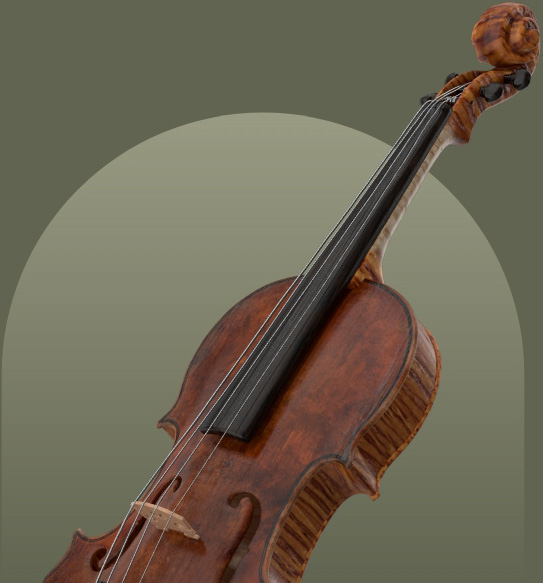
Joseph Anton Laske (1738-1805) was a notable luthier who, after extensive training and work in various European cities, established his workshop in Prague from 1764. A pupil of J. Kolditz and Th. Hulinzky, he was known for his craftsmanship, utilizing Stainer-derived models and producing a wide array of bowed instruments including violins, violoncellos, and violas d'amore. His instruments, which featured an evolving varnish from golden-brown to deep red-brown, were highly esteemed in Bohemia, Saxony, and Poland, with Fétis reportedly stating they were preferred over those of Italian makers. Examples of his work are preserved in collections such as the Braunauer Stiftskirche and the musikhistorisches Museum of Paul de Wit.
Auction price history
Highest auction price
| Type | Details | Auction house | Sold | Price |
|---|---|---|---|---|
| Violin | 1799 | — | November 1986 | £660 |
No results match those filters.
Maker Overview
Life
Joseph Anton Laske (1738-1805) was born on March 18, 1738, in Rumburk and died on November 30, 1805, in Prague. He worked in various European cities including Dresden, Berlin, Vienna, and Brno before establishing himself in Prague from 1764., he worked at the sign 'Au Petit Serpent d'Or' in Prague, Czech Republic. Willibald Leo Lütgendorff specifies his address as Malteserplatz No. 474, 'bei der goldenen Schlange' on the Prague Kleinseite, where he gained citizenship in 1765. He married Elisabeth Vogl in 1766, who passed away in 1768, and subsequently entered a second marriage with Ludmilla Libicky in 1779. His name also appeared as Laschke, Lasche, or Láška. He was held in high esteem in Bohemia and Poland, with Fétis reportedly stating that his instruments were preferred over those of Italian makers.
- Josephus Laske, Lauten und Geigen-
macher in Prag 17..John Dilworth - Josephus Antonius Laske
fecit Pragæ, Anno 1791John Dilworth
Influence and legacy
- Mentorship: He was a pupil of J. Kolditz. Willibald Leo Lütgendorff further specifies his teachers as Jac. Kolditz and Th. Hulinzky.
- Training: He travelled extensively, working under some of the best makers in Dresden, Berlin, Vienna, and Brünn.
- Collections: A violin from 1765 (or possibly 1775) by Laske is located in the choir of the Braunauer Stiftskirche. The musikhistorisches Museum of Paul de Wit in Leipzig possesses a fine pocket violin made by him.
- Reputation: His instruments were particularly well-regarded in Bohemia, Saxony, and Poland.
Biographies
The overview above is drawn from the following published accounts. Read them in the original:
John Dilworth+
LASKE (LASKA), Joseph Anton Born 1738 Rumburk, died 1805, Worked Prague Czech Republic. Pupil of J. Kolditz. Subsequently worked in Dresden, Berlin, Vienna, and Brno. Established in Prague from 1764 at the sign ‘Au Petit Serpent d’Or’. Stainer-derived models with plain materials. Golden-brown varnish up to c.1790; later deep red-brown. Bowed instruments of all forms. Josephus Laske, Lauten und Geigen- / macher in Prag 17.. Josephus Antonius Laske / fecit Pragæ, Anno 1791
Cecie Stainer+
b. March 18, 1738, at Rumburg ; d. Nov. 30, 1805, at Prague. Was a pupil of J. Kolditz, later he travelled a good deal, working under some of the best makers in Dresden, Berlin, Vienna, and Brimn.
In 1764 he settled in Prague, and proved an excellent workman, his instruments, violins, altos, violoncellos, violas d’amore, and mandolines, were especially liked in Bohemia, Saxony, and Poland.
Willibald Leo Lütgendorff+
Schüler von Jac. Kolditz und Th. Hulinzky. Er arbeitete dann in Dresden,
Berlin, Wien und Brünn. Aus der Fremde zurückgekehrt, machte er sich 1764
auf der Prager Kleinseite ansässig , wo er Malteserplatz No. 474 »bei der
goldenen Schlange« wohnte; 1765 erlangte er das Bürgerrecht. Am 6. Mai 1766
heirathete er Elisabeth Vogl († 1768) und ging 1779 eine zweite Ehe mit Ludmilla
Libicky ein. Ausser sehr guten Geigen baute er auch Pochetten, Violen
d’amour, Harfen und Mandolinen. Der Name kommt auch Laschke, Lasche oder
auch Láška geschrieben vor. In Böhmen und Polen stand er in höchstem Ansehen
bei den Geigern, die (nach Fétis) seine Instrumente denen der Italiener
vorgezogen haben sollen. Auf dem Chor der Braunauer Stiftskirche befindet
sich von ihm eine Geige von 1765 (1775?). Das musikhistorische
Museum von Paul de Wit in Leipzig besitzt eine schöne Taschengeige von ihm.
Sell your instrument with Amati
Get started by uploading photos of your instrument for our experts to review.
Sell your instrument with Amati
Get started by uploading photos of your instrument for our experts to review.