
England School
Walter H. Mayson
Cheetwood, London, Manchester, Windermere, 1835–1904
Walter H. Mayson (1835-1904) was a self-taught English violin maker born in Cheetwood, Manchester. Initially pursuing a commercial career and showing early talents in cabinet work and literature, he dedicated himself to violin making from 1875. Despite initial criticism, his "excellent" and "beautifully finished" instruments, often featuring distinctive personal models, high-quality wood, and unique varnishes, gained significant recognition. He was known for his confident workmanship, sometimes incorporating elaborate carved-back decorations depicting landscapes and flowers. Mayson produced over 700 instruments, each individually named and marked, and authored several books, including Violin making. He received medals at Cork (1883), Inventions (1885), and Melbourne (1888), and his instruments were highly regarded for their powerful and broad tone, with some experts predicting they would rival Cremonese masterpieces.

Instruments

Auction price history
Highest auction price
| Type | Details | Sold | Price |
|---|---|---|---|
| Violin | May 2015 | £1 | |
| Violin | May 2015 | £1,000 | |
| Violin | October 2014 | £1 | |
| Viola | August 2013 | £2,000 | |
| Violin | 36.0 cm Manchester, 1880 | November 2011 | £1,579 |
| Violin | 35.8 cm Manchester, 1878 | September 2011 | £1,800 |
| Violin | 35.5 cm Manchester, 1905 (revarnished) | July 2011 | £404 |
| Violin | 36.2 cm Manchester, 1891 n°250 | June 2011 | £1,560 |
| Violin | 35.1 cm 1884 | December 2010 | £600 |
| Violin | 36.0 cm Manchester, 1890 | October 2010 | £2,441 |
| Violin | 35.8 cm 1887 | June 2010 | £1,440 |
| Violin | 35.4 cm Mancunia, 1879 | December 2009 | £1,680 |
| Violin | 35.3 cm Windermere, 1885 | October 2009 | £2,880 |
| Violin | 35.3 cm Windermere, 1885 | March 2009 | £2,457 |
| Violin | 36.2 cm Lonndon,1899 | June 2008 | £960 |
| Violin | 36.2 cm 1894 | March 2008 | £1,680 |
| Violin | 36.1 cm Manchester, 1880 | October 2007 | £1,314 |
| Violin | 36.0 cm Manchester, 1890 #15 "Meranda" | July 2007 | £660 |
| Violin | 36.2 cm 1894 | July 2007 | £960 |
| Violin | 35.0 cm 1885 | February 2007 | £840 |
| Violin | 35.7 cm Manchester, 1881 | February 2007 | £1,320 |
| Violin | 36.2 cm 1880 | July 2006 | £960 |
| Violin | 35.9 cm Manchester, 1883 | February 2006 | £1,440 |
| Violin | Manchester, 1889 "Nautilus" | May 2005 | £2,400 |
| Violin | Windermere, 1888 "Aphrodite" | May 2005 | £2,400 |
| Violin | Manchester, 1877 | May 2005 | £646 |
| Violin | Manchester, 1900 | March 2005 | £420 |
| Violin | Windermeyer, 1887 | January 2005 | £837 |
| Violin | 1884 | November 2004 | £1,150 |
| Violin | Manchester, 1902 | March 2004 | £2,409 |
| Violin | 1894 | November 2003 | £1,880 |
| Violin | 1890 c. | November 2003 | £823 |
| Violin | 1885 | September 2003 | £987 |
| Violin | 1860 c. | September 2003 | £588 |
| Violin | 1895 | March 2003 | £822 |
| Viola | 40.5 cm 1882 | February 2003 | £1,527 |
| Violin | 1884 | March 2002 | £550 |
| Violin | 1894 | February 2002 | £500 |
| Violin | 1883 | November 2000 | £1,840 |
| Violin | 1897 | March 2000 | £920 |
| Violin | 1878 | November 1999 | £923 |
| Violin | 1898 | October 1998 | £460 |
| Violin | 1892 | September 1998 | £690 |
| Violin | 1881 | June 1998 | £402 |
| Violin | 1876 | April 1998 | £460 |
| Violin | 1891 | May 1997 | £1,700 |
| Violin | 1889 | March 1997 | £782 |
| Violin | 1878 | December 1996 | £621 |
| Violin | 1875 | November 1996 | £920 |
| Violin | 1892 | November 1996 | £690 |
| Violin | 1890 | November 1996 | £1,725 |
| Violin | 1884 | November 1996 | £805 |
| Cello | 1895 | May 1996 | £5,750 |
| Violin | 1875 | May 1996 | £690 |
| Violin | 1877 | May 1996 | £483 |
| Violin | 18-- | March 1996 | £2,300 |
| Violin | 1893 | February 1996 | £874 |
| Cello | 1880 | June 1989 | £660 |
| Cello | 1888 | November 1988 | £2,640 |
| Viola | 40.3 cm 1890 | May 1988 | £1,760 |
| Viola | 40.6 cm 1888 | April 1988 | £1,400 |
| Viola | 40.6 cm 1887 | November 1987 | £1,870 |
| Viola | 40.5 cm 1887 | May 1986 | £918 |
| Cello | 1884 | May 1982 | £1,705 |
| Viola | 40.5 cm 1890 | July 1980 | £440 |
Maker Overview
Life
Walter H. Mayson (1835-1904) was born on November 8, 1835, in Cheetwood, Manchester, UK, and passed away in 1904 in Manchester, UK in The Brompton's Book of Violin & Bow Makers. He was the son of Mark Mayson, a landed proprietor from Keswick, and Elizabeth, the eldest daughter of the celebrated painter William Green in British Violin Makers. His maternal grandfather, Green, was a contemporary and intimate of Coleridge, Professor Wilson, and the poet Wordsworth. Mayson received his education from Thomas Walley at Cheetham Hill, Manchester. He married Catherine Mary Ellwood at the age of twenty-eight, but she passed away five months later during childbirth. He later married the widow of Frank King, whose maiden name was Hutchinson, and together they had five children: Sarah Elizabeth, Walter Henry, Stansfield, Florence Gertrude, and Leonora Beatrice.
Characteristics
- Workmanship
- Walter H. Mayson was a self-taught maker, yet his instruments are described by Cecie Stainer in A Dictionary of Violin Makers as "excellent, and the workmanship beautifully finished." William Meredith Morris notes that his work is "the product of a master mind."
- Models
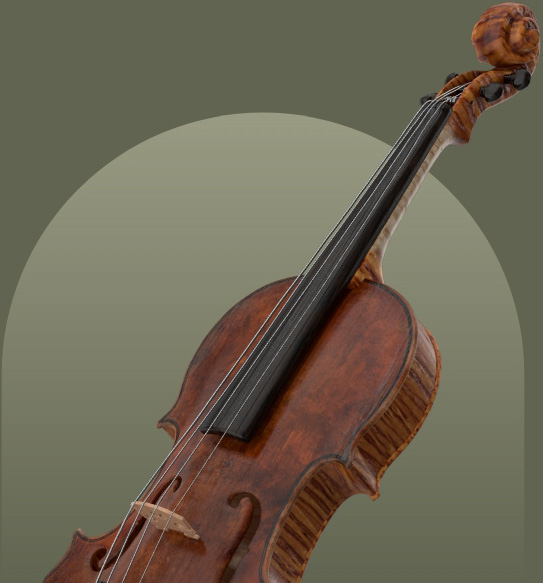
- He made copies of most classical models but also developed a personal, original model. This original model featured distinctive flourishes, such as the wings of the soundholes terminating in a strong inward arc. The arching was full to the edges and broad across the centre, of medium height, and moderately pronounced, slightly more than that of the flat Stradivari models. He was "no copyist of any one,", and while he took Stradivari, Amati, and Guarneri models as starting points, he adapted them for modern players and the tonal qualities of his chosen wood, giving his instruments a unique character.
- Materials
- Mayson used the choicest maple and pine, with the wood in the back and front tables of his high-class instruments being comparable to that used by Stradivari in his finest examples.
- Varnish
- His varnish was his own composition, available in various colours, described as a very elastic oil, perfectly transparent, and free from cracking. In softer shades, it was considered "surpassingly beautiful."
- Decoration
- His work was confident, sometimes featuring additional carved and painted decoration. He became largely engaged in carved-back instruments, depicting rocky landscapes (chiefly from the Lake District), flowers, and other subjects in low relief (only one-fortieth of an inch). Examples include Rosa Bonheur and Moliere (scroll work), Anemone (with a girl dancing over a shell), Portinscale (groups of youths), I will arise (Christ ascending), Old Windsor (Queen Victoria in the centre with drooping flowers), Convolvulus, Thirlmere, Blea Tarn, and Wastdale (viola), all depicting Lake District scenes, as well as Ivy and King Edward VII.
- Dimensions (Original Model)
- The dimensions of his original model were: Length of body – 14 5/15 inches; Width across upper bouts – 6 7/8 inches; Width across middle bouts – 4 1/2 inches; Width across lower bouts – 8 1/2 inches; Depth of rib at lower bouts – 1 1/4 inches; Depth of rib at upper bouts – 1 1/8 inches; Length of sound-holes – 3 inches; Distance between sound-holes at upper turn – 1 5/8 inches.
- Tone
- The tone of his instruments is described as "most remarkable," running very closely in quality to that of the perfect Stradivari and Guarneri instruments, and often excelling them in power and breadth. It was believed that with age and careful use, the tonal qualities of his instruments would develop to surpass many "all-but-deified Strads."
- Distinctive Features
- An originality in edging, a Grecian ogee between the purfling and the rims, was specially mentioned in his award citations for adding to the gracefulness of his work.
- Deus adsit, obsit Mundus
Walter H. Mayson
Manchester
Fecit Anno 1878John Dilworth - Walter H. Mayson
Manchester Fecit
Panope
1903John Dilworth - Walter H. Mayson
Manchester Fecit
“Panope”
1903Brumpton Import
Influence and legacy
- Training: Walter H. Mayson was entirely self-taught in violin making, receiving no formal training.
- Inspiration: While he did not imitate other masters, he took the last Stradivari model, alongside Amati and Guarneri, as a starting point, adapting them to suit the playing style of modern violinists and the tonal characteristics of his carefully selected wood.
- Awards: Walter H. Mayson's violins received medals at Cork (1883), Inventions (1885), and Melbourne (1888). The awards at Cork and Inventions specifically recognized the originality of his edging, a Grecian ogee, for enhancing the gracefulness of his work.
- Literary Contributions: He was the author of several books, including Violin making (London, 1902), Colazzi, The Heir of Dalton, and The Stolen Fiddle. He also contributed valuable articles to the journal The Strad.
- Family Continuity: His sons, Walter Henry and Stansfield, both became professors of the violin and composers.
- Reputation: Many experts expressed the opinion that Mayson's "Halle-Mayson" class fiddles would worthily replace the chefs-d'oeuvre of Cremona when the latter deteriorated. Instruments like Cordelia and Elephanta were considered grand and remarkable specimens, calculated to further enhance his fame.
Biographies
The overview above is drawn from the following published accounts. Read them in the original:
John Dilworth+
MAYSON, Walter H. Born 1835 Cheetwood, Manchester, died 1904 Manchester UK. Self-taught maker. Established initially in Manchester. Moved to London 1899, but returned to Manchester after only a few years. Author of Violin making (London, 1902). Prolific maker credited with well over 800 violins, violas, and cellos. Copies of most classical models. Mature period given to a personal model with distinctive flourishes such as the wings of the soundholes terminating in a strong inward arc. Arching full to the edges and broad across the centre, but of medium height. Very confident work, sometimes with additional carved and painted decoration. Dark red and red-brown varnishes. Instruments given individual names on the labels. Deus adsit, obsit Mundus / Walter H. Mayson / Manchester / Fecit Anno 1878 Walter H. Mayson / Manchester Fecit / Panope / 1903
William Meredith Morris+
He was born at Cheetwood, Manchester, on Nov. 8, 1835. He is a son of Mark Mayson, who was born at Keswick, and of Elizabeth, eldest daughter of the celebrated William Green, painter in oils and water-colours. His father was a landed proprietor in Keswick, and a descendant of an ancient Cumberland family. Green, the maker’s grandfather on his mother’s side, was contemporary and intimate with Coleridge, father and son ; Professor Wilson, who wrote a memoir of him in Blackwood’s Magazine at his death, and the poet Wordsworth, who composed the epitaph now over his grave, in Grasmere Churchyard, close to where the said Wordsworth lies. He was educated by Thomas Walley, at Cheetham Hill, Manchester. He was married when twenty-eight years of age, at Eccles old Church, to Catherine Mary, eldest daughter of John Ellwood, bandmaster, whom he lost in five months in premature childbirth. Later he married the widow of Frank King, of Manchester, by whom he has five children living, viz. : Sarah Elizabeth ; Walter Henry, professor of the violin and composer ; Stansfield, ditto ; Florence Gertrude ; and Leonora Beatrice. His second wife’s maiden name was Hutchinson, and her native place Leicester.
During his childhood Mayson manifested a strong natural bent for the use of fine edge tools. He made at an early period several articles of cabinet work, and also a number of Aeolian harps. He invented an ingenious contrivance for this primitive instrument whereby the usual volume of sound was more than quadrupled. He showed an early leaning also towards literature. He had scarcely attained his majority when he published a volume of dramatic poetry, which evinced a considerable wealth of thought and mastery of verse.
He received no training whatever in the art of violinmaking ; he is absolutely self-taught. His first fiddle was made at “The Polygon,” Lower Broughton, and begun on Oct. 16, 1873. A few more violins were made at the same house. He then removed to a workshop in Burton Arcade, Deansgate, Manchester, where he remained for some time and made many instruments.
At this period Mayson suffered a great deal of persecution from his brother artists (if any one can be called an artist whose soul is stained with prejudice). Certain of the fraternity sought to put his light under a bushel by dubbing his work as “amateurish,” ” unclassical,” &c. The inanity of these epithets soon became apparent when men of note began to recognise in Mayson a genius of the highest order.
He next removed to Croft House, Newby Bridge, at the foot of Windermere, where he remained for six years, and made many fine instruments. From there he went back to Manchester to open a shop at 62 Oxford Street, where he has carried on business for several years. In September 1899, he opened a workshop at 256 High Holborn, London, which he had to close shortly after through lack of patronage. It has ever been the fate of genius to be recognised by only the few during its life day. The blinding light of the sun forbids us to look at the source of day straight in the face.
Mr. Mayson has made up to the present 733 instruments, including violins, violas, and violoncellos. He makes on the classical lines, and also on an original model, but he is no copyist of any one. His wood is of the choicest maple and pine. In both the back and front tables of his high-class instruments it is not a whit inferior to that used by Stradivari in his finest examples. One specimen may be mentioned, viz., ” Cordelia,” in which the wood of the back is artistically finer than anything I have ever seen, classical or post-classical. His varnish is his own composition, of various colours, and of a very elastic oil, perfectly transparent and free from any thought of cracking. In the softer shades it is surpassingly beautiful, defying the power of description as it defies the possibility of imitation.
His original model is shown in the annexed plate. As to its merit there can be but one opinion: it is the conception of a lofty mind — the creation of genius. The sound-holes are the classical conception idealised, and the scroll the quintessence of gracefulness and strength. The entire work is the product of a master mind. Such specimens as ” Cordelia,” ” Eudocia,” ” Halle-Mayson,” “In Memoriam,” ” Isidor,” “Bianca d’Opia,” &c., are poems — poems that sing their own poetry in streams of velvet sounds.
The dimensions of his original model are : —
Length of body … 14 5/15ins,
Width across upper bouts … 6 7/8ins,
Width across middle bouts … 4 1/2ins,
Width across lower bouts … 8 1/2ins,
Depth of rib at lower bouts … 1 1/4ins,
Depth of rib at upper bouts … 1 1/8ins,
Length of sound-holes … 3ins,
Distance between sound-holes at upper turn … 1 5/8ins,
The arching is moderately pronounced — a trifle more than that of the flat Strads.
Mr. Mayson is now mostly engaged in carved-back instruments, choosing rocky landscapes, chiefly from the Lake district, flowers, &c., which are carved most beautifully in low relief.
The illustration facing this page will give some idea of this beautiful work. The relief is only one-fortieth of an inch, and the effect is marvellous in so slight a cutting. The following is a list of Mayson’s carved-back fiddles down to date : — ” Rosa Bonheur,” ” Moliere,” both in scroll work ; “Anemone,” carved in this flower with a girl dancing over a shell in the centre ; ” Portinscale,” a group of youths at the top engaged in plucking and eating grapes, and another group at the lower part holding a carouse on the fermented liquor of the same fruit ; ” I will arise,” Christ ascending among clouds ; ” Lord Cavendish ” and ” Thomas Haviland Burke,” both in scroll work; “Anemone” (No. 2), same as before; ” Old Windsor,” her Majesty Queen Victoria in centre of back, rich drooping flowers down the sides; “Convolvulus,” “Thirlmere,” “Blea Tarn,” “Wastdale” (viola)— scenes from the Lake district ; “Ivy,” and ” King Edward VII.”
The fame of Mayson two hundred years hence will be due more especially to his ordinary back, original model fiddles, however exalted as works of art the above may be. Many experts have expressed the opinion that fiddles of the ” Halle-Mayson ” class will worthily replace the chefs-d’oeuvre of Cremona, when the latter have become food for worms.
A grander fiddle than ” Cordelia,” e.g. has never been made, never can be made. Another remarkable specimen is “Elephanta,” which has only just been completed in London. This, in the opinion of two experts of eminence, is calculated to throw lustre even on Mayson’s fame, though it is difficult to imagine how it can surpass his previous accomplishments. The tone of these instruments is most remarkable. In saying this it is not assumed that it is now equal in mellowness to that of the perfect Strads and Josephs left us, but it is maintained that it runs theirs very closely in quality, and most certainly excels that of most of them in power and breadth. It needs but age and careful use to develop the tonal qualities of these instruments to put many of the all- but-deified Strads entirely out of court.
Mr. Mayson names each instrument as he makes it, and in doing so he has followed a wise plan, seeing that it makes fraud more difficult. There are, in addition, numerous private marks here and there in the instrument. A clue as to the maker’s method of inserting private marks may be found in his interesting book ” The Stolen Fiddle.”
The Mayson violins gained medals at Cork (1883), Inventions (1885), and Melbourne (1888). In the two former awards an originality in edging was specially mentioned as adding to the gracefulness of the work. This was a Grecian ogee between the purfling and the rims. His prices range from £10 to £60.
The label is a different one for each instrument.
Mr. Mayson is the author of ” Colazzi,” “The Heir of Dalton,” “ The Stolen Fiddle,” “Violin-Making,” and other works.
Cecie Stainer+
A maker in Manchester 1875, who began as an amateur, but adopted violin making as a profession. His instruments are excellent, and the workmanship beautifully finished.
Willibald Leo Lütgendorff+
Sohn von Mark Mayson und Elisabeth, der Tochter des berühmten Malers
William Green. Schon als Knabe zeigte er ein besonderes Talent für Kunsttischlerarbeiten,
machte allerlei Aeolsharfen, die er zu verbessern verstand. Er
genoss eine vorzügliche Schulbildung und schrieb schon als Jüngling Gedichte
und Theaterstücke, die zu grossen Hoffnungen berechtigten; doch bestimmte
man ihn zunächst für die kaufmännische Laufbahn. Er trat bei der Firma
J. und N. Phillips & Co. ein, und erst 1873 machte er seine erste Violine. Er
verlegte sich nun mit grösstem Eifer auf das Studium des Geigenmachens und gab
1875 sogar sein Geschäft auf, um sich mit »Herz und Seele« dieser Kunst zu
widmen. Er brachte es bald zu bemerkenswerther Geschicklichkeit, und schon
seine ersten, berufsmässig ausgeführten Geigen (von flachem Modell) hatten
einen ansprechenden, wenn auch nicht grossen Ton. Er machte rasche Fortschritte,
Form und Handarbeit nahmen an Schönheit zu, der Ton vergrösserte
und veredelte sich, und heute gilt er als einer der besten lebenden Geigenmacher
Englands. Wenn er auch nie die Absicht hat, fremde Meister nachzuahmen,
so nahm er doch das letzte Stradivari-Modell neben Amati und Guarneri zum
Ausgangspunkt; er verändert daran, was ihm für die Spielweise der modernen
Geiger nothig erscheint, und richtet sich nach dem Tonwerth des von ihm verarbeiteten,
stets sorgfältig gewählten Holzes. So erhalten seine Violinen, Violen
und Violoncelli ein eigenartiges Gepräge. Er hat bis jetzt an 750 neue Geigen
gemacht, von denen viele auch in der äusseren Ausstattung hervorragen. Er
ist auch wiederholt als Fachschriftsteller aufgetreten und hat u. A. werthvolle
Beiträge für die Zeitschrift: »The Strad« geliefert. Seine Biographie mit Bild etc.
ist in der genannten Zeitschrift von W. M. Groundwater (Juli 1892) und Meredith-Morris (Dec. 1899) veröffentlicht worden.
Sell your instrument with Amati
Get started by uploading photos of your instrument for our experts to review.
Sell your instrument with Amati
Get started by uploading photos of your instrument for our experts to review.
Working in Cheetwood at the same time
A. Pretts worked 1851
Albert E. Warrick worked 1889–1915
Albert Edgar Phillips Hill (Phillips) 1883–1981
Albert Henry Price worked 1850–1890
Alfred Ernest Cooper b. 1857
Alfred James Burling worked 1891–1924
Alfred Vincent 1877–1947
And Co. Andre worked 1885