
Leeds School
John William Owen
Leeds, 1852–1933
John William Owen (1852-1933) was a British violin maker born in Leeds. Initially trained in engineering, ill-health led him to pursue violin-making, a former hobby, as his profession from 1884. He was self-taught, diligently seeking knowledge from expert workmen and visiting ateliers in France. Working from "Amati House" in Leeds, he produced approximately 100-200 new instruments, including violins, violas, 'cellos, and double basses, as well as bows, and performed extensive repairs. He worked on Stradivari, Guarneri, and his own models, utilizing high-quality wood, including prize-winning material from the 1851 Exhibition. Owen developed his own oil varnish, known for its yellow to deep red hues, and his instruments were praised for their breadth and brilliancy of tone. His 'cellos, in particular, received high acclaim from figures like Arthur Broadley. He worked personally, assisted by his daughter Ivy, and was married to Jane E. Beresford with whom he had five children. Owen was also a violinist and teacher, and his biography was published in The Strad in 1900.
Auction price history
Highest auction price
| Type | Details | Sold | Price |
|---|---|---|---|
| Cello | 76.2 cm Leeds, 1914 n°31 | October 2011 | £10,200 |
| Violin | 35.6 cm Leeds, 1924 | June 2011 | £1,680 |
| Violin | 35.7 cm Leeds, 1917 n°93 (restorations) | March 2011 | £5,040 |
| Violin | 36.4 cm 1930 | March 2008 | £2,160 |
| Violin | 35.9 cm 1927 | April 2006 | £1,440 |
| Cello | Leeds, 1916 | March 2004 | £6,600 |
| Violin | 1916 | November 2003 | £2,938 |
| Viola | 40.8 cm 1906 | June 2002 | £2,760 |
| Violin | 1919 | February 2001 | £920 |
| Violin | 1920 | March 2000 | £1,495 |
| Violin | 1900 c. | November 1998 | £2,300 |
| Cello | 1924 | March 1996 | £6,095 |
| Violin | 1898 | March 1995 | £1,840 |
| Violin | 1900 | June 1994 | £1,150 |
| Violin | 1907 | March 1993 | £2,310 |
| Violin | 1919 | July 1992 | £880 |
| Cello | 1900 c. | October 1990 | £3,416 |
| Cello | 1926 | September 1990 | £4,620 |
| Violin | 1898 | September 1990 | £1,320 |
| Cello | 1904 | June 1988 | £4,950 |
| Cello | 1905 | November 1987 | £1,980 |
| Viola | 40.8 cm 1921 | November 1981 | £1,073 |
Maker Overview
Life
John William Owen (1852-1933) was born in Leeds on May 28, 1852. He was the only child of William Owen, a native of Congleton, and Hannah Owen, from Chester, whose maiden name was Rimmer. His mother was noted for her artistic talent as a designer in fancy work. Owen received his early education at an elementary school in his native town, later supplementing it with attendance at evening scientific classes.
Characteristics
- Production
- John William Owen commenced violin-making in 1884. He made approximately one hundred new instruments, including violins, violas, and 'cellos, and also produced a significant number of new backs and bellies, primarily for dealers. He extensively repaired instruments, maintaining a record of 3721 instruments that passed through his hands., he is credited with about 200 violins, violas, cellos, and double basses, as well as many bows.
- Models
- He worked on models by Stradivari, Guarneri, and his own original designs. Willibald Leo Lütgendorff confirms he possessed his own model while also imitating Guarneri and Stradivari.
- Workmanship
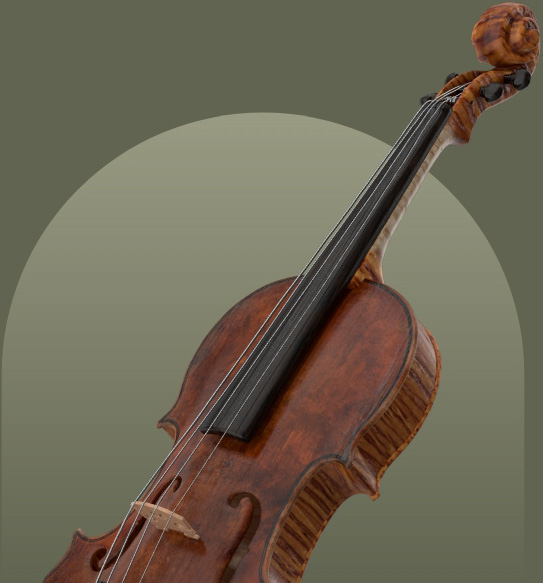
- The interior of his instruments was finished with the same care as the exterior; the blocks and lining were faultless, showing no trace of glue. The mitres of an examined fiddle were geometrically perfect, featuring facets of nearly a millimetre in width, a style considered more in keeping with the outline than the "knife-edge" facet. His scroll work was described as exquisite, masterfully executed, and full of refined strength.
- Materials
- The wood used was excellent, with the curl of the maple being of narrow width, very regular, and running at an angle of thirty degrees to the long axis of the fiddle. The front table of an examined instrument was cut from a slab that had received an award for excellence at the 1851 Exhibition. Owen was fortunate to acquire a considerable quantity of this "Exhibition wood," enabling him to use superior material in his higher-class instruments.
- Varnish
- He used an oil varnish of his own composition, with colors ranging from yellow to deep red. The specimen examined by William Meredith Morris featured a rich red varnish with a golden tinge, noted for its brilliance and transparency. John Dilworth also describes it as a "Good oil varnish of own formula; yellow to deep red."
- Tone
- The chief characteristics of his instruments' tone were breadth and brilliancy, described as a tone that, when mellowed by time, would subdue due to its grandiose timbre.
- Personal Work
- All his work was personal; he employed no workmen but was assisted in the workroom by his daughter, Ivy. Willibald Leo Lütgendorff also states that Owen worked alone.
- Pricing
- His prices were considered more moderate than usual for the time, with violins starting from £12, violas from £15, and 'cellos from £20.
- Labeling
- His labels were not dated, but the date was inscribed on the bare wood after the maker's autograph. John Dilworth notes a "Printed label with name within outline of a soundhole: J. W. Owen Maker Leeds."
Influence and legacy
- Training: John William Owen diligently sought information on violin-making from every available source, acquiring both theoretical and practical knowledge from expert workmen.
- Travel: He traveled to France, visiting one atelier after another, with the specific objective of gaining further instruction and knowledge in instrument making. Willibald Leo Lütgendorff confirms he visited significant violin makers not only in England but also in France, seeking instruction everywhere.
- Reputation: John William Owen was considered one of the most capable violin makers in England. William Meredith Morris published Owen's biography and image in The Strad in February 1900, offering him the highest praise.
- Critical Acclaim: His violoncellos, in particular, garnered significant praise.. Arthur Broadley, Owen's 'cellos "stand alone of their kind in the midst of modern productions," noting their perfect workmanship, big, brilliant tone, good carrying power, and ease of playability.
- Valuation: A 'cello made by Owen for Mr. David Dixon, a 'cellist at the Theatre Royal, Bradford, was recently seen by Mr. Van Biene and valued at £150.
- Family Involvement: His daughter, Ivy, assisted him in his workroom.
Biographies
The overview above is drawn from the following published accounts. Read them in the original:
John Dilworth+
OWEN, John William Born 1852, died 1933 Leeds, Yorkshire UK. Trained engineer and self-taught violin maker active from 1884. Credited with about 200 violins, violas, cellos, and double basses, as well as many bows, made at his home, ‘Amati House’. Good oil varnish of own formula; yellow to deep red. Printed label with name within outline of a soundhole: J. W. Owen Maker Leeds
William Meredith Morris+
He was born in Leeds, May 28, 1852, and works at Amati House, Merrion Place, New Briggate. He is the only child of William and Hannah Owen, the father being a native of Congleton, and the mother of Chester. The latter, whose maiden name was Rimmer, was of a highly artistic turn of mind, and without a rival as a designer in fancy work. Owen received his early education at an elementary school in his native town, but it was discontinued at a stage which made it necessary for him to supplement it by attendance at scientific classes in the evenings later on in life.
He was apprenticed to the engineering trade, but the work proved too heavy for him and his health gave way. He was an invalid for about three years, and was obliged to get constant medical attendance. On recovering, his doctor advised him to give up all business except that of violin-making, which he had taken up as a hobby previous to his illness. He acted upon this advice, and as he gained in strength he took up the art of making and repairing more thoroughly. He spared no effort in gleaning information on the subject from every available source. He acquired both theoretical and practical knowledge from expert workmen, and he went to France, visiting one atelier after another, with the same object in view.
It sometimes happens that good comes out of evil. It is so in this instance : the ill-health of Mr. Owen is responsible for one more splendid addition to the roll of British fiddle-makers. We do not regret his severe illness provided that it has not shortened his thread of life, and that it will not. Phoenix-like, rise again from its own ashes.
He commenced violin-making in 1884, but the business at the start was not continuous. Since his recovery it has been carried on without intermission. Up till now he has made about a hundred new instruments, including violins, violas, and ‘cellos. He has also made a large number of new backs and bellies for instruments belonging chiefly to dealers. He has repaired very extensively. He keeps a record of every instrument that passes through his hands, and the list stands now at 3721. He works on the Stradivari, Guarneri, and his own models. The fiddle submitted to me was original in outline and modelling. Its dimensions are : —
Length of body … 14 1/8ins,Width of upper bouts … 6 5/8ins,Width of lower bouts … 8 1/4ins,Width of middle bouts … 4 3/8ins,Length of inner bouts from corner to corner 3 ins,Length of ff holes … 3 ins,Height of ribs 1 1/4ins, diminishing to … 5 /32ins,
The outline of this fiddle is very pure and graceful, and every individual part is in perfect keeping with the whole. The margins are full and the edges strong, slightly raised, and beautifully rounded. The scroll is an exquisite piece of work; it is thrown with a masterly hand, and is full of refined strength. The interior is finished as carefully as the exterior. The blocks and lining are faultless, showing not the slightest trace of glue. The mitres of the fiddle examined by me were geometrically perfect, having facets of nearly a millimetre in width. This style, it must be conceded, is more in keeping with the outline than the ” knife-edge ” facet. The wood is excellent. The curl of the maple is of narrow width and very regular, and running at an angle of thirty degrees to the long axis of the fiddle. The front table has been cut from a slab that obtained a prize for excellence at the 1851 Exhibition, and it has a ” reed ” of medium width. Mr, Owen was fortunate in being able to purchase a considerable quantity of Exhibition wood, and is thus enabled to put superior material in his higher class instruments. The varnish is an oil one, of the maker’s own composition ; colours : yellow to deep red. In the specimen examined by me it was a rich red with a golden tinge, very brilliant and transparent. The chief characteristics of this maker’s tone are breadth and brilliancy. It is a tone which, when time has mellowed it, will subdue by reason of its grandiose timbre. The awe-inspiring and the grand are required in the realm of sound as in that of form.
Perhaps Mr. Owen claims attention even more on account of his violoncellos than his fiddles. In Mr. Arthur Broadley’s opinion, these stand alone of their kind in the midst of modern productions. He says : ” The latest ‘cello is beyond everything. In workmanship it is perfect ; in tone nothing better could be desired — big, brilliant, and of good carrying power, easy to play on at every part of the instrument.” The ‘cello to which Mr. Broadley refers is of fine proportions, and slightly higher in model than the earlier ones. Mr. Owen made about two years ago a ‘cello for Mr. David Dixon, ‘cellist at the Theatre Royal, Bradford. The instrument was very recently seen by Mr. Van Biene, and said to be worth at present £150.
Mr. Owen makes bows, violins, violas, violoncellos, and double-basses. All the work is personal. He employs no workmen, but he is assisted in the workroom by his daughter. Ivy. His prices are a trifle more moderate than is usual in these days of high figures. They are : —
For violins … from £12 For violas … from £15For ‘cellos … from £20
He was married to Miss Jane E. Beresford in December 1879, in York. Their offspring are : — Leonora Beresford, Jenny Stella, Ivy Rimmer, Adelina, and Paulina. In private life he is amiable and blameless. In his art he is an enthusiast. To the outsider he may seem to be crazy on the subject of violin-making. He has a firm belief in his own powers, and has the conviction that he has found his vocation in the making of stringed instruments. This gentle egotism is not to be condemned ; it is a psychical state in which the mind of every born luthier is bound to find itself. And herein lies the test between the born artist and the artist that is made.
Mr. Owen has played the violin from childhood, and has also studied harmony and composition from an early age.
He gave violin lessons at one time, and enjoyed a considerable reputation as a teacher. He for some time also acted as deputy leader at the local theatres when occasion required.
The label is not dated, but the date is inscribed on the bare wood after the maker’s autograph.
Willibald Leo Lütgendorff+
Ursprünglich für den Beruf eines Ingenieurs bestimmt, zwang ihn Krankheit
seine Studien zu unterbrechen. Als gut geschulter Geiger kam er darauf,
sich aus Liebhaberei mit dem Geigenmachen zu beschäftigen, und was er anfangs
nur zur Zerstreuung hat, ward ihm allmählich so zur Leidenschaft, dass
er jede Gelegenheit benützte, sich weiter auszubilden. Er besuchte nicht nur
in England, sondern auch in Frankreich die bedeutendsten Geigenmacher, überall
Unterweisung suchend. Seine Mühe wurde von Erfolg gekrönt; seit 1884
hat er sich als Geigenmacher in seiner Vaterstadt niedergelassen und gilt jetzt
als einer der Tüchtigsten seines Fachs in England. Meredith-Morris veröffentlichte
in der Zeitschrift »The Strad« (Februar 1900) Owen’s Biographie und
Bildniss etc. und zollt ihm das höchste Lob. O. macht alle Arten von Geigen
und arbeitet allein, da er keinen Gehilfen beschäftigt. Seine Arbeit ist tadellos;
er besitzt ein eigenes Modell, ahmt aber auch Guarneri und Stradivari nach;
auch sein Lack von gelber oder tiefrother Farbe ist recht gut. Seine Firma
heisst »Amati-house«.
Sell your instrument with Amati
Get started by uploading photos of your instrument for our experts to review.
Sell your instrument with Amati
Get started by uploading photos of your instrument for our experts to review.
Pupils
Ivy Rimmer Owen Pupil
Family
Ivy Rimmer Owen Daughter
Working in Leeds at the same time
Albert E. Warrick worked 1889–1915
Alfred Walker Heaps 1854–1906
George Langton Dykes 1884–1922
Handel (Andrew) Pickard worked 1856–1875
Ivy Rimmer Owen b. 1883
Joseph Antony Dearlove worked 1876–1890
Leonard Geoffrey Balmforth 1909–1966