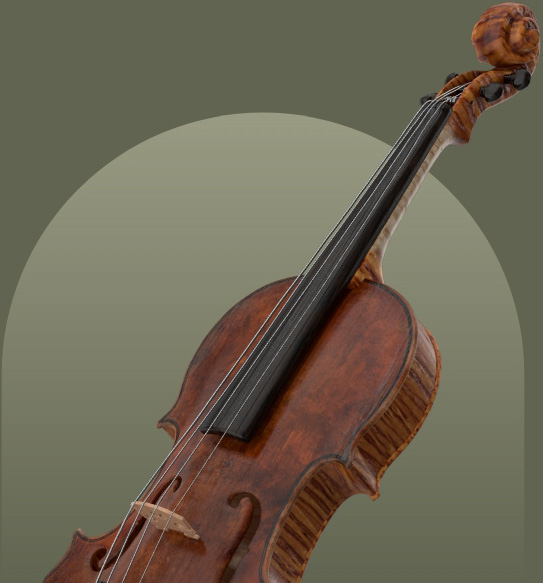
Edward Pemberton
London
Edward Pemberton was a violin maker active in London around 1660-1700, though his historical existence and the authenticity of instruments attributed to him are subjects of considerable debate among historians. While some accounts, like Cecie Stainer's, describe his instruments as having good tone and fine varnish despite their appearance, other authorities such as John Dilworth and William Meredith Morris find no historical or physical evidence to substantiate his presence or the instruments bearing his name. He is notably associated with a debunked legend concerning a violin presented to the Earl of Leicester by Queen Elizabeth.
Maker Overview
Life
Edward Pemberton (c.1660-1700) was a maker in London.'s A Dictionary of Violin Makers, he was active in 1660. However, his historical existence is a subject of debate among experts. John Dilworth's The Brompton's Book of Violin & Bow Makers states that while Pemberton's name is found in most dictionaries, there is no known historical or physical evidence of him. William Meredith Morris, in British Violin Makers, notes that despite some authors writing as though they had seen numerous examples of Pemberton's art, he had diligently inquired for twenty years without finding definite particulars. George Hart, in The Violin, mentions that Pemberton has often been cited as the author of a violin said to have been presented to the Earl of Leicester by Queen Elizabeth, a legend that led to Pemberton's era being placed a century earlier. Morris confirms that the legend of the "Earl of Leicester" violin has been "laid to rest long ago." Willibald Leo Lütgendorff, in Die Geigen- und Lautenmacher vom Mittelalter bis zum Gegenwart, speculates he might have been a son or grandson of a J. Pemberton. Sources contain conflicting information about his exact dates and the authenticity of instruments attributed to him.
Characteristics
- Workmanship
- Cecie Stainer described his instruments as "ugly," but noted their good tone and fine quality varnish.
- Characteristics
- Willibald Leo Lütgendorff also described his work as "roh" (raw), but mentioned the varnish was "nicht schlecht" (not bad) and the tone sometimes "weich und angenehm" (soft and pleasant).
- Innovation
- It was suggested that a Pemberton might have been the maker of the instrument presented to the Earl of Leicester, which, if true, would make him the earliest English maker to produce a four-string violin.
Biographies
The overview above is drawn from the following published accounts. Read them in the original:
John Dilworth+
PEMBERTON, Edward c.1660-1700 London UK. This name is found in most dictionaries, but there is no historical nor physical evidence known of him.
George Hart+
This maker has been often mentioned as the author of a Violin said to have been presented to the Earl of Leicester by Queen Elizabeth, and to suit this legend Pemberton’s era has been put back a century. The date given above will be found in the Violins of this maker.
William Meredith Morris+
I have not seen or heard of anybody living who professes to have seen violins by Pemberton. Some have written as though they had seen numerous examples of Pemberton’s art, but I have inquired diligently for the last twenty years for definite particulars, and none are forthcoming. The legend of the ” Earl of Leicester ” violin has been laid to rest long ago.
Cecie Stainer+
A maker in London in 1660. His instruments are ugly, but the tone is good and the varnish of fine quality. It has been suggested that a Pemberton was the maker of the instrument presented to the Earl of Leicester by Queen Elizabeth, which has “J. 1578 P.” engraved on the tail-pin—supposed to be the initials of the maker and the date of the year (1578) in which it was made—if so, he was the earliest English maker to make the violin of four strings.
Willibald Leo Lütgendorff+
Vielleicht ein Sohn oder Enkel von J. Pemberton. Wenn die Geigen, die seinen
Namen tragen, echt sind, dann war er kein Meister. Seine Arbeit ist roh, der
Lack aber nicht schlecht und auch der Ton manchmal weich und angenehm.
Sell your instrument with Amati
Get started by uploading photos of your instrument for our experts to review.
Sell your instrument with Amati
Get started by uploading photos of your instrument for our experts to review.