Thomas Absam
London, worked 1812–1849
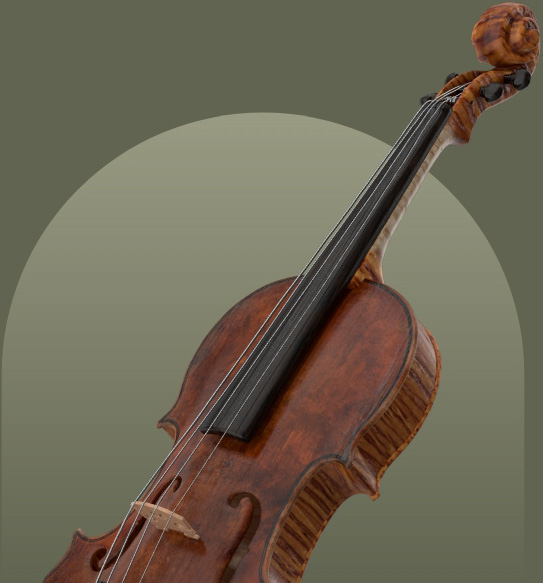
Thomas Absam was an English violin maker active from approximately 1810 to 1849, working in London, Leeds, and primarily Wakefield, Yorkshire. He crafted instruments for dealers like Picard and Dearlove. His work, which included violins based on Stradivari and Amati models and Betts-like cellos, featured a flat model with broad edges, geometrical purfling, and often utilized local woods. His workmanship was considered of average merit, with a hard, lifeless spirit varnish.
Auction Price History
Highest auction price
2 results
| Type | Details | Auction house | Sold | Price |
|---|---|---|---|---|
| Violin | 35.5 cm London, 1812 | — | March 2011 | £1,800 |
| Violin | 1883 | — | May 1981 | £264 |
No results match those filters.
Maker Overview
Life
Thomas Absam (c. 1810-1849),also known as Absom, was an English violin maker active from approximately 1810 to 1849. in The Brompton’s Book of Violin & Bow Makers, he was active in London around 1812 before moving to Leeds in 1813, and subsequently established himself in Wakefield, Yorkshire. He produced instruments for dealers such as Picard (also spelled Pickard) in Leeds, and also for Dearlove. William Meredith Morris, in British Violin Makers, confirms his primary work for Pickard. Cecie Stainer, in A Dictionary of Violin Makers, states he worked in Wakefield, Yorkshire, from 1810-49.
Characteristics
- Model Characteristics
- John Dilworth describes his instruments as having a flat model with very broad edges and extended corners, somewhat reminiscent of the Furber type. The head often displayed crude Betts characteristics.
- Cello Construction
- His cellos were also Betts-like, featuring a full arch, red varnish, and an inlaid purfling monogram on the back in the style of Barak Norman.
- Materials
- Dilworth notes that Absam utilized local woods in his constructions.
- Purfling
- A distinctive feature was the geometrical purfling inlay found on the back of his instruments.
- Instrument Models
- William Meredith Morris observed two violins by Absam, one crafted on the Stradivari model and another on the N. Amati model. Dilworth also mentions these models.
- Workmanship and Varnish
- Meredith Morris assessed his workmanship as being of average merit, and described the varnish as a spirit one, which was hard and lifeless.
- Comparison
- Willibald Leo Lütgendorff, in Die Geigen- und Lautenmacher vom Mittelalter bis zur Gegenwart, remarked that Absam's work was reminiscent of Forster, though not quite his equal.
- Made by T. Absom
Violin Maker
No.27 Greek Street
Soho
London
August 19 1812John Dilworth - Thomas Absam, Leeds, late from London, 1813John Dilworth
- Made by Thomas Absam Wakefield 1828John Dilworth
- Thomas Absam
Wakefield
15 Feb. 1833John Dilworth
Influence and legacy
- Stylistic Influences: Thomas Absam's work shows clear influences from established traditions and makers. John Dilworth notes characteristics akin to the Furber type and crude Betts characteristics in his instrument heads. His cellos also adopted a Betts-like form and incorporated inlaid purfling monograms in the style of Barak Norman.
- Model Replication: William Meredith Morris observed that Absam produced violins based on both the Stradivari and N. Amati models, indicating an adherence to classical Italian forms.
Biographies
The overview above is drawn from the following published accounts. Read them in the original:
John Dilworth+
ABSAM (ABSOM), Thomas Worked circa. 1812-1849 London and Wakefield, Yorkshire UK. Active in London c.1812, moved to Leeds 1813, and finally established in Wakefield. Made instruments for Picard (a dealer in Leeds). Worked also for Dearlove. Flat model with very broad edges and extended corners, somewhat of the Furber type, and head showing crude Betts characteristics. Local woods used. Geometrical purfling inlay on back. Cello also Betts-like: full arch, red varnish, and inlaid purfling monogram on back in the style of Barak Norman. Meredith Morris cites two examples: one of Stradivari model, one of Amati model. Manuscript labels: Made by T. Absom / Violin Maker / No.27 Greek Street / Soho / London / August 19 1812 Thomas Absam, Leeds, late from London, 1813. Made by Thomas Absam Wakefield 1828 Thomas Absam / Wakefield / 15 Feb. 1833
Willibald Leo Lütgendorff+
Er stand in Diensten des Händlers Pickard in Leeds,
versah aber auch einige bessere Geigen mit seinem
eigenen Zettel. In seiner Arbeit erinnert er an Forster,
kommt ihm aber nicht gleich.
William Meredith Morris+
I have seen two instruments of his make, both violins, one on the Stradivari model, and the other on that of N. Amati. The workmanship is of average merit, and the varnish a spirit one, hard and lifeless. He made chiefly for Pickard, a dealer in Leeds.
Label :—
MADE BY THOMAS ABSAM, WAKEFIELD, FEB. 14, 1833
Cecie Stainer+
Worked in Wakefield, Yorkshire, 1810-49. Made violins for a dealer called Pickard, in Leeds.
Label: “Made by Thomas Absam, Wakefield, Feb. 14, 1833.”
Sell your instrument with Amati
Get started by uploading photos of your instrument for our experts to review.
Sell your instrument with Amati
Get started by uploading photos of your instrument for our experts to review.