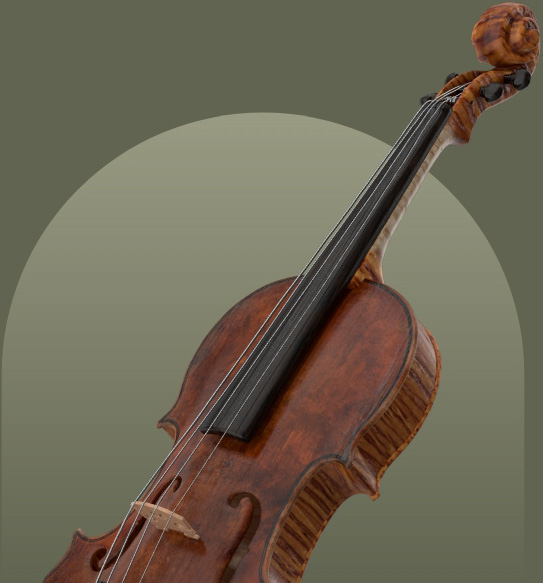
Johann Christian (II) Ficker
Markneukirchen, 1720–1772
Son and pupil of Johann Caspar Ficker, above. Admitted to the violin makers guild 1755. Amongst the better makers of this family, using the ubiquitous Stainer model, but fairly accurately executed. Dull thin varnish of an iron-oxide red or yellow colour. Also made viols. Branded internally: * I * C \u{2026} — John Dilworth
Auction Price History
Highest auction price
10 results
| Type | Details | Auction house | Sold | Price |
|---|---|---|---|---|
| Violin | 35.8 cm Probably by | — | July 2010 | £462 |
| Violin | 35.7 cm | — | November 2008 | £2,395 |
| Violin | 1760 | — | March 2001 | £1,495 |
| Violin | 1750 c. | — | November 2000 | £3,525 |
| Violin | 17-- | — | November 1998 | £1,265 |
| Violin | 1750 c. | — | November 1998 | £1,108 |
| Violin | 1750 c. | — | May 1997 | £1,286 |
| Violin | 1760 | — | March 1997 | £1,380 |
| Violin | 17-- | — | March 1997 | £1,150 |
| Violin | 17-- | — | November 1992 | £539 |
No results match those filters.
Biographies
The overview above is drawn from the following published accounts. Read them in the original:
John Dilworth+
Johann Christian (II) Born 1720, died 1772. Son and pupil of Johann Caspar Ficker, above. Admitted to the violin makers guild 1755. Amongst the better makers of this family, using the ubiquitous Stainer model, but fairly accurately executed. Dull thin varnish of an iron-oxide red or yellow colour. Also made viols. Branded internally: * I * C * F *. Printed label: Johann Christian Ficker / Prove violino in Cremona, 1757 [Hamma]
Cecie Stainer+
Was one of a family of makers in Markneukirchen. Lived 1735-80. Work fairly good ; he used brown varnish. For trade purposes, sometimes dated his labels from Cremona.
Willibald Leo Lütgendorff+
Wahrscheinlich ein Sohn von Joh. Chr. F. I. und dessen Nachfolger. Er
verstand es, dem väterlichen Geschäft einen erhöhten Aufschwung zu geben,
das er schon um 1755, da er Meister wurde, übernommen haben dürfte. Seinem
Geschäftsgeiste entsprach es, in seinen Geigen häufig Mittenwald und Cremona
als Ursprungsorte anzugeben, obwohl seine Arbeit weder tyrolerisch und noch
weniger cremonesisch aussah. Im Innern des Bodens findet man häufig die
Brandmarke »I. C. F.«. Das Holz ist meist gut, der Lack braun. Er gebrauchte
auch die Zettel seines Vaters, oft ohne Jahreszahl.
Sell your instrument with Amati
Get started by uploading photos of your instrument for our experts to review.
Sell your instrument with Amati
Get started by uploading photos of your instrument for our experts to review.