
United Kingdom School
William (I) Forster
Brampton, London, c.1713–1801
William (I) Forster (circa 1713-1801) was an English luthier and spinning-wheel maker from Brampton, Cumbria. The son of John Forster, he pursued violin making as an amateur, improving upon his father's work. His instruments, often described as crude but with a fairly good tone, were typically unpurfled or featured painted purfling, and were finished with spirit varnish. He is recognized for passing on his passion for instrument making to his son, William, who would become the most prominent maker in the distinguished Forster family.
Auction price history
Highest auction price
| Type | Details | Sold | Price |
|---|---|---|---|
| Cello Bow | Silver mounted, octagonal stick faintly stamped Forster, ebony frog plain, silver button | March 2025 | £6,344 |
| Small Violoncello | Lighter colour strip of wood running along the line of the bass bar on the table | March 2025 | £100,040 |
| Violin | October 2014 | £3 |
Maker Overview
Life
William (I) Forster (circa 1713-1801) was born around 1713 and died on March 4, 1801, in Brampton, Cumbria, UK. He was the son of John Forster and, like his father, primarily worked as a spinning-wheel maker, also referred to as a Spinnraddrechsler by Willibald Leo Lütgendorff. He occupied his spare time making and repairing violins and other musical instruments, earning his living as a musician, or Spielmann. His work showed a considerable improvement over that of his father. George Hart states that his labors, though unpretending in violin making, served to impart a taste for the art to his son, William, who became the best maker in the family. His labels read: "William Forster / Violin Maker / in Brampton."
Characteristics
- Workmanship
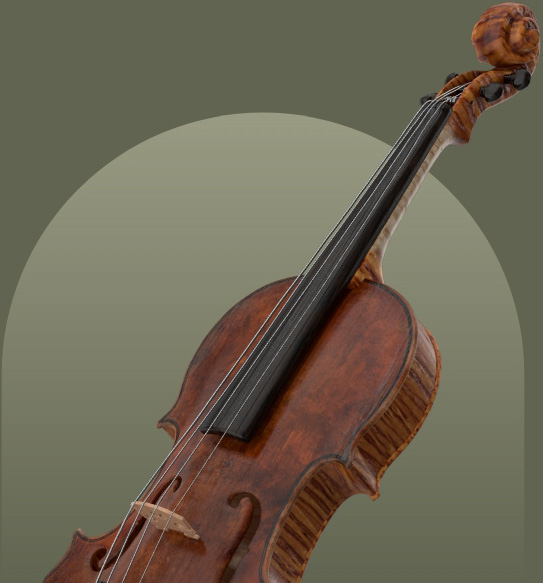
- John Dilworth describes his instruments as being of a "fairly crude Stainer model." William Meredith Morris notes that his workmanship was "a little better than his father's." Willibald Leo Lütgendorff states his violins were "roh gearbeitet" (roughly worked), and Cecie Stainer adds that his work was "not highly finished."
- Construction
- Instruments were made on the "old method" without a separate top block, with the upper ribs set into the side of the extended neck root.
- Purfling
- His instruments were unpurfled. John Dilworth, however, mentions "painted purfling."
- Varnish
- He used a "thin textured dull iron-oxide red varnish" (Dilworth) or "spirit varnish" (Morris, Stainer), which Lütgendorff describes as "schlechten Spirituslack" (poor spirit varnish).
- Tone
- Sources contain conflicting information regarding the tone of his instruments. William Meredith Morris states the tone was "about the same" as his father's, while Willibald Leo Lütgendorff notes they "klingen aber meist gut" (usually sound good). Cecie Stainer describes the tone as "fairly good."
- William Forster
Violin Maker
in BramptonJohn Dilworth
Influence and legacy
- Family Tradition: He was the son of John Forster, who also made and repaired fiddles, continuing a family tradition of instrument making.
- Mentorship: His own efforts in violin making fostered an interest in the craft in his son, William, who would later become the most renowned maker in the Forster family, as documented by George Hart.
- Family Legacy: The Forster family, including William (I), played a significant role in the history of violins in England, commanding attention from both artists and amateurs, a level of recognition perhaps unequalled in the country.
- Successor: His son, William Forster, became the most celebrated maker of the family, building upon the foundation laid by his father.
Biographies
The overview above is drawn from the following published accounts. Read them in the original:
John Dilworth+
FORSTER, William (I) Born circa. 1713, died 1801 Brampton, Cumbria UK. Son of John Forster, above. Also a maker of spinning wheels and amateur luthier. Few instruments known, of fairly crude Stainer model with painted purfling and thin textured dull iron-oxide red varnish. Made on the old method without a separate top block, the upper ribs being set into the side of the extended neck root. William Forster / Violin Maker / in Brampton [BVMA]
George Hart+
The family of the William Forster, Forsters have played Violin Maker, no unimportant part in in Brampton. the history of Violins. The attention they commanded as makers, both, from artists and amateurs, has probably never been equalled in England. Their instruments claimed attention from the moment they left the makers’ hands, their construction being excellent in every way. William Forster was a native of Brampton, in Cumberland, where he followed the trade of a spinning-wheel maker, occupying his spare time in the making and repairing of Violins and musical instruments generally. His labours, as far as they relate to Violinmaking, appear to have been of a very unpretending nature, but they served to impart a taste for the art to his son William, who was the best maker of the family.
William Meredith Morris+
He was the son of John Forster, and, like his father, made and repaired an occasional fiddle. The workmanship is a little better than his father’s, but the tone is about the same. His instruments are unpurfled, and spirit varnished.
Cecie Stainer+
Son of John Forster, b. 1713-14 ; d. March 4, 1801. He was a maker of spinning-wheels in Brampton, Cumberland, merely occupying his spare time in making and repairing instruments; but his work shows a considerable improvement on that of his father. He used spirit varnish, and did not purfle his instruments ; the work altogether is not highly finished, but the tone is fairly good.
Willibald Leo Lütgendorff+
Sohn von John F. Er nennt sich auf seinen Zetteln zwar ausdrücklich
Geigenmacher, war aber gleich seinem Vater eigentlich Spinnraddrechsler und hat auch als Spielmann sein Brod verdient. Seine Geigen sind roh gearbeitet, haben schlechten Spirituslack, klingen aber meist gut.
Sell your instrument with Amati
Get started by uploading photos of your instrument for our experts to review.
Sell your instrument with Amati
Get started by uploading photos of your instrument for our experts to review.
Working in Brampton at the same time
Adam Martin worked 1790–1798
Alexander Kennedy worked 1730–1785
And Co. Astor worked 1800–1820
Arthur (I) Betts worked 1763–1765
Baines worked 1780
Barton worked 1768–1779
Benjamin (II) Banks 1758–1820
Benjamin Hill 1754–1793