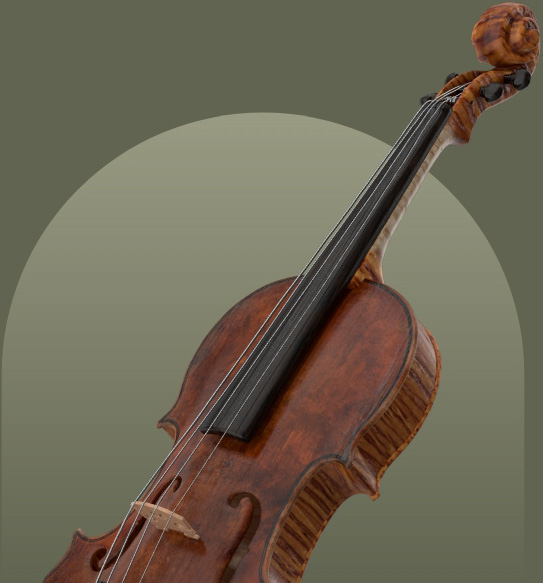
Brescia School
Joan Kerlino
Brescia
Joan Kerlino was a 15th-century instrument maker from Brescia, Italy, known for producing rebecs and viols. He is considered one of the earliest known makers and possibly the founder of the Brescian School. An instrument bearing his label, "Joan Kerlino, ann. 1449", sparked historical debate, with some initially speculating it was the oldest violin and that Kerlino was its inventor, though Fétis later identified it as a converted viol. Kerlino's name is associated with a commission from Isabella d'Este in 1495, and his legacy is complicated by numerous speculative copies and fakes, including those by George Chanot. His precise origin remains a subject of historical debate, with theories ranging from Breton to Flemish, German, Tyrolean, or even Sephardic Jewish.
Maker Overview
Life
Joan Kerlino (15th century) is cited by John Dilworth in The Brompton's Book of Violin & Bow Makers as a maker from Brescia, Italy. An instrument attributed to Kerlino was cited by Laborde, formerly in the Kolliker collection, and discussed by Fétis and others, bearing the label: "Joan Kerlino, ann. 1449". Laborde originally described this instrument as a violin, leading to speculation that it was the oldest violin in existence and that Kerlino was its inventor. Laborde also speculated that the name was Breton, suggesting France as the birthplace of the violin. Fétis, however, interpreted the instrument as a converted viol or possibly a viola da braccio and identified Kerlino as Brescian. Dilworth notes that the name "Kerlino" may be a corruption of the Hebrew "kelim", meaning musical instrument or cantor, potentially indicating a Sephardic Jewish origin, though there is no documentary evidence for this interpretation. Kerlino is often identified as the unnamed Brescian maker with whom Isabella d'Este unsuccessfully negotiated the purchase of a set of instruments in 1495. Further confusion has arisen from speculative copies and straightforward fakes bearing his name, mostly made in France in the 19th century, and notably a number of violas made in London by George Chanot labelled "copy of Joan Kerlino, Brescia 1452". The presumed model for these copies is a Venetian viola da braccio in the Royal College of Music, London, which has a later inked inscription: "Joan Karlino Brescia 1452".
Characteristics
- Instrument Type
- Joan Kerlino is noted as a maker of rebecs and viols of all sorts. George Hart suggests he primarily made instruments of the viol type, doubting he made violin-shaped instruments.
- Specific Instrument Description
- A viol attributed to Kerlino, seen by Fétis and described by Stainer, had its neck changed (possibly by Koliker in 1804) and was mounted with four strings like a violin, but featured a piece of ivory pierced with four holes for string attachment instead of a tail-piece. This instrument was very much arched and produced a soft, muffled tone.
- Fétis's Observation
- Fétis described an instrument as a converted viola, noting its higher arching and ribs compared to later viols, and an ivory hook with four holes in place of an ebony tailpiece.
- Inscriptions
- Instruments attributed to Kerlino bore inscriptions such as "Joann Kerlino, ann. 1449" and a later inked inscription on a viola da braccio in the Royal College of Music reads "Joan Karlino Brescia 1452".
Influence and legacy
- School Affiliation: Cecie Stainer suggests that Joan Kerlino was probably the founder of the Brescian School of instrument making.
- Historical Speculation: Kerlino's name became central to speculation regarding the invention of the violin, with an instrument attributed to him once considered the oldest violin in existence.
- Copies and Fakes: His name has been associated with numerous speculative copies and straightforward fakes, particularly in 19th-century France, and notably by George Chanot in London, who produced violas labelled "copy of Joan Kerlino, Brescia 1452".
- Museum Collections: A viola da braccio of Venetian origin, bearing a later inked inscription "Joan Karlino Brescia 1452", is held in the collection of the Royal College of Music, London.
Biographies
The overview above is drawn from the following published accounts. Read them in the original:
John Dilworth+
KERLINO, Joan 15th century Brescia Italy. One instrument cited by Laborde (ex Kolliker collection) and discussed by Fétis and others, labelled: Joan Kerlino, ann. 1449. Originally described as a violin by Laborde, speculation ensued that it was the oldest violin in existence and that Kerlino was the inventor of the instrument. Laborde also speculated that the name was a Breton one, and that France could claim to be the birthplace of the violin. Fétis interpreted it as in fact a converted viol (or possibly viola da braccio) and identified Kerlino as Brescian. In fact, the name may be a corruption of the Hebrew kelim meaning musical instrument or cantor, and may indicate that the individual was one of the Sephardic Jews expelled from Spain. There is as yet no documentary evidence for this interpretation. However, he is often identified as the unnamed Brescian maker with whom Isabella d’Este unsuccessfully negotiated the purchase of a set of instruments in 1495. Further confusion has followed as a result of a number of speculative copies and straightforward fakes with his name made mostly in France in the 19th century, and in particular a number of violas made in London by George Chanot labelled ‘copy of Joan Kerlino, Brescia 1452’. What was presumably the model for this is a viola da braccio of Venetian origin currently in the collection of the Royal College of Music, London which bears a later inked inscription in the back: ‘Joan Karlino Brescia 1452’.
George Hart+
Maker of Viols. Numerous instruments of the Violin shape have been attributed to this maker, particularly those of quaint appearance, but it is doubtful whether he made any instruments but those of the Viol type.
Cecie Stainer+
A maker of rebecs and viols of all sorts at Brescia about 1449-93. He is one of the earliest makers known, and was probably the founder of the Brescian School. It has been suggested that he originally came from Brittany, as many family names there commence with the syllable ” Ker.”
A viol of his, which had had the neck changed (probably by Koliker, of Paris, in 1804), and was mounted with four strings like a violin —only instead of a tail-piece it had a piece of ivory pierced with four holes to which to attach the strings—was very much arched, and had a soft, muffled tone. Inside was the inscription : “Joann Kerlino, ann. 1449.”
Willibald Leo Lütgendorff+
Seine Lebenszeit und seine Heimath zu bestimmen ist nicht möglich, nur
so viel darf man als sicher betrachten, dass er kein Italiener war. Laborde verlegte
seine Heimath in die Bretagne, Rühlmann tritt mit Nachdruck für seine
deutsche Abstammung ein, und de Piccolellis hält ihn, freilich ein wenig zweifelnd,
für einen Tyroler. Da vom 15.—18. Jahrhundert eine ganze Anzahl flandrischer
Musiker Namens Kerle in Italien nachweisbar ist, möchte ich ihn am ehesten
für einen eingewanderten Flamänder halten. Urkundlich steht über ihn nur
fest, dass die Markgräfin Isabella von Mantua im Juni 1495 einige Violen
von ihm machen liess und gegen Ende des genannten Jahres den Lautenspieler
Angelo Testagrossa beauftragte, nach Brescia zu reisen, um die bestellten
Violen zu prüfen. (Vgl. Bertolotti, S. 17, und Davari, S. 16.) Was man sonst
von ihm erzählt, beruht auf den Mittheilungen von Fétis, der in seinem Buche
über Stradivari (S. 49) erwähnt, dass es nach Laborde um 1450 einen bretagnischen
Geigenmacher Kerlino gegeben habe. Fétis sah ein schon von Laborde erwähntes
Instrument von Kerlino 25 Jahre später im Besitze des Geigenmachers Koliker
und beschreibt es folgendermaassen: »Es war keine gewöhnliche Violine, sondern
eine dazu umgearbeitete Viola. Sie war höher gewölbt und hatte höhere Zargen
als die Violen aus späterer Zeit. An Stelle des Ebenholzsaitenhalters befand
sich ein Haken von Elfenbein mit vier Löchern. Das Instrument trug auf der
Rückseite die Inschrift »Joan. Kerlino 1449« . — Das ganze Instrument war
zweifellos ein Machwerk Kolikers, an dem vielleicht einige Theile alt waren.
Auch die Inschrift wird wohl unecht gewesen sein, wenn es auch zu weit gegangen
ist, wenn man, wie James M. Fleming, den Namen Kerlino für eine aus
einer Umdrehung des Namens Koliker (= Ker-li-ko) entstandene Erfindung des
Pariser Geigenmachers hält, da der urkundliche Nachweis der Existenz Kerlino’s
ja bereits erbracht ist.
Sell your instrument with Amati
Get started by uploading photos of your instrument for our experts to review.
Sell your instrument with Amati
Get started by uploading photos of your instrument for our experts to review.