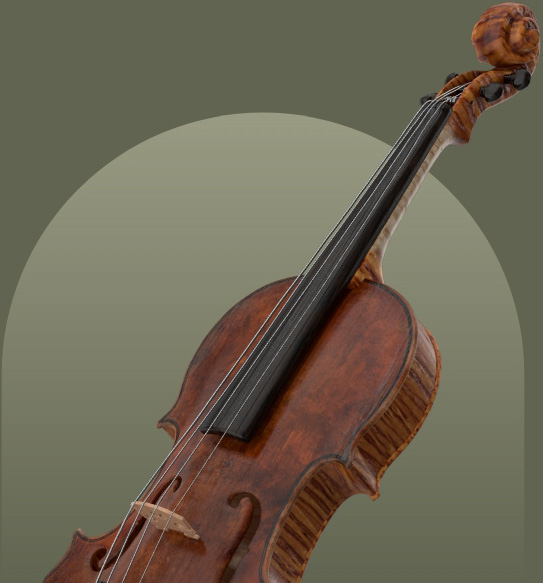
Breslau School
Ernst (III) Liebich
Breslau, 1862–1934
Ernst (III) Liebich (1862-1934) was a notable luthier from Breslau, son and pupil of Ernst Liebich (II). After working in Vienna, he took over his father's business in 1884, establishing a significant workshop that employed several craftsmen. He was appointed luthier to the Duke of Saxe-Coburg and Gotha. Liebich was known for crafting new instruments, often following patterns of masters like Stradivari and Guarneri, and was particularly skilled in repairing old instruments, handling approximately 300 annually. His instruments featured a transparent, reddish-yellow spirit varnish, which he applied personally. He also produced bows, guitars, and lutes. His legacy includes multiple awards, such as silver and gold medals, and a Prussian silver state medal, recognizing his craftsmanship and expertise.
Auction price history
Highest auction price
| Type | Details | Sold | Price |
|---|---|---|---|
| Cello | 75.3 cm 1895 c. [Attributed to] | October 2010 | £2,160 |
| Violin | Breslau, 1876 | May 2005 | £807 |
Maker Overview
Life
Ernst (III) Liebich (1862-1934) was born on May 25, 1862, in Breslau. He died in 1934 in Wrocław (Breslau), Poland. Sources contain conflicting information about his death date, with Cecie Stainer indicating 1896. He was the son and pupil of Ernst Liebich (II). He worked for Bittner and Voigt in Vienna before succeeding to his father's business in Wrocław (Breslau) in 1884. He founded a large business, employing several craftsmen, and was appointed luthier to the Duke of Saxe-Coburg and Gotha.
Characteristics
- Models
- He worked well after the famous masters, often following the Stradivari or Guarneri patterns, and also copied Amati and Maggini patterns. He also used his own model.
- Varnish
- His instruments featured transparent varnish, often of a reddish-yellow color, and he used spirit varnish. He personally varnished all instruments.
- Production
- He was especially skillful in repairing old instruments, with about 300 passing through his hands annually, and made from six to ten new instruments per year.
- Other Instruments
- He also made fine bows, guitars, and lutes.
- Von Ernst Liebich
Breslau. 1886John Dilworth
Influence and legacy
- Training: He was the son and pupil of Ernst Liebich (II).
- Work Experience: As an assistant, he worked for D. Bittner and Voigt in Vienna.
- Awards: He was awarded a silver medal at Breslau in 1881 and a gold medal at Posen in 1895. He also received the Prussian silver state medal and various exhibition medals.
- Royal Appointment: He was appointed instrument maker and luthier to the Duke of Saxe-Coburg and Gotha.
- Professional Status: He was a sworn expert.
Biographies
The overview above is drawn from the following published accounts. Read them in the original:
John Dilworth+
LIEBICH, Ernst (III) Born 1862, Worked Vienna Austria, died 1934 Wroc?aw (Breslau) Poland. Son and pupil of Ernst Liebich (II), above. Worked for Bittner and Voigt in Vienna before succeeding to his father’s business in Wroclaw 1884. Founded a large business, employing several craftsmen. Appointed luthier to the Duke of Saxe-Coburg and Gotha. Silver and gold medals awarded at Breslau and Posen. Stradivari and Guarneri models. Also some copies of Amati and Maggini. Made fine bows, guitars, and lutes. Von Ernst Liebich / Breslau. 1886
Cecie Stainer+
b May 25, 1862, Breslau. learnt from his father; later worked with Bittner in Vienna. In 1884 succeeded to the business at 2, Catherinenstrasse Breslau He was especially skilful in repairing; old instruments, about 300 a year passing through his hands ; but also made from six to ten new instruments per year; they have a fine full tone, and generally follow the Stradivari or Guarneri patterns, with transparent varnish, reddish-yellow colour.
He also copied the Amati and Maggini patterns; he employed five workmen in his shop, but varnished all instruments himself. Was awarded silver medal, Breslau, 1881, and a gold medal, Posen, 1895. Appointed instrument maker to the Duke of Saxe-Coburg and Gotha. He died 1896.
Willibald Leo Lütgendorff+
Sohn und Schüler von Ernst II. L. Als Gehilfe arbeitete er u. A. bei
D. Bittner und Voigt in Wien und übernahm nach dem Tode seines Vaters
das Geschäft in Breslau. Er arbeitet recht gut nach den berühmten Meistern,
verwendet auch ein eigenes Modell und gebraucht Spirituslack. Für seine
Arbeiten erhielt er die preussische silberne Staatsmedaille und verschiedene
Ausstellungsmedaillen. Er ist Hof-Instrumentenmacher des Herzogs von Coburg-
Gotha und beeideter Sachverständiger.
Sell your instrument with Amati
Get started by uploading photos of your instrument for our experts to review.
Sell your instrument with Amati
Get started by uploading photos of your instrument for our experts to review.