
Venice School
Ventura Linarol
Venice, worked 1577–1591
Ventura Linarol (c.1540-1591) was a prominent Italian luthier of the Venetian school, son of Francesco Linarol. He worked primarily in Venice, with a brief period in Padua around 1585. Renowned for his diverse instrument making, his surviving works include sophisticated lira da braccio, violins, and various viols, many of which are preserved in major museums and historical collections.
Maker Overview
Life
Ventura Linarol (c.1540-1591) was the son of Francesco Linarol and an important early maker of the Venetian school. He worked in Venice until around 1584, then appears to have moved to Padua for a short period in 1585, before returning to Venice by 1591 in The Brompton's Book of Violin & Bow Makers and Willibald Leo Lütgendorff in Die Geigen- und Lautenmacher vom Mittelalter bis zur Gegenwart. Lütgendorff identifies him as the most significant maker within his family.
Characteristics
- Instrument Types
- Ventura Linarol was known for making viols, lutes, bass viols, violins, and lira da braccio in The Violin and Cecie Stainer in A Dictionary of Violin Makers.
- Lira da Braccio
- A particularly large and sophisticated lira da braccio, dated 1563 and preserved in a fine state at the National Music Museum in Dakota, USA, features characteristic incurving lower bouts and ribs and a back carved from a solid block of maple, though it now has a modern head. Several smaller lira da braccios are attributed to him which have been converted into violas.
- Violin Characteristics
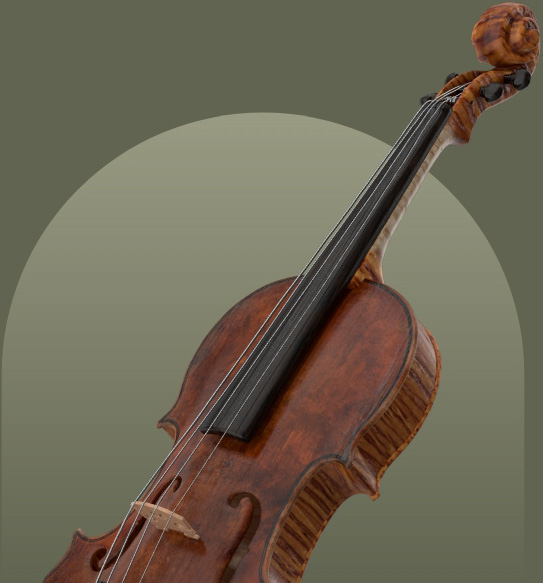
- The Kunsthistorisches Museum in Vienna houses a fine early violin dated 1581, which retains its original form, featuring a mahogany back, double purfling, and a head with small 'spurs' integrated into the pegbox profile, along with characteristic F-holes.
- Tenor-Viols
- Two tenor-viols exhibited in London in 1872, likely made by Linarol, originally accommodated six or seven strings, indicated by the broad space between the sound-holes, but were later fitted with scrolls for four pegs.
- Ventura di Francesco
Linarolo In Venetia 1577 1585John Dilworth - Ventura di Franco
Linarol in Padoa, f. Ventura di Francesco
Linaroli fece in Venetia, a. 1591John Dilworth
Influence and legacy
- Museum Holdings: Instruments by Ventura Linarol are preserved in significant collections, including a lira da braccio in the National Music Museum, Dakota, USA, and an early violin in the Kunsthistorisches Museum in Vienna.
- Historical Ownership: Archduke Franz Ferdinand of Austria-Este owned a violin dated 1581 by Linarol, and Paul de Wit possessed a magnificent lira da gamba from 1577.
- Exhibitions: A tenor-viol and a discant gamba were displayed at the Vienna Music Exhibition, and two tenor-viols were exhibited in London in 1872.
- Family Significance: Willibald Leo Lütgendorff identifies Ventura Linarol as the most significant maker within his family.
Biographies
The overview above is drawn from the following published accounts. Read them in the original:
John Dilworth+
LINAROL, Ventura b. c.1540, Worked 1577-1591 Venice Italy. Son of Francesco Linarol, above. Important early maker of the Venetian school, although at least one reported label places him in Padua c.1585. Surviving instruments include a bass viol, violin, and lira da braccio. The lira da braccio in the National Music Museum, Dakota, USA is a very large and sophisticated instrument with characteristic incurving lower bouts, the ribs and back carved from a solid block of maple. Dated 1563 it is in a fine state of preservation, although with a modern head. Several smaller lira da braccios are attributed to him which have been converted into violas. The Kunsthistorisches Museum in Vienna has a fine early violin of original form dated 1581: the back of mahogany, double purfled, the head with small ‘spurs’ integrated into the profile of the pegbox. Ventura di Francesco / Linarolo In Venetia 1577 1585 Ventura di Franco / Linarol in Padoa, f. Ventura di Francesco / Linaroli fece in Venetia, a. 1591
George Hart+
A maker of Viols.
Cecie Stainer+
Son of Francesco Linarolo. A maker of lutes and viols in Venice, worked there till 1581.
Was then in Padua: label, “Ventura de Francco Linarol in Padova, f. 1585 ” ;
but probably returned to Venice shortly after, for there is a label ” fece in Venetia, a. 1591.”
Two tenor-viols exhibited in London in 1872 were probably made by him ; they both had a scroll with four pegs substituted for the ancient head with six or seven pegs; the great breadth left between the sound-holes shows that the instruments were originally made for six or seven strings.
Willibald Leo Lütgendorff+
Francesco’s Sohn; abeitete bis gegen 1584 in Venedig, scheint dann 1585
für kürzere Zeit nach Padua übergesiedelt zu sein, kehrte aber bald wieder nach
Venedig zurück. Er ist der Bedeutendste aus seiner Familie und nannte sich
nach seinem Vater »Ventura di Francesco Linarolo«. Eine aus dem Jahre 1581
datirte Violine mit einer in den ersten Formen gehaltenen Schnecke und den
charakteristischen F-Löchern besitzt Erzherzog Franz Ferd. v. Österreich-Este
eine herrliche Lira da Gamba vom Jahre 1577 Paul de Wit, eine Tenorgeige
und Discantgamba sah man auf der Wiener Mus.-Ausst. (mit verschieden lautenden
Zettelinschriften). Wenn Valdrighi eine Viola da Gamba von ihm mit der
Jahreszahl 1514 gesehen haben will, so scheint dies auf einem Lesefehler zu beruhen,
Sell your instrument with Amati
Get started by uploading photos of your instrument for our experts to review.
Sell your instrument with Amati
Get started by uploading photos of your instrument for our experts to review.
Family
Giovanni Linarol Son
Working in Venice at the same time
Giovanni Linarol worked 1590–1625