Nuremberg School
Leonard Maussiell
Nuremberg, b. 1685
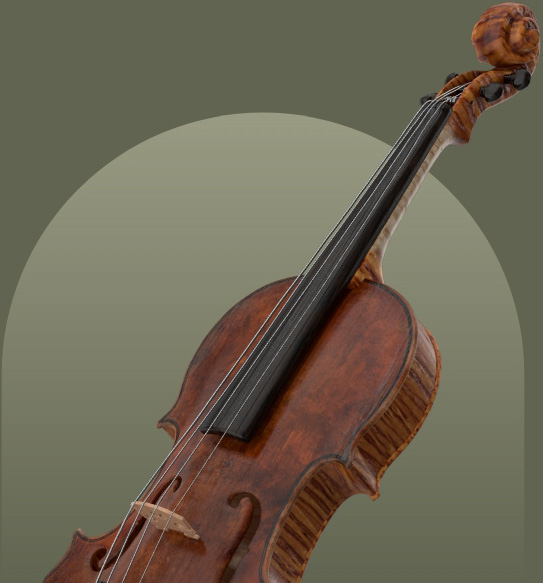
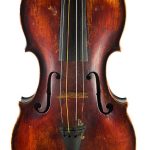
Leonard Maussiell (1685-after 1765) was a distinguished German instrument maker based in Nuremberg, active from approximately 1707 to at least 1757. He is noted for his very fine workmanship, often following the Stainer pattern with influences from Tecchler, and for his distinctive scrolls, which sometimes featured carved lion's or women's heads. Maussiell utilized a range of varnishes and was also highly regarded as a zither maker. His instruments are preserved in significant collections, including the Germanisches Museum in Nuremberg, and he is known for his specific labeling and branding practices.
Auction price history
Highest auction price
7 results
| Type | Details | Auction house | Sold | Price |
|---|---|---|---|---|
| Violin | Labelled Leonhard Maussiell, Lautten-und Geigenmacher in Nürnberg, 1726, branded to the inside L M Lot 142 | Tarisio | October 2024 | £4,932est. € 8.000-12.000 |
| Violin | 35.4 cm Nurnberger, 1716 | — | December 2007 | £4,255 |
| Violin | Nurnberg, 1745 c. | — | September 2005 | £1,680 |
| Violin | Nüremberger, 1740 c. | — | February 2005 | £7,200 |
| Violin | 1740 | — | July 2003 | £4,800 |
| Violin | 1741 | — | November 1991 | £1,650 |
| Violin | 1711 | — | May 1981 | £1,430 |
No results match those filters.
Maker Overview
Life
Leonard Maussiell (1685-after 1765) was a distinguished instrument maker who was active in Nuremberg, Germany.'s authoritative work, The Brompton's Book of Violin & Bow Makers, Maussiell was born in 1685 and his death occurred sometime after 1765. His earliest documented work dates back to approximately 1707. Cecie Stainer's A Dictionary of Violin Makers further specifies his period of activity in Nuremberg as being between 1720 and 1750. Willibald Leo Lütgendorff, in his comprehensive volume Die Geigen- und Lautenmacher vom Mittelalter bis zur Gegenwart, suggests that Maussiell likely immigrated from Bohemia. Lütgendorff also notes that the latest known instrument crafted by Maussiell is a violin from 1757, which is currently preserved in the Benedictine Abbey of St. Margareth near Prague.
Characteristics
- Workmanship
- Leonard Maussiell's instruments are consistently characterized by their very fine and excellent workmanship, often exhibiting a meticulously finished quality.
- Model Influences
- He frequently adopted the Stainer pattern for his instruments, with his overall model also showing resemblances to the work of Tecchler.
- Arching and Edges
- A distinctive feature of his instruments is a deep edge flute that transitions into a medium-high arch. Some pieces also incorporate raised edges.
- Scroll Design
- Maussiell typically crafted tightly wound scrolls; however, he was also known to replace these with intricately carved decorative elements such as lion's heads or women's heads.
- Varnish Characteristics
- He utilized a variety of varnishes, including shades of yellow, brown, thin yellow, thick lustrous golden-yellow, and brown-red.
- Instrument Specialization
- Beyond violins, Maussiell was also highly regarded for his skill as a zither maker.
- Leonhardus Maussiell
me fecit Nurmberg. An 1736John Dilworth - Leonhard Maussiell, Lautten
und Geigenmacher im Nürm-
berg, 1743John Dilworth
Influence and legacy
- Stylistic Influences: Leonard Maussiell's instrument-making was significantly shaped by the established patterns and stylistic approaches of both Stainer and Tecchler.
- Geographical Origin: Willibald Leo Lütgendorff proposes that Maussiell likely immigrated to Nuremberg from Bohemia.
- Museum Collections: The Germanisches Museum in Nuremberg proudly preserves a Taschengeige (pocket violin) and a Viola da Gamba dated 1743, both crafted by Maussiell.
- Historical Collections: A Chorzither from 1735, made by Maussiell, was historically part of the esteemed Hammer collection located in Stockholm.
- Significant Surviving Works: The latest known instrument attributed to Maussiell is a violin from 1757, which is currently housed in the Benedictine Abbey of St. Margareth near Prague.
Biographies
The overview above is drawn from the following published accounts. Read them in the original:
John Dilworth+
MAUSSIELL, Leonard Born 1685, d. after 1765 Nuremberg Germany. Earliest work from c.1707. Very fine workmanship on a model recalling both Stainer and Tecchler. Deep edge flute to medium high arch. Tightly wound scroll, sometimes replaced by carved lion’s heads. Thick lustrous golden-yellow varnish. Some branded: ‘L.M.’ with imperial eagle. Leonhardus Maussiell / me fecit Nurmberg. An 1736. Leonhard Maussiell, Lautten / und Geigenmacher im Nürm- / berg, 1743
George Hart+
Stainer pattern, excellent workmanship. Thin yellow varnish, raised edges. The style and work is not unlike that of Tecchler.
Cecie Stainer+
A maker in Nuremberg, 1720-50. He copied the Stainer pattern, and made good instruments, carefully finished, with yellow or brown varnish.
Willibald Leo Lütgendorff+
Vermuthlich aus Böhmen eingewandert. Er folgte Stainer und Tecchler,
arbeitete recht gut und wandte braunrothen Lack an. Statt der Schnecke
schnitzte er gerne Frauen- und Löwenköpfchen etc. und war auch als Zithermacher
geschätzt. Eine Taschengeige im Germanischen Museum in Nürnberg
enthält den Zettel:
Es ist dies die früheste Arbeit, die mir von ihm vorgekommen ist. Die späteste ist eine Geige aus dem Jahre 1757, welche sich im Besitze des Benedictiner- Stifts St. Margareth bei Prag befindet. Eine Viola da Gamba (1743) von ihm ist im Germanischen Museum; eine Chorzither (1735) war in der Sammlung
Hammer in Stockholm. Er schreibt den Namen Nürnberg gerne mit m (Nürmberg)
und verwendet deutsche und lateinische Zettel, sowie manchmal auch die Brandmarke
L. M. Dass er unter dem verballhornten Namen »Mansielli« sogar schon zum Italiener
gemacht wurde, sei nur Spasses halber erwähnt.
Sell your instrument with Amati
Get started by uploading photos of your instrument for our experts to review.
Sell your instrument with Amati
Get started by uploading photos of your instrument for our experts to review.