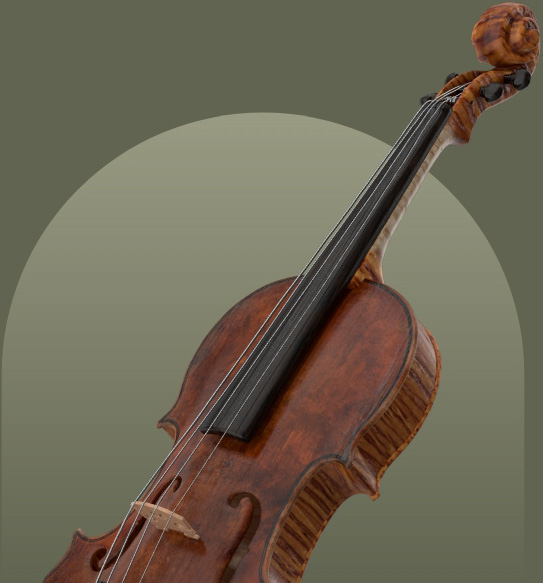
Monkwearmouth School
Anthony John Moore
Monkwearmouth, b. 1852
Anthony John Moore (1852-1905) was a British artist and self-taught amateur violin maker from Monkwearmouth, who worked in Sunderland, UK, from approximately 1886 to 1905. Initially a painter, he became enamoured with violin making after encountering the work of Hart, producing his first instrument in 1886. Moore dedicated himself to experimenting with the geometrical construction of violins, aiming for excellence in the modern school. His instruments, such as one examined by William Meredith Morris, were noted for their beautiful craftsmanship, modified Joseph or Stradivari-derived models, and a clear, responsive tone, often finished with his own golden yellow oil varnish.
Auction price history
Highest auction price
| Type | Details | Sold | Price |
|---|---|---|---|
| Violin | 1906 | May 1987 | £110 |
Maker Overview
Life
Anthony John Moore (1852-1905) was the eldest son of the late Captain Thomas Moore, who was well known in the Indian and China trades. He received his education at the academy of the Rev. William Parks in Ravensworth Terrace, Monkwearmouth, and also at the schools of Mr. James Cameron in North Bridge Street and Mr. John Cameron in Blandford Street, all in the same locality. By profession, he was an artist, specializing as a painter of the sea and tidal rivers.British Violin Makers, approximately fifteen years before the book's publication (around 1904-1905), he encountered the work of Hart on the violin, which deeply impressed him and led to his fascination with the instrument. He made his first violin in 1886 and subsequently produced a considerable number. John Dilworth, in The Brompton's Book of Violin & Bow Makers, notes that Moore was born in 1852 in Monkwearmouth and worked circa 1886-1905 in Sunderland, UK. He dedicated much of his leisure time to experimenting and meticulously working out the geometrical construction of the instrument, aiming to produce "fiddles that will be representative of all that is excellent in the modern school."
Characteristics
- Construction
- The one instrument examined by William Meredith Morris was beautifully made, exhibiting a large and telling tone.
- Model
- Its outline and arching were based on the Joseph model, slightly modified. John Dilworth also notes a Stradivari derived model.
- Materials
- The wood of the front table was described as an "extraordinary piece of timber," appearing fresh despite its "great age."
- Scroll
- The scroll was nicely carved, though it possessed "more of the feminine characteristics than is perhaps allowable in copies of Joseph."
- Details
- The button was "prim and prop," the margin of medium width, and the edges gently rounded. The sound-holes were characterized as "piquant and expressive."
- Varnish
- An oil varnish of Mr. Moore's own composition, with a golden yellow colour.
- Tone
- The tone of the examined instrument was "perfectly clear and responsive in all the positions," with harmonics "as crisp as the jingle of frozen rush blown by the breath of winter."
- Label
- An example label reads: "Anthony John Moore / Sunderland. Fecit anno 1899 / Table made of wood 200 years old./ No. 11."
- Anthony John Moore / Sunderland. Fecit anno 1899 / Table made of wood 200 years old./ No. 11John Dilworth
Influence and legacy
- Training: Anthony John Moore was a self-taught amateur violin maker.
- Inspiration: His interest in violin making was sparked by encountering the work of Hart on the violin, which deeply impressed him with its many illustrations.
Biographies
The overview above is drawn from the following published accounts. Read them in the original:
John Dilworth+
MOORE, Anthony John Born 1852 Monkwearmouth, Worked circa. 1886-1905 Sunderland UK. Painter and self-taught amateur violin maker. Stradivari derived model with golden yellow varnish. Anthony John Moore / Sunderland. Fecit anno 1899 / Table made of wood 200 years old./ No. 11
William Meredith Morris+
He is the eldest son of the late Captain Thomas Moore, at one time well known in the Indian and China trades. He was educated at the academy of the Rev. William Parks, in Ravensworth Terrace, Monkwearmouth, and also at the schools of Mr. James Cameron, in North Bridge Street, and of Mr. John Cameron, in Blandford Street, of the same place. He is an artist by profession — a painter of the sea and tidal rivers. About fifteen years ago he first saw the work of Hart on the violin, and he was so much impressed with its many illustrations that he became enamoured with the king of instruments. In the year 1886 he made his first violin, and since then he has made a considerable number. He spends most of his leisure time in experimenting and in working out the geometrical construction of the instrument, with the view of by-and-by turning out fiddles that will be representative of all that is excellent in the modern school.
The one instrument of his make which I examined was beautifully made, and had a large and telling tone. Its outline and arching were on the Joseph model slightly modified. The wood of the front table was an extraordinary piece of timber, and seemed fresh, considering its great age. The scroll was nicely carved, but possessed more of the feminine characteristics than is perhaps allowable in copies of Joseph. The button was prim and prop. The margin was of medium width, and the edges gently rounded. The sound-holes were piquant and expressive. The varnish was an oil one of Mr. Moore’s own composition ; colour : golden yellow. I was particularly pleased with the tone of this instrument. It was perfectly clear and responsive in all the positions, and the harmonics were as crisp as the jingle of frozen rush blown by the breath of winter. I have no knowledge whether Mr. Moore is always equally successful in producing a good tone.
Sell your instrument with Amati
Get started by uploading photos of your instrument for our experts to review.
Sell your instrument with Amati
Get started by uploading photos of your instrument for our experts to review.