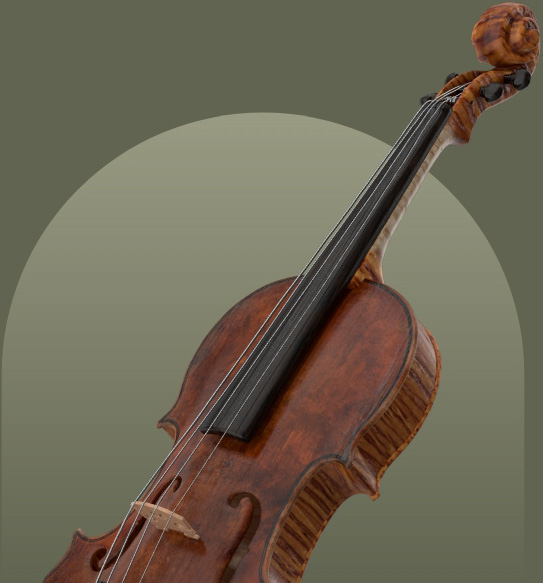
James Morgan
1839–1906
James Morgan (1839-1906) was a Scottish cabinet-maker and violin maker born in Kincardine-on-Forth. Apprenticed at fourteen, he initially produced several violins and a violoncello. He later moved to Edinburgh, where his instruments gained recognition for their quality. After a 28-year hiatus due to a religious crisis, he resumed violin-making, crafting instruments on the Stradivari model using choice materials and Whitelaw's varnish, known for their large and mellow tone. He is credited with approximately 20 instruments and died in Edinburgh in 1906.
Maker Overview
Life
James Morgan (1839-1906) was born in Kincardine-on-Forth in 1839. At the age of fourteen, he was apprenticed to a cabinet-maker who was also an occasional maker of various wooden musical instruments, including violins, as detailed by William Meredith Morris in British Violin Makers. During his apprenticeship, Morgan crafted approximately a dozen violins and one violoncello. After leaving Kincardine, he established himself in Edinburgh, where his violins, noted for their excellent workmanship and tone, quickly garnered the attention of local musicians. experienced a religious crisis during this period, which led him to abandon violin-making and playing for twenty-eight years. He resumed the art later in life, past what Morris describes as the 'meridian of life', though he continued to produce instruments of high quality, albeit infrequently. John Dilworth, in The Brompton's Book of Violin & Bow Makers, notes that Morgan died in Edinburgh in 1906.
Characteristics
- Craft
- James Morgan was primarily a cabinet-maker who also produced violins in Die Geigen- und Lautenmacher vom Mittelalter bis zur Gegenwart, who described him as 'Ein Kunsttischler, der auch einige gute Geigen gemacht hat' (An art cabinet-maker who also made some good violins).
- Models
- He worked on the Stradivari model, and his work is described by John Dilworth as 'decent Cremonese modelled work'.
- Materials and Varnish
- utilized very choice materials and Whitelaw's varnish.
- Tone
- His instruments are characterized by a large and mellow tone.
- Output
- John Dilworth credits him with approximately 20 instruments, including cellos.
- Labeling
- Morgan signed and labelled his instruments internally, typically with his name and the year. An example provided by Dilworth is 'James Morgan / Maker / April 1900 / Edinburgh'. Lütgendorff also mentions that he only wrote his name and the year inside his works.
- James Morgan
Maker
April 1900
EdinburghJohn Dilworth
Influence and legacy
- Apprenticeship: James Morgan's initial training was as a cabinet-maker, apprenticed at age fourteen to a skilled workman who also occasionally made various wooden musical instruments, including violins.
Biographies
The overview above is drawn from the following published accounts. Read them in the original:
John Dilworth+
MORGAN, James Born 1839, Worked Kincardine, died 1906 Edinburgh, Scotland UK. Cabinet maker and amateur violin maker credited with about 20 instruments, including cellos. Decent Cremonese modelled work. Signed and labelled internally. James Morgan / Maker / April 1900 / Edinburgh
William Meredith Morris+
He was born in Kincardine-on-Forth, in the year 1839. He was apprenticed at the age of fourteen to a cabinet-maker, who was a first-class workman, and an occasional maker of all sorts of musical instruments made of wood, including violins. During apprenticeship he made about a dozen violins and one violoncello. Leaving Kincardine, he settled down in Edinburgh, where he made several violins of such excellent workmanship and tone that brought him quickly to the notice of some of the musicians of the town. At this period, however, he passed through a religious crisis, and violin-making and playing were cast aside for twenty-eight years. When he next took up the art he was considerably past the meridian of life, and had reached the age at which it is usual for men to cease from the harder activities of life. This does not imply that he does not now turn out instruments of a high order, but that they are few and far between. It is a pity that Morgan ever laid by his gouge, and especially so when it is considered that religious scruples were the cause. It was never intended that religion should rob art of its fruit.
He works on the Stradivari model, using very choice materials, and Whitelaw’s varnish. The tone is large and mellow.
Willibald Leo Lütgendorff+
Ein Kunsttischler, der auch einige gute Geigen gemacht hat. Er schreibt
nur seinen Namen und die Jahreszahl in das Innere seiner Arbeiten.
Sell your instrument with Amati
Get started by uploading photos of your instrument for our experts to review.
Sell your instrument with Amati
Get started by uploading photos of your instrument for our experts to review.