
Parma School
Felix Mori Costa
Parma, worked 1798–1825
Very distinctive workmanship and character. Strongly influenced by Parma-period Guadagnini of 40 years earlier. May have encountered Giuseppe Guadagnini, but more probably influenced by Antonio Borelli, the son of Andreas Borelli, both comparatively rare makers active in Parma in the second half of \u{2026} — John Dilworth
Auction price history
Highest auction price
| Type | Details | Sold | Price |
|---|---|---|---|
| Violin | 35.5 cm Italy, Mid-19th C. [Attributed to] | October 2007 | £12,500 |
| Violin | 35.0 cm Parma, 1800 c. | May 2006 | £19,130 |
| Violin | Parma, 1805 c. | November 2004 | £50,400 |
| Violin | 1809 | March 2000 | £27,600 |
| Violin | 1810 | November 1996 | £5,980 |
Biographies
The overview above is drawn from the following published accounts. Read them in the original:
John Dilworth+
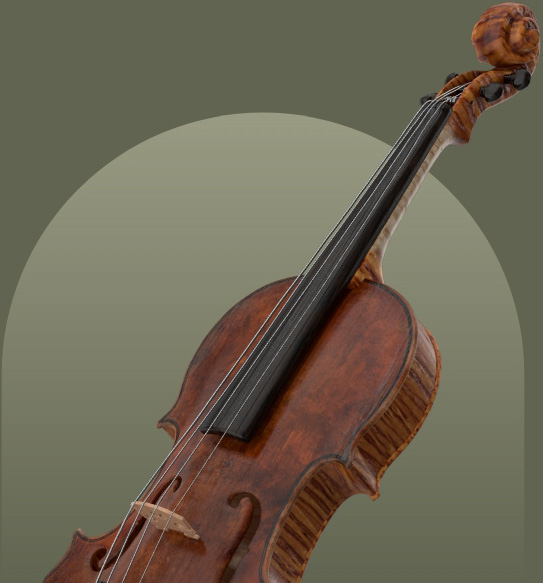
MORI COSTA, Felix Worked 1798-1825 Parma Italy. Very distinctive workmanship and character. Strongly influenced by Parma-period Guadagnini of 40 years earlier. May have encountered Giuseppe Guadagnini, but more probably influenced by Antonio Borelli, the son of Andreas Borelli, both comparatively rare makers active in Parma in the second half of the century. Elegantly slender model, though not always entirely well-governed. Long soundholes and sometimes low-set nicks in the Guadagnini manner. The nicks themselves cut in an unusual manner. Low arch but nicely rounded form. Stylish scroll with narrow constricted throat. Material generally quite plain, but covered with very fine varnish: dark golden-yellow to plum-coloured, a little hard. Mori Costa Felice / fece in Parma 1802 Felix Mori Costa / Fecit Parmae anno 1804
Willibald Leo Lütgendorff+
Andere nennen ihn Mori-Costa. Seine
Arbeit ist nicht schlecht, aber ohne bemerkenswerthe
Eigenschaften.
Sell your instrument with Amati
Get started by uploading photos of your instrument for our experts to review.
Sell your instrument with Amati
Get started by uploading photos of your instrument for our experts to review.
Working in Parma at the same time
Antonio Gibertini 1797–1866
Antonio Merighi 1756–1833
Carlo (I) Guadagnini 1768–1816
Ferdinando Leoni worked 1812–1820