
France School
Francois Fourrier (II) Nicolas
Mirecourt, Paris, 1758–1810
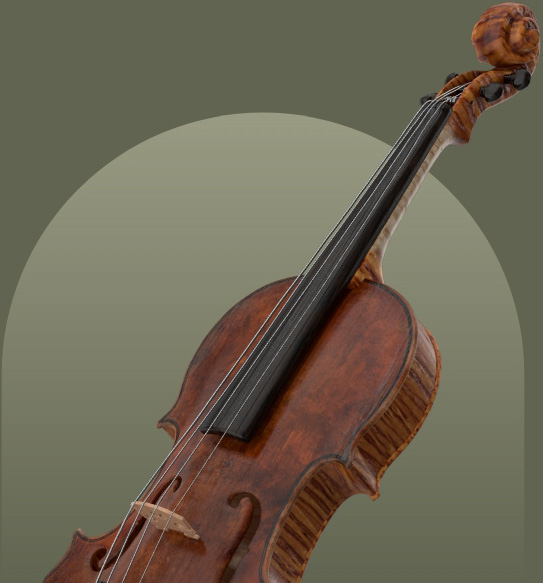
François Fourrier (II) Nicolas (1758-1810/1816) was a significant French luthier, son and pupil of François Nicolas (I). He established his independent workshop in Paris by 1784, after working for E. Saunier, and held prestigious appointments as Luthier to the Royal School of Music and Emperor Napoleon I. Known for his refined and superior workmanship, he often followed a large Stradivari model, utilizing carefully chosen wood and good proportions, with a distinctive thick, highly coloured varnish. His cellos were particularly successful, and his instruments were used in Napoleon I's private orchestra. Despite a period of declining fashion, his good violins remain valued.
Auction price history
Highest auction price
| Type | Details | Sold | Price |
|---|---|---|---|
| Violin | Bearing the maker's label and brand, excellent condition | November 2024 | £8,246 |
| Cello | 75.0 cm Paris, 1810 c. | May 2008 | £13,850 |
| Viola | 38.9 cm 1793 | December 2003 | £2,474 |
Maker Overview
Life
François Fourrier (II) Nicolas (1758-1810/1816) was born in 1758 in Mirecourt, with his birth date specifically noted as October 5, 1758. Sources contain conflicting information regarding his death date, with John Dilworth stating he died in 1810 in Paris, while George Hart and Cecie Stainer indicate he died in 1816 in Paris. He was the son and pupil of François Nicolas (I). Around 1770, he was employed by E. Saunier in Paris. By 1784, he had established himself independently in Paris and was appointed Luthier to the Royal School of Music. He later became Luthier to Emperor Napoleon I in 1789, or 1804. His workshop locations included place de l'Ecole from 1789, rue Nicaise in 1797, and finally rue des Petits Champs. The name Fourrier is an acknowledgement of St Pierre Fourrier of Mattaincourt, a popular dedicatee in the Vosges region, which was the origin of the Nicolas family.
Characteristics
- Model
- François Fourrier (II) Nicolas generally worked to a large Stradivari model.
- Workmanship
- His instruments exhibit emphatic and slightly heavy workmanship, featuring low ribs and thick, highly coloured varnish, which ranged from clear red to a deep orange-brown.
- Quality
- His work is described as very refined and superior, with his cellos being particularly successful.
- Materials and Proportions
- , he is especially commended for the careful choice of wood and the good proportions of his instruments, which he closely copied from beautiful specimens of Cremona work.
- Usage
- He made all the string instruments used in the private orchestra of Napoleon I.
- Authenticity Concerns
- The best instruments by Fourrier Nicolas are sometimes found with false Lupot labels applied by unscrupulous dealers.
- Often branded: ‘Nicolas de Paris’ Nicolas, luthier, rue St.
Nicaize, No.502 à Paris, an 1797John Dilworth - Fourrier Nicolas
Luthier de la Chapelle de sa Mté
L’Empereur Napoleon Ier.
L. Parisiorum anno 1806John Dilworth - Réparé par Fourrier Nicolas
luthier de la chapelle de S. M. l’Empereur
pour son ami Julien, chef d’orchestra
des bals de la cour, 1806John Dilworth
Influence and legacy
- Parentage and Apprenticeship: He was the son and pupil of François Nicolas (I).
- Early Employment: He was employed by E. Saunier in Paris around 1770.
- Historical Reception: His instruments, though much used at one time, eventually dropped out of fashion, but good violins by him are still available.
- Labels: A manuscript label found in a violin reads: "Repare par Fourrier Nicolas, luthier de la chapelle de S.M. l'Empereur, pour son ami Julien, chef d'orchestre des bals de la Cour, 1806."
Biographies
The overview above is drawn from the following published accounts. Read them in the original:
John Dilworth+
François Fourrier (François II) Born 1758 Mirecourt, died 1810 Paris. Son and pupil of François Nicolas (I), above. Employed by E. Saunier in Paris c.1770. Established independently there in 1784. Appointed Luthier to the Royal School of Music 1784 and to Emperor Napoleon I 1789. His workshop was at place de l’Ecole from 1789, rue Nicaise 1797, and finally rue des Petits Champs. The name Fourrier is in acknowledgement of St Pierre Fourrier of Mattaincourt, a popular dedicatee in the Vosges region, the origin of the Nicolas family. Generally worked to a large Stradivari model. Emphatic and slightly heavy workmanship with low ribs and thick highly coloured varnish, from clear red to a deep orange-brown. Cellos particularly successful. Very refined and superior work. The best instruments are sometimes found with false Lupot labels applied by unscrupulous dealers. Often branded: ‘Nicolas de Paris’ Nicolas, luthier, rue St. / Nicaize, No.502 à Paris, an 1797 Fourrier Nicolas / Luthier de la Chapelle de sa Mté / L’Empereur Napoleon Ier. / L. Parisiorum anno 1806 Réparé par Fourrier Nicolas / luthier de la chapelle de S. M. l’Empereur / pour son ami Julien, chef d’orchestra / des bals de la cour, 1806
George Hart+
He is said to have worked from about 1784 to 1816.
Cecie Stainer+
b. Oct. 5, 1758, Mirecourt; d. 1816, Paris. Began to work under Saunier in Paris in 1770, was appointed maker to the Royal School of Music in 1784, and maker to the Emperor in 1804, and made all the string instruments used in the private orchestra of Napoleon I.
He is especially to be commended for the careful choice of wood and the good proportions of his instruments; the latter he had closely copied from beautiful specimens of Cremona work. His instruments, though much used at one time, dropped out of fashion, but good violins of his are still to be had. A MS. label found in a violin: ” Repare par Fourrier Nicolas, luthier de la chapelle de S.M. I’Empereur, pour son ami Julien, chef d’orchestre des bals de la Cour, 1806.”
Sell your instrument with Amati
Get started by uploading photos of your instrument for our experts to review.
Sell your instrument with Amati
Get started by uploading photos of your instrument for our experts to review.
Working in Mirecourt at the same time
(Parisse) Claude Paris worked 1770–1814
(Perrault) Perault worked 1770–1790
(Persoit) Jean Pierre Marie Persois worked 1809–1854
(Prevot) Charles Prevost worked 1775–1789
A. B. Mercier worked 1775
Aine Poirot worked 1785–1820
Alexis (I) Boyer worked 1773–1789
Alexis (II) Boyer worked 1783