
London School
Barak Norman
London, 1651–1724
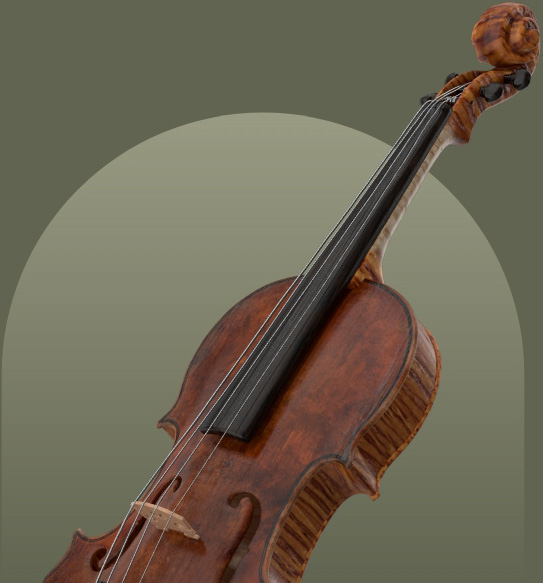
Barak Norman was a highly influential English instrument maker, active from the late 17th to early 18th centuries, though sources conflict on his exact life dates. Apprenticed to W. Harding and likely a pupil of Thomas Urquhart, he established his workshop in St Paul's Churchyard at 'the Bass Viol'. Initially renowned as a leading viol maker, he later expanded to produce high-quality violins, violas, and violoncellos, with some historians crediting him as the first English maker of the violoncello. His craftsmanship is characterized by features such as ribs set into the back, lavish purfled monograms ('BN' or 'N. B.'), and a preference for the Maggini model in his later work. His instruments, particularly his viols, are well-preserved in prominent museum collections worldwide, underscoring his significant legacy in English instrument making.
Auction price history
Highest auction price
| Type | Details | Sold | Price |
|---|---|---|---|
| Small Violoncello | Dorothy Fellows collection, labelled Barak Norman at the Bass Viol in St. Paul's Church yd: London ... | October 2024 | £21,600 |
| Cello | 71.1 cm 1700 c. | November 2007 | £20,669 |
| Cello | 1710 [Possibly by] | November 2001 | £2,800 |
| Cello | 1715 | March 2000 | £9,200 |
| Cello | 1720 | March 1997 | £2,530 |
| Viola | 37.8 cm 1704 | November 1994 | £1,035 |
| Cello | 1720 | July 1993 | £14,375 |
| Cello | 1718 | March 1991 | £1,980 |
| Viola | 41.6 cm 1720 c. | March 1989 | £2,057 |
| Cello | 1722 | May 1986 | £8,800 |
| Cello | 17-- | April 1984 | £2,200 |
| Cello | 1725 | November 1983 | £2,253 |
| Cello | 1715 | January 1981 | £1,375 |
| Viola | 40.3 cm 17-- | November 1980 | £1,980 |
Maker Overview
Life
Barak Norman was a prominent English instrument maker. Sources contain conflicting information regarding his life dates: John Dilworth states 1651-1724, while Cecie Stainer indicates 1688-1740. He was apprenticed to W. Harding from 1668 to 1675. Norman was active in Bishopsgate, London, from 1689 and established his workshop in St Paul's Churchyard from 1692, operating at the sign of 'the Bass Viol'. He was assisted by Nathaniel Cross from approximately 1713. After Norman's death, his shop was continued by his widow, Elizabeth. He was established as the leading viol maker of his time, and from about 1700, he also began to produce violins, violas, and cellos of comparable quality., during his early years, he was much esteemed as a maker of Viols, many of which show careful work. Around 1715, Barak Norman entered into a partnership with Nathaniel Cross, carrying on their joint business at 'the Bass Viol' in St. Paul's Churchyard. George Hart and Cecie Stainer suggest that Norman was the first English maker of the violoncello, as all endeavors to discover any existing English violoncello or record of one anterior to him have failed.
Characteristics
- Construction
- In his instruments of the violin family, the ribs are generally set into a slot cut in the inner edge of the back, a method used by violin makers throughout northern Europe during this period.
- Decoration
- Many of his instruments feature a lavish monogram, 'BN' reflected symmetrically, rendered in purfling on the front or back. His viols carry much of the formal decoration characteristic of that instrument. Cecie Stainer notes that he sometimes used double purfling and ornamental devices, such as the 'clover-leaf' design on his violoncellos. Willibald Leo Lütgendorff mentions that besides his label, his monogram is sometimes found on the outside of the back.
- Materials & Varnish
- His viols typically have a pale golden-brown varnish. Instruments of the violin family are generally plain, using modest materials and a thin, intensely colored red varnish. George Hart notes that all the violoncellos of Barak Norman have bellies of splendid quality, with modeling executed skillfully and due care observed in leaving sufficient wood. Willibald Leo Lütgendorff states that he chose fine wood and that the varnish is good, though somewhat dark. Cecie Stainer describes the varnish on his violoncellos as dark and his tenors as having very dark varnish.
- Design Elements
- The scrolls tend to be rather large but delicately cut with a slender chamfer. The soundholes are open and widely set, with an Amati form. George Hart describes his tenors as having a higher build and sound-holes of German character. Willibald Leo Lütgendorff notes that the F-holes in his altviolen still show the old snake form.
- Workmanship
- Willibald Leo Lütgendorff states that Norman insisted that only the works he made alone bore his name, or he explicitly noted which parts originated from him.
- Manuscript label; Barak Norman
At the Bass viol in
St Pauls Churchyard
London 1711John Dilworth - Barak Norman at the Bass Viol
in St. Paul’s Alley
London. Fecit 1706John Dilworth - Barak Norman at the Bass Violin
in St. Paul’s Church-yd.
London. Fecit 1723John Dilworth - Barak Norman and Nathaniel Cross
at the Bass Viol in St. Paul’s Church Yard. London. Fecit 1724John Dilworth
Influence and legacy
- Apprenticeship: was apprenticed to W. Harding.
- Mentorship: William Meredith Morris, George Hart, Cecie Stainer, and Willibald Leo Lütgendorff suggest he was probably a pupil of Thomas Urquhart. George Hart notes that judging from the character of his work, it is very probable he learned from Thomas Urquhart, an opinion strengthened by examining his earliest instruments, which show the same peculiarities that mark Urquhart's individuality. Cecie Stainer also observes that his earlier work had much the same appearance as that of Urquhart.
- Stylistic Influences: Later in life, he leaned much to the model of Maggini, copying these makers in nearly all his violoncellos. Cecie Stainer also mentions that he copied G. P. Maggini to some extent. Willibald Leo Lütgendorff observes that his violin instruments have some kinship with those of the Brescian school.
- Preserved Instruments: Very well preserved viols by Barak Norman are held in the collections of the Royal College of Music and the Horniman Museum (London), Longford Castle (Salisbury, UK), the Musée de la Musique (Paris), and the National Music Museum (Vermilion, USA).
- Exhibitions: Three bass-viols were exhibited at the South Kensington Museum in 1872.
- Museum Collections: A bass viola by Norman is likely in the Paris Conservatorium (No. 173), and a carefully crafted, beautifully inlaid Viola da Gamba is in Berlin, kgl. Samml. No. 826.
- Historical Value: Cecie Stainer mentions that one of his violoncellos, made in 1718, was valued at 15 guineas in 1790, with prices now higher.
Biographies
The overview above is drawn from the following published accounts. Read them in the original:
John Dilworth+
NORMAN, Barak Born 1651, died 1724 London UK. Apprenticed to W. Harding 1668-1675. Active in Bishopsgate, London from 1689. Established in St Paul’s Churchyard from 1692 at the sign of ‘the Bass Viol’. Assisted by Nathaniel Cross from c.1713. The shop was continued after his death by his widow Elizabeth. Established as the leading viol maker of his time, from about 1700 he also began to produce violins, violas, and cellos of comparable quality. In these instruments the ribs are generally set into a slot cut in the inner edge of the back; a method used by violin makers throughout northern Europe in this period. Many of his instruments feature a lavish monogram, ‘BN’ reflected symmetrically rendered in purfling on the front or back. The viols carry much of the formal decoration characteristic of that instrument, with a pale golden-brown varnish. Instruments of the violin family are generally plain, using modest materials and a thin intensely coloured red varnish. The scrolls tend to be rather large, but delicately cut with a slender chamfer, the soundholes open and widely set, with an Amati form. Very well preserved viols are in the collections of the Royal College of Music and the Horniman Museum (London), Longford Castle (Salisbury, UK), Musée de la Musique (Paris), and the National Music Museum (Vermilion, USA). Manuscript label; Barak Norman / At the Bass viol in / St Pauls Churchyard / London 1711 Barak Norman at the Bass Viol / in St. Paul’s Alley / London. Fecit 1706 Barak Norman at the Bass Violin / in St. Paul’s Church-yd. / London. Fecit 1723 Barak Norman and Nathaniel Cross / at the Bass Viol in St. Paul’s Church Yard. London. Fecit 1724 [BVMA]
George Hart+
The instruments of this maker are among the best of the Old English school. His instructor in the art of Viol and Violin-making is unknown, but judging from the character of his work it is very probable he learned from Thomas Urquhart. This opinion is strengthened upon examining his earliest instruments. We there find the same peculiarities which mark the individuality of Urquhart. Later in life he leaned much to the model of Maggini. During his early years he was much esteemed as a maker of Viols, many of which have all the marks of careful work upon them. On all of these instruments will be found his name, surrounded with a design in purfling, under the finger-board, or his monogram executed in purfling. The same trade token will be found in his Violoncellos. All endeavours to discover any existing English Violoncello, or record of one, anterior to Barak Norman, have failed, and, consequently, it may be assumed that he was the first maker of that instrument in England. Here, again, is evidence of his partiality for the form of the Maggini, both father and son, as he copied these makers in nearly all his Violoncellos. All the Violoncellos of Barak Norman have bellies of splendid quality; the modelling is executed skilfully, due care having been observed in leaving sufficient wood. His Tenors are fine instruments. Many of these were made years before he began the Violoncellos, a fact which satisfactorily accounts for the marked difference in form peculiar to them. The build is higher, and the sound-hole German in character; the varnish is very dark. About the year 1715 Barak Norman entered into partnership with Nathaniel Cross, carrying on the joint business at the sign of the Bass Viol, St. Paul’s Churchyard. In a Viol da Gamba owned by Walter Brooksbank, Esq., of Windermere, is a label in the handwriting of Nathaniel Cross, by which he adds the power of speech to the qualities of the quaint Gamba; the words are, ” Nathaniel Cross wrought my back and belly.” The sides and scroll being the work of his partner.
William Meredith Morris+
A pupil of Thomas Urquhart, who worked in Bishopsgate and afterwards in St. Paul’s Churchyard. I have not seen any violins of his make, but I have seen two violoncellos. Unfortunately, the notes of these instruments which I made at the time have been lost, and I cannot say anything about them from memory, but I have a distinct recollection that one had a most pleasing tone. The biographical particulars are familiar to all who are interested in violin literature, and need not be repeated here, seeing that I have nothing new to write about this maker.
Cecie Stainer+
b. 1688; d. 1740. A maker in London, lived first in Bishopsgate and then in St. Paul’s Churchyard. He was probably a pupil of Thomas Urquhart, his earlier work having much the same appearance as that of the latter ; but later he copied G. P. Maggini to some extent, using double purfling and ornamental devices, such as the ” clover-leaf ” design on his violoncellos. He is supposed to have been the first English maker of violoncellos. They are of large size, the wood being of good quality, the thicknesses correctly proportioned and the work carefully done ; the varnish is dark, the tone is very good ; one made in 1718, was valued at 15 guineas in 1790, but now the price is higher.
He also made beautiful tenors, probably at an earlier date than the violoncellos; they are of a different pattern, being very much arched. They are generally large size, with very dark varnish and of fine tone. No violins of his remain, but he was well known as a maker of viols. He marked his instruments with his name enclosed in a design of purfling or with the monogram “N. B.” in purfling, under the wide part of the finger-board, or sometimes in the centre of the back.
He entered into partnership with Nathaniel Cross about 1715 ; they worked at the sign of the ” Bass-Viol.” In a viola da gamba was found a label in the handwriting of Cross, “Nathaniel Cross wrought my back and belly ” ; the sides and scroll were the work of Norman.
Three bass-viols were exhibited at South Kensington Museum in 1872; in one of them, which had been converted into a violoncello, was the label: ” Barak Norman, at the Bass-Viol in Saint Paul’s alley, London, fecit 1690.”
Willibald Leo Lütgendorff+
Wahrscheinlich ein Schüler von Th. Urquhart, an den seine frühesten Arbeiten erinnern. Einer der berühmtesten Geigen- und Lautenmacher der altenglischen
Schule, dessen Violen, Theorben und Lauten die Hand eines Meisters verrathen. Im Jahre 1715 war er mit Nathaniel Cross verbunden. Er wählte feines Holz, der Lack ist gut, nur etwas dunkel, und seine Geigeninstrumente haben manche Verwandtschaft
mit denen der Brescianer Schule. Ausser seinem Zettel findet man manchmal auch sein Monogramm an der Aussenseite des Bodens. Er soll der erste Engländer sein, der ein Violoncello gemacht hat Violinen von ihm kennt man bis heute nicht. Drei Bassviolen waren 1872 im South Kens.-Mus. ausgestellt. Die F-Löcher in seinen Altviolen zeigen noch die alte Schlangenform. Er hielt darauf, dass nur die Arbeiten, die er allein gemacht hatte, seinen Namen trugen, oder er bemerkte ausdrücklich, welche Theile von ihm herrührten. Eine Bassviola im Pariser Conservatorium (No. 173) dürfte von ihm gemacht sein. Eine Viola da Gamba von sorgfältiger Arbeit,
hübsch eingelegt, befindet sich in Berlin, kgl. Samml. No. 826.
Sell your instrument with Amati
Get started by uploading photos of your instrument for our experts to review.
Sell your instrument with Amati
Get started by uploading photos of your instrument for our experts to review.
Working in London at the same time
Allin Hillard worked 1654–1684
Daniel Parker worked 1712–1720
Ditton worked 1700
Edward (II) Lewis worked 1700–1742