
Paris School
Claude Pierray
Paris, d. 1729
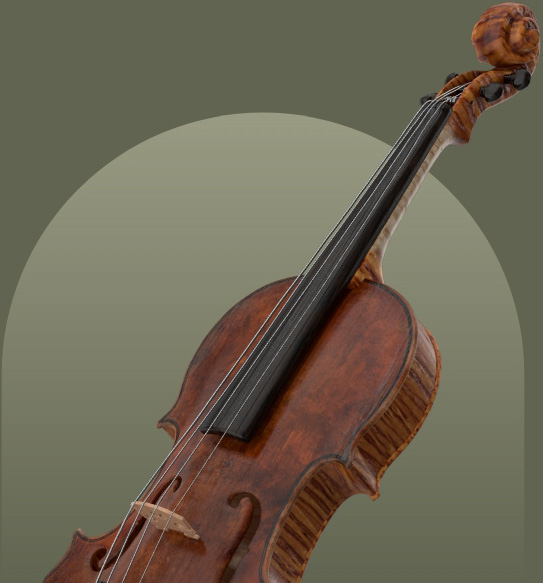
Claude Pierray (c. 1700-1729) was an influential Parisian violin maker, considered a leading figure of the 'vieux Paris' school who consistently followed Italian models. He produced a significant number of violins, often on a large pattern, and highly praised violoncellos. While sources vary on the precise nature of his work, he worked on Amati-like forms, sometimes closely copying Girolamo Amati. He used good quality wood, though not always visually appealing, and his instruments featured variable thickness proportions. His craftsmanship and varnish colour are described contradictorily across sources, as are the tonal qualities of his instruments. Pierray trained notable pupils including Jean Ouvrard, Paul Grosset, and Louis Guersan. His work was highly appreciated, notably in England, with Thomas Britton owning a violin considered "as good as a Cremona." A bass viol dated 1712 made by Pierray is housed in the Musée de la Musique, Paris.
Auction price history
Highest auction price
| Type | Details | Sold | Price |
|---|---|---|---|
| Violin | March 2012 | £4,250 | |
| Cello | 72.0 cm Paris, 1710 7/8 size (many restorations) | June 2011 | £16,532 |
| Violin | 35.8 cm Paris, 1740 c. [Probably by] | March 2011 | £4,750 |
| Violin | 35.8 cm Paris, 1714 | March 2010 | £13,750 |
| Cello | 74.0 cm Paris, 1715 - 1720 c. (some restorations, French head later) | June 2009 | £14,002 |
| Violin | 35.8 cm Paris, 1714 (head replaced) | December 2007 | £5,105 |
| Violin | 36.0 cm 1712 | July 2007 | £16,800 |
| Violin | 35.5 cm Paris, 1715-1720 c. (head replaced, restored soundpost crack & more) | December 2006 | £4,394 |
| Violin | Paris, 1714 | November 2005 | £7,200 |
| Cello | Paris, 1715-1720 c. (head replaced) | June 2005 | £22,946 |
| Cello | Paris, 1725 | June 2005 | £38,237 |
| Violin | 1720 | June 2003 | £5,166 |
| Violin | 1709 | June 2000 | £9,574 |
| Violin | 1751 | September 1998 | £3,423 |
| Violin | 1735 c. | November 1997 | £3,220 |
| Violin | 1707 | November 1995 | £6,900 |
| Violin | 1706 | March 1995 | £5,290 |
| Violin | 1714 | August 1994 | £6,325 |
| Violin | 1764 | June 1994 | £1,870 |
| Violin | 1730 c. | November 1990 | £3,080 |
| Violin | 1730 c. | March 1989 | £6,600 |
| Violin | 1714 | November 1987 | £3,080 |
| Violin | 1730 c. | November 1987 | £2,035 |
| Violin | 1720 c. | June 1987 | £2,420 |
| Violin | 1710-20 | March 1987 | £4,620 |
| Violin | 17-- | June 1984 | £3,024 |
| Violin | 1714 | June 1983 | £5,720 |
| Violin | 1719 c. | June 1983 | £2,970 |
| Violin | 1718 | March 1983 | £1,980 |
| Cello | 1709 | April 1981 | £3,220 |
Maker Overview
Life
Claude Pierray (c. 1700-1729) was a highly influential Parisian violin maker who worked in Paris from around 1700 until his death in 1729. A contemporary of Boquay, he is considered one of the best representatives and the most influential maker of the ‘vieux Paris’ school. Like many of his contemporaries, he worked following Italian models. He was established in the rue des Fossés, Saint-Germain-des-Prés, and from 1725, his address was identified as ‘proche la Comédie Français’. He made a great many violins and violoncellos and was held in high regard during his lifetime.
Characteristics
- Materials
- He consistently used good quality wood, although it was often described as not particularly handsome or inconspicuous. Sources provide varied descriptions of his varnish, noting it as pale red, red, golden-brown with a red accent, or light red or yellow, and of good quality.
- Methods
- Sources present conflicting views on his craftsmanship; some describe him as an 'excellent workman' or state his 'work is carefully finished' and 'of a high order,' while others consider his work of 'average merit' or 'not always perfectly finished.' He worked on a very Amati-like form, with some sources suggesting Amati would seem to have been his model, retaining the outline but with other features being dissimilar. Other accounts note he sometimes copied the work of Girolamo Amati rather closely. His violins show both large and small patterns, with the majority being large. His instruments featured a medium-high arch, rather stiff soundholes, and variable or inconsistent thickness proportions.
- Bass viol, dated 1712, in the Musée de la Musique, Paris. Claude Pieray
à Paris, 171..John Dilworth - Claude Pierray
à Paris, 1715John Dilworth - Claude Pierray, rue des Fossés
Saint Germain-des-préz à Paris, 1714John Dilworth - Claude Pierray
proche la Comédie
à Paris 1725John Dilworth - Claude Pierray, 1729John Dilworth
Influence and legacy
- Training and Mentorship: He trained a number of capable students, some of whom became good makers, including Jean Ouvrard, Paul Grosset, and Louis Guersan.
- Schools/Tradition: He is regarded as one of the best representatives and the most influential maker of the 'vieux Paris' school, working after Italian models and on a very Amati-like form.
- Notable Associations: His work was generally of a better order than that of his contemporary Boquay. His string instruments were appreciated in England at the beginning of the eighteenth century. London musical promoter Thomas Britton owned a Pierray violin which he considered ‘as good as a Cremona’.
- Museum Collections: A bass-viol, dated 1712, made by Claude Pierray is held in the Musée de la Musique, Paris (formerly the Paris Conservatoire Collection).
- Famous Owners: Thomas Britton, a London musical promoter and collector, owned a violin by Claude Pierray.
Biographies
The overview above is drawn from the following published accounts. Read them in the original:
John Dilworth+
PIERRAY, Claude Worked circa. 1700, died 1729 Paris France. Established in the rue des Fossés, Saint-Germain-des-Prés from 1725 (further identified as ‘proche la Comédie Français’). The most influential maker of the ‘vieux Paris’ school, working on a very Amati-like form. Medium-high arch and soundholes rather stiff. Generally a golden-brown varnish, sometimes with a red accent. Craftsmanship of a high order, but sometimes a little too robust and not always perfectly finished. London musical promoter Thomas Britton owned a Pierray violin which he considered ‘as good as a Cremona’. Cellos much praised. His work is generally of a better order than that of his contemporary Boquay. Bass viol, dated 1712, in the Musée de la Musique, Paris. Claude Pieray / à Paris, 171.. Claude Pierray / à Paris, 1715 Claude Pierray, rue des Fossés / Saint Germain-des-préz à Paris, 1714 Claude Pierray / proche la Comédie / à Paris 1725 Claude Pierray, 1729
George Hart+
Was an excellent workman, and many of his productions partake of the Italian character to a considerable extent. They are of two patterns, the majority being large. Amati would seem to have been his model, but his instruments can scarcely be considered copies of that maker, the outline only being retained, while the other features are dissimilar. The wood is rarely handsome, but its quality is good, the thicknesses are variable. The work is of average merit. Varnish is of a pale red colour, of good quality. It is interesting to learn that these instruments were appreciated in England at the beginning of the eighteenth century. Tom Britton had in his collection of books and instruments at Clerkenwell a ” Claude Pierray,” which is described in the sale catalogue as ” a very beautiful Violin, and as good as a Cremona.”
Cecie Stainer+
A contemporary of Boquay, he worked in Paris about 1700-30. He made a great many violins and violoncellos, the former on a large pattern. He sometimes copied the work of Girolamo Amati rather closely. He used good wood, though not very beautiful to look at, and red varnish. The proportions of his thicknesses varied too much; the tone is excellent but not powerful; the work is carefully finished.
In Thomas Britton’s Collection of instruments was a violin by “Claude Pieray, of Paris, as good as a Cremona.” Some of his pupils became good makers, such as Jean Ouvrard, Paul Grosset, and Louis Guersan.
Labels: “Claude Pierray, rue des Fosses-Saint-Germain-des-Pres a Paris, 1710”; a similar label, dated 1714,
There is a bass-viol, dated 1712, in the Paris Conservatoire Collection
Willibald Leo Lütgendorff+
Einer der besten Vertreter der alten Pariser Schule, der, wie alle seine
Zeitgenossen, nach italienischen Vorbildern arbeitete. Er wohnte in der Rue
des Fosses-Saint-Germain-des-Près und 1725 »proche la Comédies« seine Geigen
zeigen sowohl grosses als kleines Patron und meist hellrothen oder gelben Lack,
der jetzt sehr nachgedunkelt erscheint. Das Holz ist gut, wenn auch oft unscheinbar,
nur ungleich in den Stärkenverhältnissen. Der Ton ist immer kräftig,
wenn auch nicht sehr ansprechend. Er stand schon bei Lebzeiten in hohem Ansehen
und bildete eine Reihe tüchtiger Schüler aus. In Thomas Britton’s
Katalog liest man: »a violin by Cl. Pierray as good as a Cremona«. Bessere
Arbeiten von ihm werden jetzt von Liebhabern bis 1000 M. bezahlt, was freilich
Sell your instrument with Amati
Get started by uploading photos of your instrument for our experts to review.
Sell your instrument with Amati
Get started by uploading photos of your instrument for our experts to review.
Pupils
Paul Francois Grosset Pupil
Jean Ouvrard Pupil
Working in Paris at the same time
Barbey worked 1720–1748