
France School
Francois-Louis Pique
Boret, Paris, 1758–1822
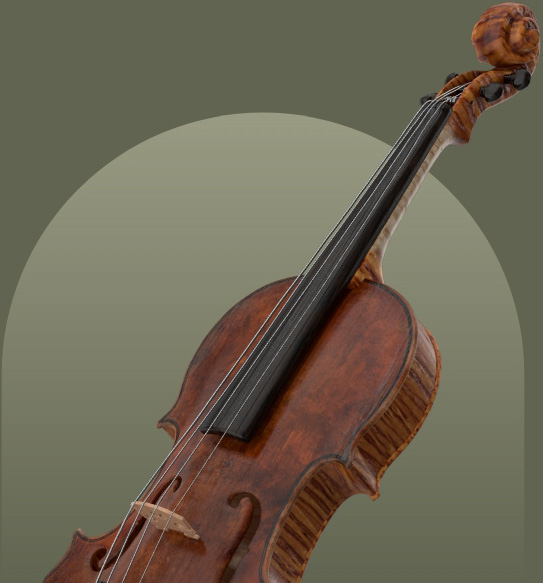
Francois-Louis Pique (1758-1822) was an influential French luthier, born in Mirecourt, who established his workshop in Paris from 1777. Apprenticed under E. Saunier, he became a guiding light of the post-revolutionary Paris school, known for his academic application of Stradivari's ideas and exemplary workmanship. Pique was considered senior to Nicolas Lupot, even commissioning unvarnished instruments from him which Pique then finished and labeled. His craftsmanship is characterized by well-proportioned, sometimes eccentric scrolls, exaggerated ebony purfling, and the use of fine materials, often with one-piece backs. His varnish varied from dry red to luscious orange-brown. Pique retired in 1816, but his legacy continued, with his instruments recognized for their quality and functionality.
Auction price history
Highest auction price
| Type | Details | Sold | Price |
|---|---|---|---|
| Violin | 35.8 cm Paris, 1808 | November 2011 | £33,832 |
| Violin | 36.2 cm Paris, 1800 c. | October 2011 | £37,250 |
| Violin | 35.8 cm 1800 c. [Attributed to & probably by] | May 2009 | £19,410 |
| Violin | 36.1 cm Paris, 1793 | March 2009 | £43,250 |
| Violin | 35.9 cm 1780 c. [Possibly by] | March 2009 | £3,156 |
| Violin | 35.5 cm Paris, 1998 | March 2009 | £21,301 |
| Violin | 36.0 cm Paris, 1810 c. with Literature | October 2008 | £25,000 |
| Violin | 36.0 cm Paris, 1790 c. [Lit: The Cooper Collection] | March 2008 | £31,700 |
| Violin | 35.9 cm Paris, 1815 | May 2007 | £23,566 |
| Viola | 39.1 cm Paris, 1790 c. | October 2006 | £9,853 |
| Violin | Paris, 1798 | October 2004 | £36,522 |
| Violin | 1809 | June 2001 | £43,300 |
| Violin | 1820 | June 2001 | £235 |
| Violin | 1805 | December 1999 | £19,123 |
| Violin | 1800 c. | October 1995 | £29,900 |
| Violin | 1800-20 | June 1992 | £13,200 |
| Violin | 1811 | November 1990 | £18,700 |
| Viola | 38.7 cm 1802 | November 1989 | £8,800 |
| Violin | 1815 | June 1988 | £13,200 |
| Violin | 1808 | March 1986 | £5,060 |
| Violin | 18-- | April 1985 | £5,616 |
| Violin | 1810 | April 1984 | £5,720 |
| Violin | 1798 | April 1982 | £7,920 |
| Cello | 1800 c. | May 1981 | £18,700 |
Maker Overview
Life
Francois-Louis Pique (1758-1822) was born in 1758 in Roret, Mirecourt, and passed away in 1822 in Charenton-Saint-Maurice, France. He served his apprenticeship under E. Saunier in Mirecourt. Pique established himself in Paris from 1777, initially on the rue Coquillière. He moved to rue Platrière from 1778 to 1779 before returning to the rue Coquillière, and finally relocated to 52 rue de Grenelles Saint-Honoré, where he remained until his retirement in 1816. He retired to Charenton-Saint-Maurice in 1816. was a highly important and influential maker, considered a guiding light of the post-revolutionary Paris school. He is distinguished from the earlier 'vieux Paris' style by his academic application of Stradivari ideas and workmanship. Although born in the same year as Nicolas Lupot, Pique was seen as the senior of the two, having been established in Paris from an earlier date. He commissioned work from Lupot from approximately 1792. Willibald Leo Lütgendorff notes that it is a fact that Lupot made violins for Pique, which Pique then varnished and provided with his labels. Cecie Stainer further specifies that in 1792, Pique applied to Nicolas Lupot, who was then still in Mirecourt, for a certain number of unvarnished violins, which Pique subsequently varnished himself and sold under his own label. By the time of Pique's retirement in 1816, Lupot had settled in the capital in 1796 and was clearly the more prestigious maker. Despite his retirement, his business appears to have continued for some time, as evidenced by a violin with his label dated 1830 found in the Snoeck collection.
Characteristics
- Style and Workmanship
- Francois-Louis Pique was a very fine copyist of Stradivari, distinguishing himself with an academic application of Stradivari ideas and exemplary workmanship. His work is generally on a large scale, though John Dilworth notes it can be a little clumsy compared to Lupot's best work. He was not slavish in his adherence to Stradivari in the detail of his work.
- Scrolls
- Scrolls are well-proportioned but often quite distinctive, sometimes even eccentric, and described as graceful by Willibald Leo Lütgendorff.
- Purfling
- The ebony purfling generally features an exaggerated mitre, sweeping across the corner.
- Functionality
- His instruments are functionally very good.
- Materials
- Pique used very fine materials, often preferring one-piece backs. However, some instruments have relatively coarse wood in the tops. The wood quality is generally described as very good.
- Varnish
- The varnish can vary from a rather dry, dull red to a more luscious and oily orange-brown with a tendency to craquelure. Cecie Stainer describes his varnish as a dark red oil varnish, rather opaque. Willibald Leo Lütgendorff notes the varnish is of a beautiful red or reddish-brown color, though sometimes too thick and not transparent enough.
- Soundholes
- Soundholes are usually fairly straight and upright, and described as sweeping by Willibald Leo Lütgendorff.
- Instrument Rarity
- Violas and cellos made by Pique are extremely rare.
- Specific Instruments
- The Paris Conservatorium possesses a theorbo from 1779 made by Pique, and Prince Lobkowitz owns a violin from 1806 located at Schloss Roudnic.
- Pique rue grenelle N25
fait à Paris 1777John Dilworth - Pique
rue Coquillière
vis-à-vis le Roulage
de France. à Paris, 1791John Dilworth - Pique rue de Grenelle
St. Honoré No 52
à Paris, 1797John Dilworth - Pique Rue Coquillière
vis à vis L’hotel du
Roulage à Paris, 1789John Dilworth - Pique, rue de Grenelle
St. Honoré, au coin de celle
des 2 Ecus, à Paris, 18..John Dilworth
Influence and legacy
- Training: Francois-Louis Pique was apprenticed to E. Saunier in Mirecourt.
- School and Tradition: He is considered a guiding light of the post-revolutionary Paris school, distinguishing its style from the earlier 'vieux Paris' tradition.
- Mentorship/Relationship: Pique was seen as senior to Nicolas Lupot, having established himself in Paris earlier. He commissioned work from Lupot from approximately 1792, with Lupot making unvarnished violins that Pique then varnished and labeled.
- Recognition: His violins are mentioned by Spohr in his Methode de Violon as being among the best of the period.
- Market Value: Pique's instruments vary in price, with the best reaching prices up to 2000 Marks () or as much as £50 ().
- Institutional Supply: He was a supplier to the Conservatorium.
- Collections: A theorbo from 1779 is held by the Paris Conservatorium, and a violin from 1806 is owned by Prince Lobkowitz at Schloss Roudnic.
Biographies
The overview above is drawn from the following published accounts. Read them in the original:
John Dilworth+
PIQUE, François-Louis Born 1758 Roret, Mirecourt, died 1822 Charenton-Saint-Maurice France. Apprenticed to E. Saunier in Mirecourt. Established in Paris from 1777 on the rue Coquillière. In rue Platrière 1778-9 before returning to the rue Coquillière, and moved finally to 52 rue de Grenelles Saint-Honoré. Retired to Charenton 1816. Highly important and influential maker, a guiding light of the post-revolutionary Paris school. Distinguished from the earlier ‘vieux Paris’ style by an academic application of Stradivari ideas and workmanship. Although born in the same year as Nicolas Lupot, is seen as the senior of the two in that he was established in Paris from an earlier date and commissioned work from Lupot from c.1792. Lupot himself settled in the capital 1796 and by the time of Pique’s retirement in 1816 was clearly the more prestigious maker. Pique’s own work is generally on the large scale, and a little clumsy compared to the best work of Lupot. Not so slavish in his adherence to Stradivari in the detail of his work; scrolls are well-proportioned but often quite distinctive, if not eccentric. Ebony purfling generally has an exaggerated mitre, sweeping across the corner. Functionally very good instruments. Materials and varnish usually very fine, with a preference for one-piece backs. Some have relatively coarse wood in the tops. The varnish can also vary from a rather dry dull red to a more luscious and oily orange-brown with a tendency to craquelure. Soundholes usually fairly straight and upright. Violas and cellos extremely rare. Manuscript labels: Pique rue grenelle N25 / fait à Paris 1777 Pique / rue Coquillière / vis-à-vis le Roulage / de France. à Paris, 1791 Pique rue de Grenelle / St. Honoré No 52 / à Paris, 1797 Pique Rue Coquillière / vis à vis L’hotel du / Roulage à Paris, 1789 Printed label: Pique, rue de Grenelle / St. Honoré, au coin de celle / des 2 Ecus, à Paris, 18..
Cecie Stainer+
b 1758, at Rorei, near Mirecourt ; d. 1822, Charenton-St.-Maurice. Was a pupil of Saunier. He went to Paris in 1777 or 1778 living first in ” rue Coquilliere au coin de la rue de Bouloy according to a label in a theorbo dated 1779, then, 1787-9 in the ” rue Platriere vis-a-vis de l’Hotel de Bullion,” according to a label in a sixteen-stringed mandore dated 1787; and finally at 36, rue de Grenelle-St -Honore, where he remained till he retired from business in 1816. He made some beautiful copies of Stradivari, the workmanship being of a very high order the scrolls and sound holes are well cut and the wood is of excellent quality.
Some instruments have the backs cut in one piece, and the proportions of the thicknesses are sometimes exaggerated ; he used a dark red oil varnish, rather opaque. In 1792 he applied to Nicolas Lupot, then still at Mirecourt for a certain number of unvarnishcd violins which he then varnished himself and sold with his label. His instruments vary from a moderate price to as much as £50. His violins are mentioned by Spohr (Methode de Violon) as being some of the best of the period.
Willibald Leo Lütgendorff+
Schüler von Saunier. Er kam um 1777 nach Paris und wohnte erst in der
Rue Coquillière, au coin de la rue du Bouloy« und zog 1778 in die Rue Platrière;
1790 wohnte er wieder Rue Coquilliere, diesmal aber «vis-a-vis le roulage de
France «, und von da verlegte er seine Werkstatt nach der Rue de Grenelle
St.-Honoré, und dort blieb er bis 1816, in welchem Jahre er sich auf sein
Besitzthum in Charenton St.-Maurice zurückzog; doch scheint sein Geschäft
noch eine Zeit lang weiterbestanden zu haben; wenigstens findet sich in der Sammlung Snoeck eine Geige mit seinem Zettel und der Jahreszahl 1830. Er war ein sehr feiner Copist von Stradivari und zeichnet sich durch musterhafte Arbeit aus. Das Holz ist sehr gut, die Schnecke zierlich, die F-Löcher schwungvoll und der Lack von schöner, rother oder rothbrauner Farbe, nur manchmal zu dick und nicht durchsichtig genug. Spohr stellt seine Geigen denen von Lupot fast gleich, was um so richtiger ist, als thatsachlich feststeht, dass Lupot für Pique Geigen gemacht hat, die dieser lackirte und mit seinen Zetteln versah. Er war Lieferant des Conservatoriums und hat ziemlich viel Geigen gemacht. Die besten erreichen Preise bis zu 2000 M. Eine Theorbe von 1779 besitzt das Pariser Conservatorium von ihm, eine Geige von 1806 Fürst Lobkowitz auf Schloss Roudnic.
Sell your instrument with Amati
Get started by uploading photos of your instrument for our experts to review.
Sell your instrument with Amati
Get started by uploading photos of your instrument for our experts to review.
Working in Boret at the same time
(Parisse) Claude Paris worked 1770–1814
(Perrault) Perault worked 1770–1790
(Prevot) Charles Prevost worked 1775–1789
A. Mongel worked 1820–1830
Ambroise worked 1750–1810
Antoine Fida worked 1809
Antoine Fouquet-Lecomte worked 1775–1800
Auguste Sebastien Philippe Bernardel 1798–1870