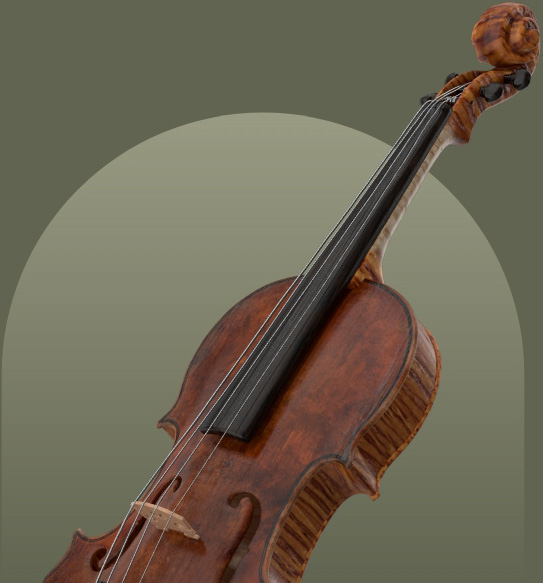
Franz Ramftler
1834–1913
Franz RAMFTLER (1834-1913) was a German luthier born and died in Munich, who trained under Andreas Engleder.
He established his independent business in Munich, with sources providing conflicting dates of 1860 or 1864 for its founding, and was appointed luthier to the Bavarian court.
Initially, he focused on repairs and dealing in old Italian instruments, traveling to Italy for this purpose.
After retiring in 1889, he dedicated himself to making new violins, primarily on the Stradivari model, utilizing his own invented varnish.
His work was characterized by its accuracy, good materials, and a varnish he believed contributed to the immediate good sound and easy response of his instruments, earning him an Anerkennungsdiplom in Vienna in 1873.
Maker Overview
Life
Franz RAMFTLER (1834-1913) was born on May 23, 1834, in Munich, Germany, and died in 1913 in Munich.
He was a pupil of A. Engleder, also known as Andreas Engleder, and remained with him after completing his apprenticeship.
Sources contain conflicting information about the establishment date of his independent business in Munich: John Dilworth states he established independently in Munich in 1864, while Cecie Stainer indicates he started his own business there in 1860.
He was appointed luthier to the Bavarian court, referred to as Hofinstrumentenmacher.
, he initially focused on repairs and the trade of Italian instruments, traveling to Italy twice annually for this purpose.
He retired in 1889, after which he dedicated himself with greater zeal to making new violins, primarily after the Stradivari model.
For his violins, he received an Anerkennungsdiplom in Vienna in 1873.
Willibald Leo Lütgendorff also mentions a Wilhelm R. who was active in Munich in 1882.
Characteristics
- Model
- He primarily made new violins after the Stradivari model.
- Workmanship
- His work is described as accurate and professional, utilizing good materials.
- Varnish
- He used his own invented varnish, which he had tested for 40 years, and to which he attributed the immediate good sound and easy response of his violins.
- Characteristics
- His violins were considered very good Orchesterviolinen with beautiful wood, varnish, and tone.
- Franz Ramftler
Hofgeigenmacher
München 1880John Dilworth
Influence and legacy
- Teacher: He was a pupil of A. Engleder, also known as Andreas Engleder, and remained with him after completing his apprenticeship.
- Workshop Experience: He worked for Padewet at Karlsruhe.
- Royal Appointment: Franz Ramftler was appointed luthier to the Bavarian court, also referred to as Hofinstrumentenmacher or Court violin maker.
- Awards: He received an Anerkennungsdiplom in Vienna in 1873 for his violins.
Biographies
The overview above is drawn from the following published accounts. Read them in the original:
John Dilworth+
RAMFTLER, Franz Born 1834, died 1913 Munich Germany. Pupil of A. Engleder. Worked for Padewet at Karlsruhe, established independently in Munich 1864. Appointed luthier to the Bavarian court. Stradivari model. Accurate professional work with good materials and own varnish. Franz Ramftler / Hofgeigenmacher / München 1880
Cecie Stainer+
b. May 23, 1834, Münich. Pupil of Andreas Engleder in Münich ; started his own business there in 1860. Principally repairs and deals in old Italian instruments, but has lately made some very good new violins on the Stradivari pattern, using a varnish of his own invention. Was appointed Court violin maker.
Willibald Leo Lütgendorff+
Schüler von Andreas Engleder, bei dem er auch, nachdem er ausgelernt hatte, noch verblieb. Nach kurzem Aufenthalt in Karlsruhe gründete er 1864 sein Geschäft in München und wurde bald zum Hofinstrumentenmacher ernannt. Er verlegte sich zunächst auf Reparaturen und den Handel mit Italienischen Instrumenten und reiste alljährlich zwei Mal zu diesem Zwecke nach Italien. Im Jahre 1889 setzte er sich zur Ruhe, und von da an macht er erst mit grösserem Eifer neue Geigen nach Strad., die er mit einem von ihm erfundenen, durch 40 Jahre erprobten Lack lackirt, dem er es hauptsächlich zuschreibt, dass seine Geigen sofort gut klingen und leichte Ansprache haben. Für seine Geigen, sehr gute Orchesterviolinen mit schönem Holz, Lack und Ton, erhielt er schon 1873 in Wien ein Anerkennungsdiplom. Auch ein Wilhelm R. war 1882 in München thätig.
Sell your instrument with Amati
Get started by uploading photos of your instrument for our experts to review.
Sell your instrument with Amati
Get started by uploading photos of your instrument for our experts to review.