Giovanni Battista Rogeri
Brescia, Bresica, Cremona, c.1642–1705
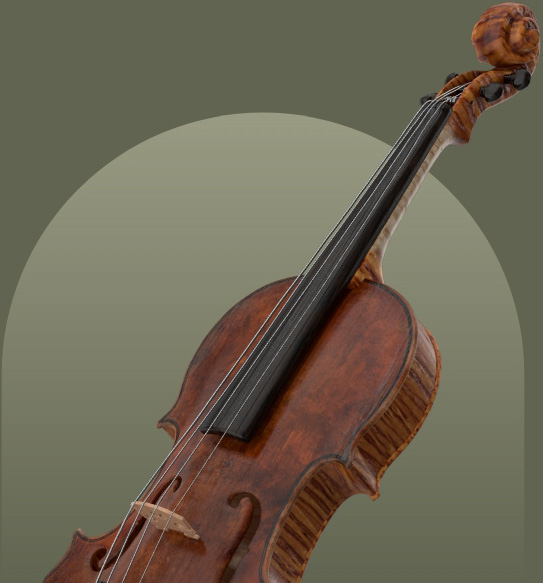
Giovanni Battista Rogeri (b. c. 1650, Bologna; d. after 1725) was a highly esteemed Italian violin maker, rooted in the distinguished Cremonese tradition under Nicola Amati, where he worked alongside Stradivari. He later established his prolific career in Brescia from approximately 1670 to 1725. Rogeri crafted admirable string musical instruments, including violins and violoncellos, expertly following the renowned Amati and Stradivari patterns. His work is celebrated for its meticulous construction, characterized by carefully selected wood, a beautiful golden-red varnish, precise purfling, and elegant corners. Such was the exceptional quality and fine tone of some of his violins that they were occasionally mistaken for, and sold as, the work of Stradivari, demonstrating their significant value and desirability as fine musical instruments. His violoncellos, particularly noted for their penetrating and robust tone, are highly valued, whether crafted from maple or, at times, poplar-wood. His consistent labeling, with dates spanning from 1671 to 1725, provides clear identification of his significant contributions to the art of violin making and why his used violins are so sought after.
Auction Price History
Highest auction price
22 results
| Type | Details | Auction house | Sold | Price |
|---|---|---|---|---|
| Violin | Lot 121 | Bonhams | October 2011 | £169,250 |
| Violin | 35.1 cm Brescia, 1690 c. | — | October 2011 | £169,250 |
| Violin | 35.3 cm Brescia, 1705 c. | — | October 2011 | £337,250 |
| Violin | 35.4 cm Italy, 1700 c. Attributed to | — | March 2011 | £39,650 |
| Violin | 35.3 cm Bresica, 1700 c. (the table later) | — | October 2009 | £34,850 |
| Violin | 34.9 cm Brescia, 1680 c. (scroll later) | — | October 2007 | £59,971 |
| Violin | 34.9 cm Cremona, 1690 c. (head later) | — | May 2007 | £23,043 |
| Cello | Attributed to | — | July 2004 | £33,460 |
| Violin | 1702 | — | October 2002 | £41,683 |
| Violin | 1705 | — | November 2001 | £55,000 |
| Violin | 1700 c. | — | June 1998 | £36,800 |
| Violin | 1670 c. | — | March 1995 | £43,300 |
| Violin | 1700 c. | — | April 1993 | £20,700 |
| Violin | 1697 | — | November 1992 | £25,300 |
| Violin | 1685 | — | November 1991 | £30,800 |
| Violin | 1695 | — | November 1991 | £25,300 |
| Violin | 1699 | — | November 1990 | £61,600 |
| Violin | 1700 c. | — | March 1988 | £15,400 |
| Violin | 1697 | — | April 1987 | £52,800 |
| Cello | 16-- | — | March 1986 | £12,100 |
| Cello | 1690 | — | June 1982 | £64,167 |
| Violin | 1705 | — | November 1981 | £11,000 |
No results match those filters.
Maker Overview
Life
Giovanni Battista ROGERI (b. c. 1650, Bologna; d. after 1725) was born in Bologna around 1650. He traveled to Cremona to train and work under the renowned Nicola Amati, where he may have been a contemporary of Stradivari, though this connection is not definitively documented. Subsequently, Rogeri established his workshop in Brescia, working there from approximately 1670 to 1725. His labels typically read: "Jo. Bap. Rogerius Bon. Nicolai Amati de Cremona alumnus Brixiae fecit, anno Domini 1671," with "Bon." signifying "Bononiensis" (of or from Bologna). He consistently used this label, which appeared in both red and black letters, with other dated examples from 1705 and 1725. The abbreviation for his birthplace, Bononiensis, was occasionally misunderstood, leading some to mistakenly give him the nickname "il Bon."
Characteristics
- Materials
- Rogeri chose wood for his instruments with the greatest care. His violoncellos were crafted from both maple and, at times, poplar-wood for the backs. His instruments are also noted for their very beautiful, golden-red varnish.
- Methods
- He made admirable string musical instruments, generally following the patterns of Amati or Stradivari. His violins are described as excellently made with a fine tone. Distinguishing features include sound holes that resemble those of Amati, accurate purfling, and elegant corners.
Influence and legacy
- Training and Mentorship: Giovanni Battista Rogeri received his training directly from Nicola Amati in Cremona, a foundational influence on his violin-making style.
- Schools/Tradition: His work clearly reflects the Cremonese tradition through his training with Amati, and his subsequent establishment in Brescia contributed to the Brescian school of violin making. He consistently adopted patterns from both the Amati and Stradivari traditions.
- Notable Associations: During his apprenticeship under Nicola Amati, he may have been a contemporary of Antonio Stradivari, though this relationship is not historically verified.
- Modern Recognition: Some of Giovanni Battista Rogeri's violins were so exceptionally well-made that they were occasionally sold as the work of Stradivari, highlighting their outstanding quality. His violoncellos, whether made from poplar or maple, are consistently beautifully crafted and are now highly valued for their especially penetrating and robust tone, making them very desirable.
Biographies
The overview above is drawn from the following published accounts. Read them in the original:
John Dilworth+
ROGERI, Giovanni Battista Born circa. 1642 Bologna, d.c.1705 Brescia Italy. Pupil of Nicolò Amati in Cremona 1661-1662. Established in Brescia 1664, initially in Contrada Rova Confettora, and from 1688 in Corte dei Polini. Very fine maker with a distinctive style based on his experience with Amati. Extremely well-finished and delicate work. Grand and small pattern Amati outline, with extended corners, quite wide but well-inlaid purfling, deep edge flute. Arching somewhat square in the Tyrolean manner, generally of medium height, but exceptional examples rather high and pinched. Rare violins seemingly built on a Maggini form with very full arch. Soundholes exquisitely cut, rather upright, and neatly fluted in lower wing. Scrolls have a distinctive flat undercut around the first turn, becoming progressively very deep towards the eye. Fluting at back of pegbox generally quite flat. Varnish golden-brown, of fine Cremonese quality. Cellos on unique short broad model. Flat arch, often with outstandingly fine materials throughout. Label in red ink: Jo. Bap. Rogerius Bon: Nicolai Amati de Cremona alumnus Brixiae fecit. Anno Domini, 1679. Jo. Baptista Rugerius Nicolai Amati Cremonae alumnus Brixiae fecit anno 1709 [Chiesa/Brescia]
Cecie Stainer+
b. in Bologna about 1650. He went to Cremona to work under Nicola Amati, Stradivari was a fellow pupil of his. He then settled in Brescia and worked there about 1670 to 1725. He made admirable instruments, generally following the Amati or the Stradivari pattern, the wood was chosen with the greatest care; the varnish is very beautiful, of a golden-red colour, the sound holes resemble those of Amati, the purfling is accurate, the corners elegant ; some of his violins are so excellently made and have such a fine tone, they have been sold as the work of Stradivari. Especially penetrating and robust is the tone of his violoncellos; he sometimes used poplar-wood for the backs— perhaps it was then thought that this rendered the instrument more sonorous, or possibly he received but low prices for his work, and was obliged to use the less expensive wood—but whether of poplar or maple the violoncellos are always beautifully made and are now much valued. Label: “Jo. Bap. Rogerius Bon. Nicolai Amati de Cremona alumnus Brixiae fecit, anno Domini 1671.” (The word Bon. simply means Bononiensis. of or from Bologna.) He always used the same label, it is sometimes in red, sometimes in black letters ; other labels seen were dated 1705 and 1725.
Willibald Leo Lütgendorff+
seine Violoncelli. Auf seinem Zettel giebt er nach seinem Namen auch in Abkürzung seine Heimath an. Dieses Bon(oniensis) wurde oft missverstanden und ihm der Beiname »il Bon« geseine Violoncelli. Auf seinem Zettel giebt er nach seinem Namen auch in Abkürzung seine Heimath an. Dieses Bon(oniensis) wurde oft missverstanden und ihm der Beiname »il Bon« gegeben! Seine Zettel sind schwarz oder rothgedruckt.
Henri Poidras+
Pupil of N. Amati. Instruments by this maker are not to be mistaken for those of Francesco Ruggieri as it has been as certained that they did not belong to the same family. Confusion might arise from the fact that they were both pupils of Niccolo Amati and used labels of the same description with Rugerius, Rogerius, Ruggerius and Rogeri, minus the appellation ” Il Per ” wich belonged to Ruggieri of Cremona. His model resembles that of Stradivarius’ first efforts, consequently a little arched. The workmanship is good but on the whole there are no outstanding features. Light red varnish of good quality. His ‘cellos are valued for their powerful tone. The labels are sometimes printed in red.
Karel Jalovec+
Brescia, Bologna. Worked on the pattern of Gasparo da Salo, whose helpmate he had been for a long time. His creations of later years are in the style of Maggini. He applied an amber-yellow varnish. Historically valuable instruments if not too much damaged by age. Price about 20.000 Kc.
Sell your instrument with Amati
Get started by uploading photos of your instrument for our experts to review.
Sell your instrument with Amati
Get started by uploading photos of your instrument for our experts to review.