Matthaus Friedrich Scheinlein
d. 1771
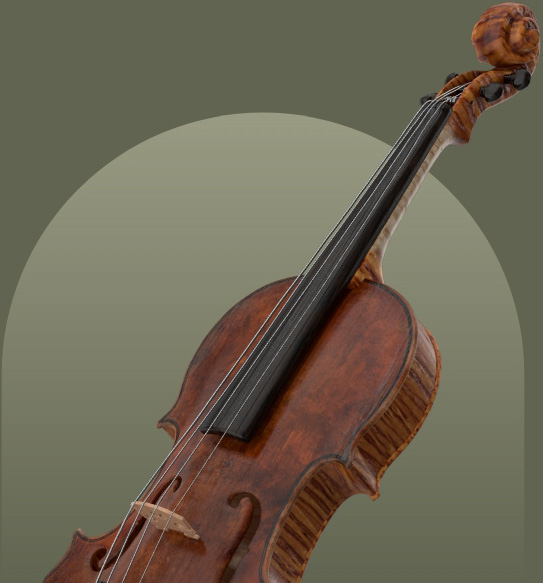
Musician and luthier. Clean work on Germanic models. High arch and narrow edges. Dark opaque varnish. Branded internally: ‘M.F.S.’ Matthaeus Friderich / Scheinlein fecit in / Langenfeldt. 1757 Matth. Fridr. Scheinlein / fecit Langenfeld prope Nürmberg 1768 Matth: Frid: Scheinlein / fecit, in Langenf\u{2026} — John Dilworth
Auction price history
Highest auction price
| Type | Details | Sold | Price |
|---|---|---|---|
| Viola | 40.0 cm 175- | November 1990 | £1,078 |
| Violin | 1757 | March 1981 | £213 |
Maker Overview
Life
Matthaus Friedrich SCHEINLEIN (1710-1771) was born in 1710 in Langenfeld in Franken (Franconia) and died there in 1771. John Dilworth notes that he worked circa 1710 and died in 1771 in Langenfeld, Nuremberg, Germany. Originally a musician, a skilled violinist and harpist, he initially focused on crafting harps, with his so-called 'Davidsharfen' quickly gaining popularity, as detailed by Willibald Leo Lütgendorff. Due to his concurrent violin trade, instruments were brought to him for repair. Lütgendorff explains that he ventured into repairs, and after successfully replacing the top of an old violin, he developed a passion for violin making. He traveled to Mittenwald multiple times to purchase materials and to observe the local masters' techniques. It required several such journeys before he could produce a satisfactory instrument. While his initial instruments reflected his Tyrolean influences, his later and superior violins showcased an original model.
Characteristics
- Model Development
- His early instruments recalled Tyrolean prototypes, but his later and better violins exhibited an original model. Henri Poidras also states that instruments made towards the end of his career followed a model of his own and are considered most interesting.
- Arching and Edges
- John Dilworth describes his work as having a high arch and narrow edges, while Cecie Stainer mentions his instruments are 'much arched'.
- Varnish
- Henri Poidras notes a yellow varnish. John Dilworth describes a dark opaque varnish, and Cecie Stainer mentions a dark brown varnish.
- Workmanship
- John Dilworth characterizes his work as 'clean work on Germanic models'. Cecie Stainer states the work was 'carefully done'.
- Tone Quality
- Willibald Leo Lütgendorff observed that the tone of his violins is good and sharp in the high register, though he generally made his violins too weak.
- Branded internally: ‘M.F.S.’ Matthaeus Friderich
Scheinlein fecit in
Langenfeldt. 1757John Dilworth - Matth. Fridr. Scheinlein
fecit Langenfeld prope Nürmberg 1768John Dilworth - Matth: Frid: Scheinlein
fecit, in Langenfeld prope Nürnberg 1770John Dilworth
Influence and legacy
- Self-Taught Learning: Willibald Leo Lütgendorff details that Matthaus Friedrich Scheinlein traveled to Mittenwald to purchase materials and to learn the art from the masters there, indicating a self-directed apprenticeship or study.
- Tyrolean Influence: Lütgendorff also notes that his first instruments were reminiscent of Tyrolean models.
- Family Continuity: Willibald Leo Lütgendorff states that Matthaus Friedrich Scheinlein left six children, but only his third son continued the paternal art. Henri Poidras identifies this son as Johann Michel, noting that his work is similar to his father's.
Biographies
The overview above is drawn from the following published accounts. Read them in the original:
John Dilworth+
SCHEINLEIN, Matthäus Friedrich Worked circa. 1710, died 1771 Langenfeld, Nuremberg Germany. Musician and luthier. Clean work on Germanic models. High arch and narrow edges. Dark opaque varnish. Branded internally: ‘M.F.S.’ Matthaeus Friderich / Scheinlein fecit in / Langenfeldt. 1757 Matth. Fridr. Scheinlein / fecit Langenfeld prope Nürmberg 1768 Matth: Frid: Scheinlein / fecit, in Langenfeld prope Nürnberg 1770 [Hamma]
Cecie Stainer+
b. 1710, Langenfeld in Franken (Franconia); d. there, 1771. He was a violinist, but taking great interest in violin making, began by repairing old instruments and finished by making excellent new ones. They are much arched, with dark brown varnish, the work carefully done.
Willibald Leo Lütgendorff+
Er war ursprünglich Musiker, tüchtiger Violinist und Harfenspieler und begann zunächst mit der Herstellung von Harfen. Seine sogen. Davidsharfen waren bald sehr beliebt. Da er gleichzeitig einen Geigenhandel betrieb, kam es von selbst, dass man ihm auch Geigen zur Reparatur brachte. Er wagte sich daran, und als ihm einmal gelungen war, einer alten Geige eine neue Decke zu machen, fand er Geschmack an der Geigenmacherei, er reiste nach Mittenwald, um einzukaufen und bei dieser Gelegenheit den dortigen Meistern ihre Kunst »abzusehen«. Er musste jedoch mehrmals die Reise wiederholen, bis es ihm gelang, ein zufriedenstellendes Instrument zu machen. Erinnern seine ersten Instrumente noch an seine Tyroler Vorbilder, so zeigen seine späteren und besseren Geigen ein originelles Modell. Der Ton seiner Geigen ist gut und in der Höhe scharf; nur hat er seine Geigen im Ganzen zu schwach gemacht. Er hinterliess sechs Kinder, von denen nur sein dritter Sohn die väterliche Kunst fortsetzte.
Henri Poidras+
Langenfeld 1710-1771. Good make. Yellow varnish. The work of his son Johann Michel is similar. The instruments made towards the end of his career are after a model of his own, and are most interesting. Label : « Matthaeus Friderich Scheinlein fecit in Langenfeld 1750 ».
Sell your instrument with Amati
Get started by uploading photos of your instrument for our experts to review.
Sell your instrument with Amati
Get started by uploading photos of your instrument for our experts to review.