Michael Strati
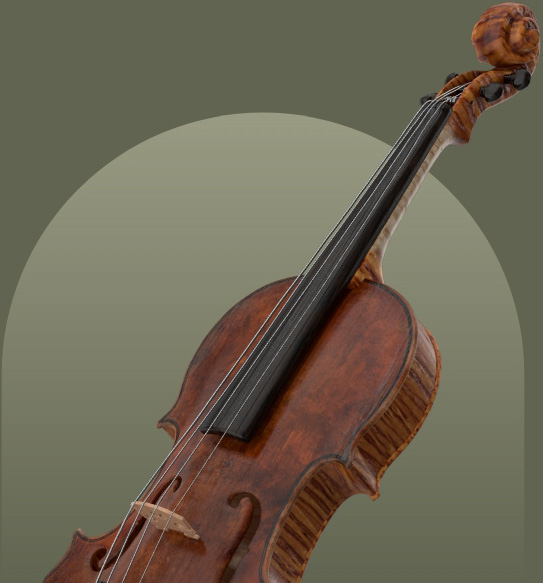
Michael STRATI, purportedly active around 1792 in Verona, Italy, is widely regarded by historians such as Willibald Leo Lütgendorff and John Dilworth as a fictitious name used on violin labels. Despite the lack of a historical maker, instruments bearing this label are noted for their careful workmanship, often imitating the outlines of Guarneri and Stradivari, with sharply cut edges, slanted F-holes, good wood, and yellow varnish, frequently exhibiting characteristics of the French school of violin making.
Maker Overview
Life
Michael STRATI (c.1792) is widely considered to be a fictitious name associated with violin labels, as no historical record of a luthier by this name has been found in Verona, Italy. in Die Geigen- und Lautenmacher vom Mittelalter bis zur Gegenwart, extensive searches of birth and death registers in Verona throughout the entire 18th century yielded no mention of the name 'Strati', leading to the conclusion that a violin maker of this name likely never existed. Lütgendorff suggests that the name might have originated from a misinterpretation of an inscription on a label. John Dilworth, in The Brompton's Book of Violin & Bow Makers, corroborates this, stating that 'Michael Strati' is 'probably a fictitious label' and that 'no trace of the maker has been found in archives'.
Characteristics
- Workmanship
- Instruments bearing the 'Michael Strati' label often exhibit clean, careful workmanship, though sometimes with slight asymmetry between the halves. Karel Jalovec notes in Italian violin makers that the workmanship was careful.
- Design
- The outlines of these instruments are often described as being based on Guarneri models. The edges are sharply cut or bevelled, and the F-holes are slanted inwards or gracefully cut. John Dilworth describes an instrument with such a label as having a 'decidedly commercial French appearance'.
- Materials
- The wood used is generally considered to be good quality.
- Varnish
- The varnish is typically yellow.
- Scroll
- Lütgendorff observed that the scroll on one instrument did not appear to be from the same hand as the rest of the work.
- Tone
- The tone is described as soft, though not particularly powerful.
- Michael Strati
Verona 1792John Dilworth
Influence and legacy
- Models: Instruments attributed to 'Michael Strati' show influences from prominent Italian masters such as Guarneri and Stradivari.
- School: The overall work and appearance often suggest a connection to the French school of violin making.
Biographies
The overview above is drawn from the following published accounts. Read them in the original:
John Dilworth+
STRATI, Michael c.1792 Verona Italy. Probably a fictitious label. No trace of the maker has been found in archives. Label recorded in an instrument of decidedly commercial French appearance. Michael Strati / Verona 1792
Willibald Leo Lütgendorff+
Kammermusiker Salzwedel besitzt eine gute Violine mit dem untenstehenden Zettel. Die Umrisslinien gehen auf Guarneri zurück; die Ränder sind scharf geschnitten, die F-Löcher nach Innen abgeschrägt: die Arbeit erinnert an französische Schule, ist sehr sauber, wenn auch beide Hälften nicht ganz symmetrisch erscheinen. Das Holz ist recht gut, der Lack gelb und der Ton weich, wenn auch nicht gross. Die Schnecke scheint nicht von gleicher Hand herzurühren. Einen Geigenmacher Namens Strati hat es in Verona nicht gegeben. In den Registern der Geborenen und Gestorbenen der Stadt Verona kommt während des ganzen 18. Jahrhunderts der Name »Strati« nicht vor; auch andere alte Register wurden vergebens durchforscht, so dass mit ziemlicher Sicherheit gesagt werden kann, dass ein Geigenmacher dieses Namens nicht gelebt habe. Da der gleiche Zettel trotzdem in mehreren Geigen gefunden wurde, so kann nur angenommen werden, dass man es mit einem fingirten Namen zu thun hat, der vielleicht dadurch entstanden ist, dass dem Verfertiger eine Inschrift vorschwebte, die folgendermaassen aussah: Die untere Zeile konnte dann leicht in Verona verwandelt werden.
Karel Jalovec+
Verona, ca 1792. He imitated, with careful workmanship, Guarneri, Stradivari and the French school, used good wood and applied yellow varnish. The edges of his instruments are sharply bevelled, the gracefully cut sound-holes designed in a slanting position.
Sell your instrument with Amati
Get started by uploading photos of your instrument for our experts to review.
Sell your instrument with Amati
Get started by uploading photos of your instrument for our experts to review.