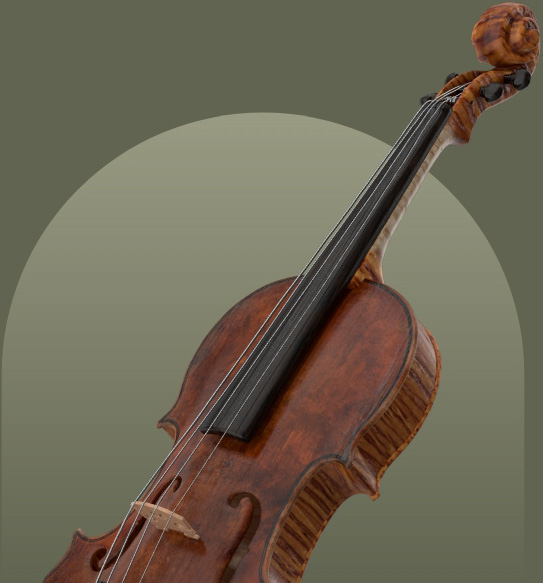
Felice Tononi
b. c.1670
Felice Tononi was a notable luthier from Bologna, active from approximately 1670 to after 1735. He is recognized for producing beautiful instruments, particularly violoncellos, which were highly regarded in Italy for their fine tone and careful workmanship. His instruments often feature a high-arched model, influenced by Amati and Stainer, and are characterized by a distinctive yellow or yellow-brown varnish. Sources present conflicting accounts regarding his relationship with Giovanni Tononi and whether he also worked in Rome.
Maker Overview
Life
Felice Tononi, born circa 1670 and deceased after 1735, was a luthier primarily active in Bologna, Italy. Sources contain conflicting information regarding his family relationships and working locations. worked in association with his son, Giovanni Tononi, around 1670-1690 and 1670-1710 respectively. However, John Dilworth states that Felice was the son of Giovanni Tononi and the brother of Carlo Tononi, and was the chief beneficiary of Carlo's will written in Venice in 1730. Karel Jalovec also suggests that Felice Tononi worked in Rome, a claim that Willibald Leo Lütgendorff states is unproven (nicht erwiesen).
Characteristics
- Workmanship
- Instruments are described as carefully finished, well made, and of solid workmanship.
- Model
- They often feature a high-arched model and are described as Amatisé, following the patterns of Amati and Stainer.
- Varnish
- The varnish is consistently noted as beautiful, soft, and of a yellow, light yellow, or yellow-brown colour.
- Purfling
- Karel Jalovec specifically notes that the purfling is finished in a very delicate manner.
- Tone
- The instruments are known for their fine and excellent tone, with their violoncellos being particularly outstanding and having a great reputation in Italy.
- Tononi di Bologna
fece, anno 16..John Dilworth - Tononi di Bologna
fecit, anno 1670John Dilworth
Influence and legacy
- Stylistic Influence: Felice Tononi's work shows influence from the patterns of both Amati and Stainer, producing what are described as Amatisé cellos.
- Reputation: The violoncellos produced by Felice Tononi and his associate (Giovanni) held a great reputation in Italy.
Biographies
The overview above is drawn from the following published accounts. Read them in the original:
John Dilworth+
TONONI, Felice Born circa. 1670, d. after 1735 Bologna Italy. Son of Giovanni Tononi, below, and brother of Carlo, above. Chief beneficiary of Carlo’s will written in Venice in 1730. Fine Amatisé cellos. Yellow or yellow-brown varnish. Tononi di Bologna / fece, anno 16.. Tononi di Bologna / fecit, anno 1670 [Pasqual]
Cecie Stainer+
A maker in Bologna about 1670-90. He worked in association with his son Giovanni ; their violoncellos have a great reputation in Italy, and are beautiful instruments, of fine tone and carefully finished workmanship ; the varnish is a yellow-brown colour. Labels: ” Tononi di Bologna fecit, anno 1670,” and ” Tononi di Bologna fece, anno 168—.”
Willibald Leo Lütgendorff+
In seinen späteren Jahren arbeitete er mit seinem Sohne Giovanni (nach Anderen: mit Guido) gemeinsam. Gediegene Arbeit, hochgewölbtes Modell, sehr guter, hellgelber oder gelbbrauner Lack. Besonders gut im Ton sind seine Violoncelli. Dass er auch in Rom gearbeitet hat, ist nicht erwiesen.
Henri Poidras+
These excellent workmen have left some good ‘cellos. Their instruments are rather high built and well made.
Karel Jalovec+
Bologna. 1670 — 1710. Worked carefully, in company with his son Giovanni, on the patterns of Amati and Stainer, applied a beautiful soft yellow or yellow brown varnish. The purfling is finished in a very delicate manner. He worked also in Rome. In tone his instruments are excellent; particularly outstanding are his ‘cellos. Price 30-50.000 Kc, ‘cello more.
Sell your instrument with Amati
Get started by uploading photos of your instrument for our experts to review.
Sell your instrument with Amati
Get started by uploading photos of your instrument for our experts to review.