
Florence School
Pier (Pietro) Lorenzo Vangelisti (Evangelisti)
Florence, worked 1700–1746
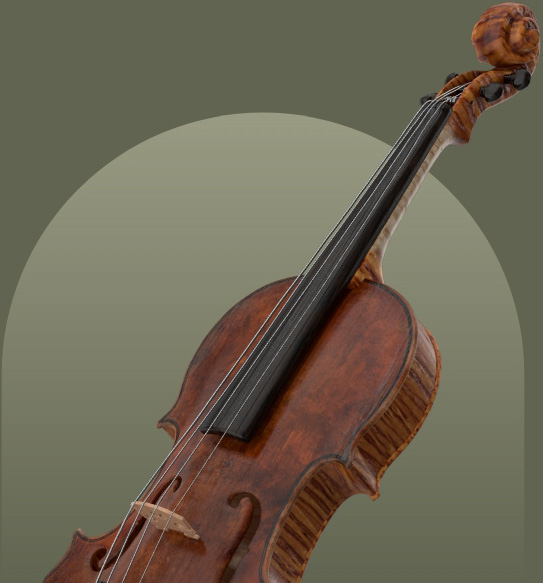
Pier (Pietro) Lorenzo Vangelisti (Evangelisti) was a luthier active in Florence, Italy, from approximately 1700 to 1746. While some sources, like Lütgendorff, categorized him as a "third-rank violin maker," others, such as Henri Poidras, considered his work to be of "Good make," particularly noting the quality of his basses, cellos, and contrabasses. His instruments, which are now quite rare, often featured a medium-sized, high-arched model influenced by Gabrielli, with some Stradivari influence evident in the scroll and soundholes. Vangelisti used various labels, and a violin made by him is preserved in the Museum Kraus in Florence.
Auction price history
Highest auction price
| Type | Details | Sold | Price |
|---|---|---|---|
| Violin | 35.6 cm Lorence, 1743 | October 2010 | £9,764 |
| Violin | 35.5 cm Florence, 1745 (head replaced) | June 2008 | £18,104 |
Maker Overview
Life
Pier (Pietro) Lorenzo VANGELISTI (EVANGELISTI) worked in Florence, Italy, from approximately 1700 to 1746, with Karel Jalovec specifying 1700-1745 and John Dilworth noting circa 1700-1746. Willibald Leo Lütgendorff, in Die Geigen- und Lautenmacher vom Mittelalter bis zur Gegenwart, describes him as a "Geigenmacher dritten Ranges" (a third-rank violin maker), though acknowledging the existence of some good basses. Lütgendorff also observes that Vangelisti used various labels, suggesting prolific output, yet his instruments are now quite rare. This rarity leads Lütgendorff to speculate that his works either suffered rapid decay or were re-labeled by dealers with more famous names.
Characteristics
- Model
- He worked on a medium-sized high-arched model, similar to that of Gabrielli in Italian violin makers. John Dilworth, in The Brompton’s Book of Violin & Bow Makers, further describes the arching as of medium height, but full and box-like with a deep and narrow edge flute.
- F-holes & Soundholes
- Willibald Leo Lütgendorff highlights his sharply bent F-holes in the upper part as distinctive. Karel Jalovec describes his sound-holes as gracefully shaped. John Dilworth identifies a Stradivari influence in both the scroll and soundholes.
- Edges & Purfling
- Karel Jalovec notes that his instruments have rather broad edges. John Dilworth specifies broad purfling.
- Materials
- Karel Jalovec states that the wood he used is nearly always of fine quality. Conversely, John Dilworth notes that the materials were fairly plain.
- Varnish
- Karel Jalovec describes a good yellow or light yellow varnish. Henri Poidras, in his Critical & Documentary Dictionary Of Violin Makers Old & Modern, also mentions yellow varnish. However, John Dilworth characterizes it as a plain brown spirit varnish, though transparent and attractive.
- Workmanship
- Willibald Leo Lütgendorff assesses him as a "Geigenmacher dritten Ranges" (a third-rank violin maker). Henri Poidras, however, describes his work as a "Good make." John Dilworth offers a perspective that the work overall was a little unrefined.
- Instruments
- Lütgendorff mentions some good basses. Karel Jalovec specifically praises his ‘cellos and contrabasses as very good.
- Labels
- He used various labels. John Dilworth provides examples of his manuscript labels, such as "Pierre Lorenzo Vangelisti / Fecit F: Ao. 1726," "Pier Lorenzo Vangelisti / L’anno 1750 in Firenza," and "Pier Lorenzo Vangelisti / fece l’Anno 1739 in Firenza."
- Pierre Lorenzo Vangelisti
Fecit F: Ao. 1726John Dilworth - Pier Lorenzo Vangelisti
L’anno 1750 in Firenza Pier Lorenzo Vangelisti
fece l’Anno 1739 in FirenzaJohn Dilworth
Influence and legacy
- School & Style: John Dilworth places him in the school of Gabrielli.
- Influences: John Dilworth also notes some Stradivari influence in the scroll and soundholes of his instruments.
- Museum Holdings: A violin made by him is preserved in the Museum Kraus in Florence, as documented by Willibald Leo Lütgendorff.
Biographies
The overview above is drawn from the following published accounts. Read them in the original:
John Dilworth+
VANGELISTI (EVANGELISTI), Pier (Pietro) Lorenzo Worked circa. 1700-1746 Florence Italy. School of Gabrielli, but some Stradivari influence in the scroll and soundholes. Arching of medium height, but full and box-like with deep and narrow edge flute. Broad purfling. Plain brown spirit, but transparent and attractive. Materials fairly plain. Work overall a little unrefined. Manuscript labels: Pierre Lorenzo Vangelisti / Fecit F: Ao. 1726 Pier Lorenzo Vangelisti / L’anno 1750 in Firenza Pier Lorenzo Vangelisti / fece l’Anno 1739 in Firenza
Willibald Leo Lütgendorff+
Ein Geigenmacher dritten Ranges, von dem es jedoch einige gute Bässe giebt. Er hatte kein ausgesprochenes Modell und arbeitete im Stile Gabrielli’s; nur seine im oberen Theile scharf gebogenen F-Löcher sind eigenartig. Eine Violine von ihm befindet sich im Museum Kraus in Florenz. Er gebrauchte verschiedene Zettel, was darauf schliessen lässt, dass er viel gemacht hat. Es muss daher auffallen, dass seine Arbeiten jetzt ziemlich selten vorkommen. Sie sind entweder einem raschen Verfall ausgesetzt gewesen oder aber von Händlern mit berühmteren Namen versehen worden.
Henri Poidras+
Gabrielli style. Yellow varnish. Good make.
Karel Jalovec+
Florence. 1700 — 1745. He worked on a medium-sized high-arched model similar to that of Gabrielli. His instruments have rather broad edges and gracefully shaped sound-holes; the wood he used is nearly always of fine quality. He applied a good yellow or light yellow varnish. Very good are his ‘cellos and contrabasses. Price 15-35.000 Kc., ‘cello more.
Sell your instrument with Amati
Get started by uploading photos of your instrument for our experts to review.
Sell your instrument with Amati
Get started by uploading photos of your instrument for our experts to review.
Working in Florence at the same time
Bartolomeo Cristofori 1653–1731
C. Carotti worked 1694
Fredimaur worked 1736–1760
Gaspero Piattellini worked 1738–1780
Giovanni Battista Gabrielli 1716–1771
Giovanni Bianchi worked 1746
Lorenzo Bomberghi worked 1680–1710
Pietro Antonio Cati worked 1735–1763