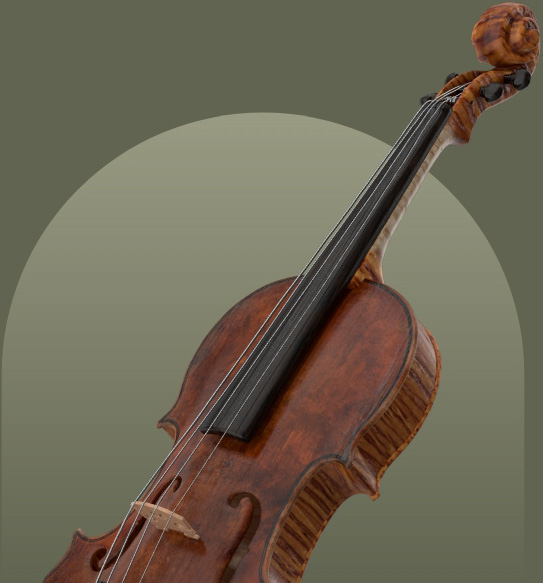
Girolamo (Hieronymus) Virchi
b. c.1523
Girolamo (Hieronymus) Virchi, born circa 1523 in Brescia, Italy, was a prominent 'maestro de istrumenti de musica' and a skilled wood carver. Trained by his father in wood carving and clog making, he established a flourishing workshop in Brescia, producing citterns, lutes, and other instruments. He was a close associate and possibly a teacher of Gasparo da Salò, even serving as godfather to Gasparo's son. Virchi's artistic contributions extended to elaborate wood carvings and marquetry for civic and religious structures, often collaborating with his brothers. His work, characterized by detailed figurative carving, is preserved in institutions like the Kunsthistorischesmuseum, Vienna, and the Ambraser Collection.
Maker Overview
Life
Girolamo (Hieronymus) Virchi (circa 1523-after 1573) was born around 1523 in Brescia, Italy., he was a pupil of his father, learning wood carving and clog making. City records from 1563 identify him as a 'maestro de istrumenti de musica', a title also noted by Karel Jalovec as "Maestro de instrumente de Musica" from 1563. He headed a thriving workshop in Brescia, producing citterns, wood carvings, and various decorations for the city. In 1565, he was present as godfather at the baptism of Francesco, son of Gasparo da Salò. Karel Jalovec and Willibald Leo Lütgendorff suggest that Virchi was a friend and possibly a teacher of Gasparo da Salò. His son, Paolo, born in 1551, was employed by the d'Este court as a violist and composer. Girolamo, along with his brothers Battista and Benedetto (who was also a cittern maker), was responsible for an elaborately carved organ loft and marquetry in the choir stalls of S. Francesco in Brescia.
Characteristics
- Instrument Making
- Girolamo Virchi's workshop in Brescia produced citterns, lutes, and other musical instruments, and Cecie Stainer.
- Woodcarving and Decoration
- He was also known for extensive wood carvings and decorations within Brescia, including an extravagantly carved organ loft and marquetry in the choir stalls of S. Francesco, created with his brothers Battista and Benedetto.
- Surviving Citterns
- A surviving cittern in the Kunsthistorischesmuseum, Vienna, inscribed 'Hieronymu (s) Brixiensis', exhibits painted figurative woodcarving. John Dilworth notes that the style of this carving shows obvious similarities to the Gasparo da Salò 'Ole Bull' violin in the Bergen Vestlandske Kustindustrimuseum, indicating a close working relationship between Virchi and Gasparo.
- Ambraser Zitherlaute
- Willibald Leo Lütgendorff describes a "Zitherlaute" from the 1596 inventory of the Ambraser Collection, which is still extant. This instrument features a carved Lucretia Romana on the neck, 12 metal strings (two drawn closely together), and is adorned with beautiful carving, partly painted and gilded. The fingerboard bears the name "Hieronimus Brixiensis", and the back displays the Tyrolean and Archducal coats of arms. Lütgendorff notes its resemblance to a similar cittern by G. P. Maggini in the Museo Modena.
- Known Labels
- Cecie Stainer records a known label: 'Hieronirno di Vir in Bresa.' Willibald Leo Lütgendorff also mentions that Vidal shared a label, which must have come from an instrument made by Gerolamo Virchi.
Influence and legacy
- Early Training: was a pupil of his father, learning the crafts of wood carving and clog making.
- Mentorship Possibility: Karel Jalovec and Willibald Leo Lütgendorff suggest that Virchi was a friend of Gasparo da Salò and potentially his teacher.
- Family Involvement: His brother, Benedetto Virchi, was also recorded as a cittern maker. Girolamo's son, Paolo Virchi (born 1551), became a violist and composer employed by the d'Este court.
- Museum Collections: A cittern inscribed 'Hieronymu (s) Brixiensis' is preserved in the Kunsthistorischesmuseum, Vienna. The Ambraser Collection also holds a "Zitherlaute" attributed to him, as detailed by Willibald Leo Lütgendorff.
Biographies
The overview above is drawn from the following published accounts. Read them in the original:
John Dilworth+
VIRCHI, Girolamo (Hieronymus) Born circa. 1523 Brescia Italy. Pupil of his father in wood carving and clog making. Recorded as ‘maestro de istrumenti de musica’ in the city records of 1563. Present as godfather at the baptism of Francesco, son of Gasparo da Salò, 1565. Head of a flourishing workshop in Brescia which made citterns and also many wood carvings and decorations in the city. He was responsible (with his brothers Battista and Benedetto – also recorded as a cittern maker) for an extravagantly carved organ loft and marquetry in the choir stalls of S. Francesco, Brescia. A son, Paolo (Born 1551), was employed by the d’Este court as a violist and composer. Obvious similarities in the style of painted figurative woodcarving seen on a surviving cittern (Kunsthistorischesmuseum, Vienna) inscribed ‘Hieronymu (s) Brixiensis’ and the Gasparo da Salò ‘Ole Bull’ violin (Bergen Vestlandske Kustindustrimuseum) make it clear that the two men, Virchi and GasparO, worked closely together.
Cecie Stainer+
The following label is known : ‘ Hieronirno di Vir in Bresa.” A maker of lutes and other instruments in Brescia.
Willibald Leo Lütgendorff+
Sein eigentlicher Familienname war vielleicht Geraldi. Im alten Inventar der Ambraser Sammlung von 1596 wird bereits eine (noch vorhandene) Zitherlaute beschrieben: »Ain Ziter, am Kragen die Lucretia Romana geschnitten . . . 12 Metallsaiten, wovon je zwei dicht neben einander gezogen sind. Alles mit schöner Schnitzarbeit verziert, zum Theil gemalt und vergoldet. . . Am Griffblatte der Name Hieronimus Brixiensis. Auf der Rückseite das tyrolische und erzherzogliche Wappen.« An anderer Stelle wird dann berichtet, wo die verschiedenen Instrumente gekauft wurden; einzelne Namen werden angegeben, darunter Hieronymus Geraldi. Es liegt also nahe, den Hieronymus Brixiensis mit Hieronymus Geraldi zu identificiren. Die erwähnte Zitherlaute erweist sich auf den ersten Anblick als Brescianer Arbeit und sieht einer ebensolchen Zither von G. P. Maggini im Museo Modena ganz ähnlich. In Brescia lasst sich im 16. Jahrhundert nur ein Lautenmacher mit dem Taufnamen Hieronymus nachweisen; es ist dies der Freund und vielleicht Lehrer Gasparo da Salò’s. Als Pathe eines Sohnes Gasparo’s wird er aufgeführt unter dem Namen »Hyeronimus de Virchis«. In anderen Urkunden wird er ausdrücklich: »Magistro de instrumenti de Musica« genannt. Vidal theilt den Zettel mit; auch das Instrument, aus dem dieser Zettel stammt, muss eine Arbeit Gerolamo Virchi’s gewesen sein. Das auf Bestellung des Erzherzogs gemalte Tyroler Wappen auf dem Boden der Lautenzither ist schuld, dass F. Trautmann u. A. die Bezeichnung »Brixiensis« mit »aus Brixen (in Tyrol)« deuten zu müssen glaubten; komisch aber wirkt es, wenn Miss Stainer die Ortsangabe »Bresa« (im Deutsch des 16. Jahrhunderts »Pressa«) mit »Bresa in Silesia« deutet und dabei wohl an Breslau denkt.
Karel Jalovec+
Born about 1523 died after 1573. Son of the master Bernardino di Virchi. From 1563 he had the predicate of “Maestro de instrumente de Musica”. He was Gasparo de Salo’s friend and perhaps his teacher. He is known to have been a lute maker.
Sell your instrument with Amati
Get started by uploading photos of your instrument for our experts to review.
Sell your instrument with Amati
Get started by uploading photos of your instrument for our experts to review.