
Naples School
Antonio Vinaccia
Naples, worked 1756–1784
Antonio Vinaccia was an 18th-century Neapolitan instrument maker, primarily renowned for his mandolins, though he also produced notable violins. He was part of the prominent Vinaccia family of makers, with sources indicating he was either the son of Gennaro Vinaccia or Nicolas V., and himself the father of makers Gennaro and Gaetano. His craftsmanship was influenced by masters such as Nicole Gagliano, and his works, including elaborately inlaid mandolins, are preserved in the Museo Spagnuolo in Naples.
Auction price history
Highest auction price
| Type | Details | Sold | Price |
|---|---|---|---|
| Violin | Labelled Antonius Vinaccia Fecit Neapoli Anno 1781 | March 2025 | £63,797 |
| Violin | 35.6 cm Naples, 1800 c. [Possibly by] | November 2006 | £13,865 |
| Violin | 1764 | June 2001 | £10,350 |
| Violin | 17-- | June 1985 | £7,674 |
Maker Overview
Life
Antonio Vinaccia worked in Naples during the 18th century. Sources contain conflicting information regarding his parentage and exact working dates., he worked circa 1756-1784 and was the son, pupil, and assistant of Gennaro Vinaccia. Dilworth notes that Antonio established independently in via Constantii from 1756, but evidence from known labels suggests he returned to his father's workshop in rua Catalana around 1770. Willibald Leo Lütgendorff considers him the progenitor of the Vinaccia family, though he suggests Antonio might have been the son of Nicolas V. Karel Jalovec states he worked from 1734 to 1781 and was probably the son of Nic. Vinaccia. Cecie Stainer notes his working period as about 1766-1774.
Characteristics
- Violin Characteristics
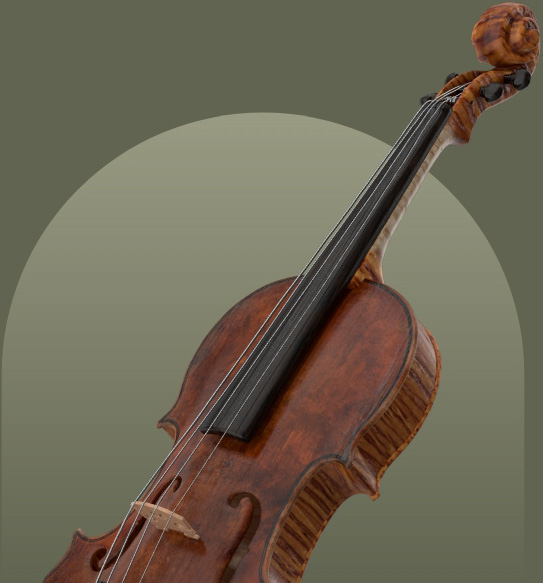
- 's violins feature a distinctive model with slightly pointed upper and lower bouts. The soundholes are narrow and slightly outward leaning, and the purfling is described as typical skimpy Neapolitan. The scroll recalls Eberle, with a long Gagliano-like pegbox and a slightly Tyrolean-looking volute. The wood quality was variable. The varnish is typical Neapolitan, with a slightly hard texture, dark golden-brown color, and a greenish-yellow underlayer.
- Mandolin Craftsmanship
- Willibald Leo Lütgendorff notes that Antonio Vinaccia achieved high perfection in mandolin making. Cecie Stainer adds that some of his mandolins in the Museo Spagnuolo feature backs beautifully inlaid with ivory, mother-o'-pearl, and tortoiseshell.
- General Workmanship
- Karel Jalovec states that Antonio Vinaccia worked on the patterns of old masters, chiefly Nicole Gagliano, exhibiting good workmanship and using a brown varnish of good quality.
- Antonius Vinaccia fecit Neap
In via Constantii, 1756John Dilworth - Antonius Vinaccia fecit
Napoli 1769John Dilworth - Antonius Vinaccia
filius Januarii fecit Neapoli
alla Strada, Rua Catalana, 1770John Dilworth
Influence and legacy
- Mentorship: was the son, pupil, and assistant of Gennaro Vinaccia. However, sources contain conflicting information regarding his father, with Willibald Leo Lütgendorff suggesting he might be the son of Nicolas V., and Karel Jalovec stating he was probably the son of Nic. Vinaccia.
- Stylistic Influence: Antonio Vinaccia worked on the patterns of old masters, chiefly Nicole Gagliano.
- Family Continuity: Antonio Vinaccia's sons, Gennaro and Gaetano, also became makers, continuing the family tradition.
- Preserved Works: Several of his works, including mandolins made for Carl III v. Bourbon, are preserved in the Museo Spagnuolo in Naples (Palazzo degli Studi).
Biographies
The overview above is drawn from the following published accounts. Read them in the original:
John Dilworth+
Antonio Worked circa. 1756-1784. Son, pupil, and assistant of Gennaro Vinaccia, below. Established independently in via Constantii from 1756, but, from the evidence of known labels, returned to his father’s workshop in rua Catalana c.1770. Chiefly known for mandolins, but some impressive violins known. Distinctive model with slightly pointed upper and lower bouts. Soundholes narrow and slightly outward leaning. Typical skimpy Neapolitan purfling. Scroll recalling Eberle, with long Gagliano-like pegbox and slightly Tyrolean looking volute. Wood of variable quality. Typical Neapolitan varnish; slightly hard texture, dark golden-brown, with greenish yellow underlayer. Antonius Vinaccia fecit Neap / In via Constantii, 1756 Antonius Vinaccia fecit / Napoli 1769 Antonius Vinaccia / filius Januarii fecit Neapoli / alla Strada, Rua Catalana, 1770
Cecie Stainer+
The head of a family of makers. He worked in Naples about 1766-74. He made a few violins, on the pattern of Gagliano, but also made excellent mandolines; some of these are in the Museo Spagnuolo (Palazzo degli Studi), Naples, and have the backs beautifully inlaid with ivory, mother-o’-pearl, and tortoiseshell. Label: ” Antonius Vinaccia, Napoli in Via Constantinii, a. 1766.” A similar label is dated 1774. His two sons, Gennaro and Gaetano, were also makers.
Willibald Leo Lütgendorff+
Er wird als der Stammvater der Familie betrachtet, ist aber vielleicht ein Sohn von Nicolas V. und kann als ein Nachahmer von Gagliano gelten. Er machte jedoch nur wenig Streichinstrumente und verlegte sich frühzeitig auf die Herstellung von Mandolinen, worin er es zu hoher Vollkommenheit brachte. Im Museo Spagnuolo in Neapel (Palazzo degli Studi) sind Arbeiten von ihm, die er für Carl III v. Bourbon anfertigte, erhalten, die seine Geschicklichkeit glänzend erweisen. Gennaro und Gaetano waren sein Söhne.
Henri Poidras+
Mandolin makers of repute, numbering no less than twelve members of the family. Among those who made violins, Uennaro should be mentioned for his instruments recalling Gagliano, thoroughly made and coated with a dark yellow varnish.
Karel Jalovec+
Naples. 1734—1781. Probably son of Nic. Vinaccia. Worked on the patterns of old masters, chiefly of Nicole Gagliano. Good workmanship; brown varnish of good quality. Price 15.000 Kc.
Sell your instrument with Amati
Get started by uploading photos of your instrument for our experts to review.
Sell your instrument with Amati
Get started by uploading photos of your instrument for our experts to review.
Family
Gaetano Vinaccia Son
Mariano Vinaccia Son
Working in Naples at the same time
Antonio (I) Gagliano worked 1780–1800
Antonio Magnus worked 1780–1802
Carlo (II) Bergonzi 1757–1836
Carlo Gagliano worked 1740–1780
Donato Filano worked 1760–1785
Ferdinando Gagliano worked 1770–1795
Filippo Galieri worked 1761
Gaetano Vinaccia 1758–1831