
Wurzburg School
Zacharias Fischer
Wurzburg, 1730–1812
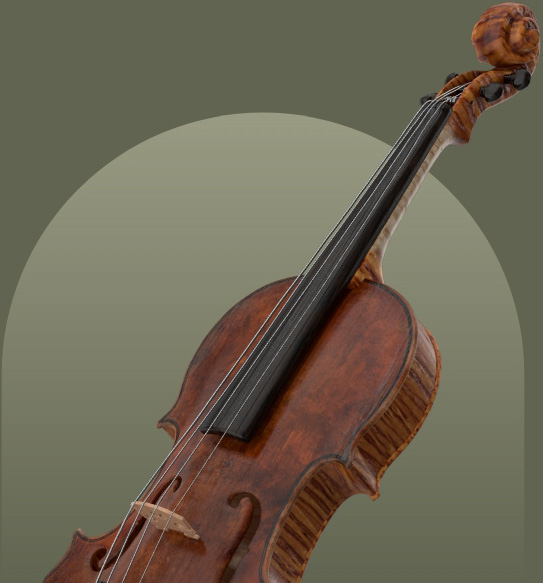
Zacharias Fischer (1730-1812) was a Würzburg-based violin maker, son and pupil of P. J. Fischer. He was known for his fine workmanship, often emulating Tyrolean Klotz or Amati models, and using a distinctive red-brown crackled varnish. While his best instruments from 1770-1780 are praised for their full and powerful tone, his later work was impacted by his controversial 1786 invention of drying wood in an oven, a method that ultimately compromised the tonal quality and durability of his instruments. He also crafted plucked instruments and guitars.
Auction price history
Highest auction price
| Type | Details | Sold | Price |
|---|---|---|---|
| Violin | October 2012 | £1,250 | |
| Violin | 35.4 cm Wurzburg, 1787 | February 2010 | £2,502 |
| Violin | 1782 | March 1997 | £1,380 |
Maker Overview
Life
Zacharias Fischer (1730-1812) was born on November 5, 1730, in Würzburg, Germany, and passed away there on November 27, 1812. He is recognized among violin makers whose work, despite being somewhat overestimated at times, still justifies their good reputation to a certain extent. His finest violins date from the years 1770 to 1780, possessing a full and powerful tone, though not as noble as that of the Amati school he emulated. Fischer diligently studied his models and achieved a high degree of cleanliness in his workmanship. However, he eventually deviated from traditional methods. In 1786, he announced the invention of a process that he claimed would make his new violins equal in quality to those of Stradivari and Stainer. This method, however, most likely involved drying, or 'baking,' the wood in an oven. George Hart notes that this practice of baking wood for violin manufacture was adopted by Fischer. Cecie Stainer further explains that this method, though often attempted, has never proven successful because it is impossible to make the drying process gradual enough, resulting in a loss of tonal brilliancy. Consequently, many of his instruments from his later years are now often found to be spoiled.
Characteristics
- Models
- Fischer utilized Tyrolean Klotz or Amati models for his instruments.
- Workmanship
- He was known for his fine workmanship, closely approaching the cleanliness of his predecessors' work.
- Purfling
- Some of his instruments were embellished with an angular purfling pattern.
- Varnish
- His instruments featured a red-brown crackled varnish.
- Wood Treatment
- In 1786, Zacharias Fischer introduced a method of drying wood in an oven, believing it would elevate his instruments to the quality of Stradivari and Stainer. This process, however, was found to make it impossible to achieve a gradual drying, leading to a loss of tonal brilliancy and often resulting in the spoilage of instruments made in his later years.
- Labels in Gothic type: Zacharias Fischer, Hochfurstl:Lauten
und Geigenmacher in Würzburg, 1771John Dilworth - Zacharias Fischer, hochfurstl.
Lauten und Geigenmacher in
Wirzburg 1791John Dilworth
Influence and legacy
- Mentorship: Zacharias Fischer was the son and pupil of P. J. Fischer.
- Study: He incessantly studied his predecessors' models.
- Reputation: Although his work was at times overestimated, his reputation is still justified to a certain degree.
- Reception: His instruments continue to be liked.
Biographies
The overview above is drawn from the following published accounts. Read them in the original:
John Dilworth+
FISCHER, Zacharias Born 1730, died 1812 Würzburg Germany. Son and pupil of P. J. Fischer, above. Tyrolean Klotz or Amati model. Fine workmanship. Some embellished with angular purfling pattern. Red-brown crackled varnish. Also made plucked instruments. Labels in Gothic type: Zacharias Fischer, Hochfurstl:Lauten / und Geigenmacher in Würzburg, 1771 Zacharias Fischer, hochfurstl. / Lauten und Geigenmacher in / Wirzburg 1791 [Hamma]
George Hart+
This maker adopted the practice of baking the wood for the manufacture of Violins.
Cecie Stainer+
b. Nov. 5, 1730, Wurzburg; d. there Nov. 27, 1812. He announced, in 1786, that in making his instruments he employed a new method by means of which they equalled those of Stradivari and of Stainer. This was the method of drying the wood in an oven, which has since often been tried but never found to answer, as it is impossible to make the process gradual enough, the result being that the tone loses all brilliancy. His instruments are liked.
Willibald Leo Lütgendorff+
Er gehört zu den Geigenmachern, die, wenn auch eine Zeit lang überschätzt,
doch durch ihre Arbeit den guten Ruf, den sie besessen, auch heute noch bis
zu einem gewissen Grade rechtfertigen. Am besten sind seine Geigen aus den
Jahren 1770—1780, deren Ton, wenn auch nicht so edel wie der, der von ihm
nachgeahmten Amatischule, immerhin recht voll und kräftig ist. Er studirte
seine Vorbilder unablässig und kam ihnen in der Sauberkeit der Arbeit sehr nahe,
leider aber gerieth er schliesslich auf Abwege. Im Jahre 1786 machte er bekannt,
dass er ein Verfahren erfunden habe, welches es ihm ermögliche, seine neuen
Geigen denen des Stradivari und Stainer gleichwerthig zu machen. Dieses Verfahren
bestand jedoch aller Wahrscheinlichkeit nach nur darin, das Holz im Ofen auszutrocknen,
d. h. zu backen, wesshalb es begreiflich erscheint, dass seine Geigen aus seinen späteren Lebensjahren jetzt meist verdorben sind. Er gebrauchte verschiedene Zettel und machte auch Guitarren.
Sell your instrument with Amati
Get started by uploading photos of your instrument for our experts to review.
Sell your instrument with Amati
Get started by uploading photos of your instrument for our experts to review.
Working in Wurzburg at the same time
Echinger worked 1810–1845
Joannes Fischer worked 1762
Johann Anton Gedler 1720–1790
Mathaus Wenceslaus Stautinger (Staudinger) worked 1745–1785