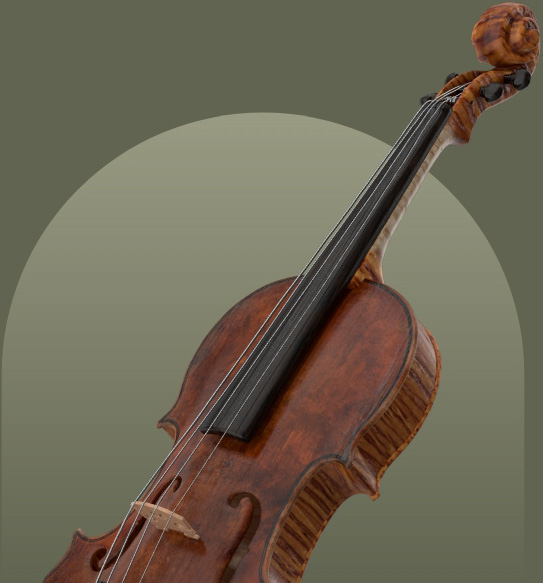
Rocco Donis
Florence, worked 1690–1725
Both Vannes and Henley suggest much earlier dates, but surviving violins are in the style of Gabrielli, suggesting a working period in the first half of the eighteenth century. Very full arching and strong Stainer influence in scroll, soundholes, and outline. Gold-orange varnish. There may be two ma\u{2026} — John Dilworth
Biographies
The overview above is drawn from the following published accounts. Read them in the original:
John Dilworth+
DONIS Rocco Worked circa. 1690-1725 Florence Italy. Both Vannes and Henley suggest much earlier dates, but surviving violins are in the style of Gabrielli, suggesting a working period in the first half of the eighteenth century. Very full arching and strong Stainer influence in scroll, soundholes, and outline. Gold-orange varnish. There may be two makers of this name; father and son. Several richly decorated lutes are cited with this name also. Rocco Doni fece 1700 in Firenze / Gio:Batta Gabbrielli restauravit / fece il copechio 1708 (new top made by Gabrielli 1708)
Cecie Stainer+
A priest in Florence, 1600-60, who made lutes and violins. It is probable that he greatly assisted the celebrated G. B. Doni (to whom he was related) in working out his idea of the ” Lira Barberina,” an instrument copied from the ancient Greeks.
Willibald Leo Lütgendorff+
Als Priester führte er vor seinem Taufnamen auch den Titel Dom. Er
hat ziemlich viele Lauten und Geigen gemacht und dürfte ein Verwandter des
berühmten Gian. Battista Doni gewesen sein. Im Verzeichniss der Musikinstrumente
des Herzogs von Florenz, das Cristofori am 23. Sept. 1716 angefertigt
hat, heisst es: »N° 45. Basetto oprã del sacerdote Rocco Doni con corpo
stiacciato con sua arco.«
Sell your instrument with Amati
Get started by uploading photos of your instrument for our experts to review.
Sell your instrument with Amati
Get started by uploading photos of your instrument for our experts to review.