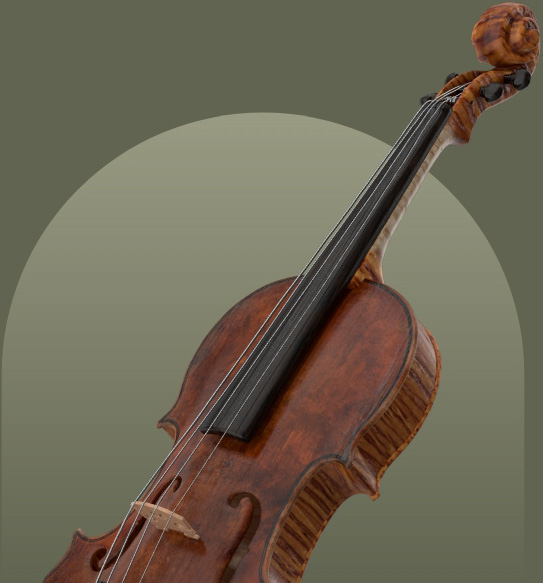
Alessandro Gagliano
Naples, worked 1700–1730
Alessandro Gagliano (c. 1640-c. 1730) was the pivotal founder of the Gagliano dynasty and the Naples school of violin making. While his labels claimed him as a pupil of Antonio Stradivari, a point of contention among historians, he established a unique style in Naples. His instruments, often of a large pattern, feature a distinctive varnish described variously as golden-red, yellow, or greyish-yellow. Gagliano's work is characterized by a long stop length, low-set soundholes with broad curves, and an Amatisé outline. Although his scrolls were sometimes roughly cut, he utilized outstanding materials, producing violins, cellos, and violas with a powerful tone. He successfully brought his sons, Nicola and Gennaro, into the trade, establishing a significant legacy in Italian violin making.
Auction Price History
Highest auction price
15 results
| Type | Details | Auction house | Sold | Price |
|---|---|---|---|---|
| Violin | Labelled Alexander Gaglianus me fecit Neapoli 17... Lot 48 | Ingles & H. | October 2024 | £132,000est. £ 60,000-80,000 |
| Violin | 35.7 cm 1790 c. | — | March 2008 | £7,605 |
| Violin | 35.3 cm Naples, 1720 c. | — | March 2008 | £36,500 |
| Violin | 35.4 cm Naples, 1720 c. (varnish later & scroll by "Giuseppe Gagliano) | — | October 2007 | £82,817 |
| Violin | 35.6 cm Naples, 1702 | — | April 2007 | £103,103 |
| Violin | 35.1 cm Naples, 1720 The scroll by Giovanni Battista Rogeri | — | November 2006 | £63,154 |
| Cello | Naples, 1724 | — | February 2005 | £86,400 |
| Violin | Attributed to | — | July 2004 | £3,824 |
| Cello | 1709 | — | November 2002 | £138,650 |
| Violin | 1720 | — | October 2002 | £45,888 |
| Violin | 1709 | — | November 1999 | £123,743 |
| Cello | 1700 c. | — | November 1995 | £80,700 |
| Violin | 1700 c. Stradivari top, with Provenance & Lit. | — | June 1988 | £38,500 |
| Violin | 1715 c. | — | March 1988 | £33,000 |
| Violin | 1700 c. | — | March 1981 | £10,651 |
No results match those filters.
Maker Overview
Life
Alessandro Gagliano (c. 1640-c. 1730) was the founder of the Gagliano dynasty and the Naples school of violin making., he was born around 1640 in Naples and died there around 1730. Stainer recounts that he initially studied music and made mandolines and lutes in his leisure moments. A dramatic event, specifically killing an adversary in a duel, reportedly forced him to leave Naples and go to Cremona. There, he is said to have entered Antonio Stradivari's workshop, remaining for about thirty years and demonstrating great ability, with Stainer suggesting that many of Stradivari's instruments might have been prepared by him. However, John Dilworth notes that Gagliano's claim on his labels to have been a pupil of Stradivari is made despite his work being distinctly different from his successors in Naples. Willibald Leo Lütgendorff also mentions the duel story from Jussupoff and Gagliano's claim on his labels, but finds the assertion of him being Stradivari's assistant for 30 years highly improbable. George Hart states that Alessandro Gagliano, upon leaving Stradivari's workshop, moved to Naples, believing the city offered greater scope for his talents than Cremona, where he felt his chances of success were small amidst the greatest luminaries of his art. Stainer indicates he was able to return to Naples in 1695 and established a business, quickly becoming well known. His labors in Naples were so well rewarded that he encouraged his sons to follow his calling, leading to what Hart describes as a virtual monopoly of violin manufacture in and around Naples, as no other maker of importance is recorded in that locality during the same period.
Characteristics
- Working Period & Location
- Alessandro Gagliano worked circa 1700-1730 in Naples, Italy.
- Varnish
- Sources contain conflicting information regarding Gagliano's varnish. John Dilworth describes it as a "richly coloured golden-red oil varnish." George Hart characterizes it as "very transparent, and of various shades, chiefly yellow," distinct from Cremona varnish. Willibald Leo Lütgendorff notes it as "hellgelb und durchsichtig" (light yellow and transparent) with a "Stich ins Graue" (a hint of grey). Cecie Stainer mentions a "good strong varnish, greyish-yellow colour."
- Model & Outline
- His work is "mostly of large pattern and flat model,". John Dilworth describes the outline as "somewhat Amatisé, well proportioned and elegant," with a "long stop length, the soundholes set low on the body, with very broad curves in the lower half." Lütgendorff states his violins are "gross und flach gewölbt" (large and flat arched), reminiscent of Stradivari's 1725-30 model. Stainer notes his instruments are "generally on a large pattern, which, in the arching, in the thicknesses, and in the carefully finished work, recall his master."
- Soundholes
- George Hart and Cecie Stainer both describe the soundholes as "broader and more perpendicular than those of Stradivari." Lütgendorff adds they are "sehr steil und ziemlich offen" (very steep and quite open).
- Scroll & Pegbox
- John Dilworth notes the pegbox is "Often lightly decorated... in slightly Germanic style and with extended corners." In contrast, George Hart describes the scroll as "diminutive, and the turn much contracted and of a somewhat mean appearance," with "roughly executed" workmanship, suggesting Gagliano "was not gifted with the power of head-cutting." Lütgendorff similarly states the scroll is "klein und manchmal nicht sehr sorgfältig geschnitzt" (small and sometimes not very carefully carved). Stainer also notes the scroll is "rather roughly cut."
- Materials
- John Dilworth highlights "Outstanding materials," with his most famous violins, such as the ‘Rotondo’, featuring "most beautifully figured one-piece backs." George Hart notes that the wood for the backs was "generally of a tough nature; the back and sides are often marked with a broad curl," and the bellies are "of wide and even grain, and very resonant." Stainer concurs on the "good wood," particularly the bellies being "of wide and even grain and very resonant." Lütgendorff mentions "ausgesucht schönes Holz" (exquisitely beautiful wood).
- Instruments Made
- Alessandro Gagliano made violins, "some cellos of original model and finely finished workmanship," and "at least one fine contralto viola is recorded,". Cecie Stainer also mentions "remarkably beautiful violoncellos" and a bass, noting that a violoncello and a bass are known that "might almost be mistaken for the work of Stradivari."
- Tone
- Cecie Stainer describes the tone of his instruments as "powerful."
- Labels
- Examples of his labels include "Alexandri Gagliano Alumnus Antonio / Stradivarius fecit anno 17.." and "Alexandri Gagliano Alumnus / Antonio Stradivarius fecit Neapoli anno 17.." as cited by John Dilworth.
- Alexandri Gagliano Alumnus Antonio
Stradivarius fecit anno 17..John Dilworth - Alexandri Gagliano Alumnus
Antonio Stradivarius fecit Neapoli anno 17..John Dilworth
Influence and legacy
- School & Tradition: Alessandro Gagliano is recognized as the founder of the Naples school of violin making.
- Early Influences: John Dilworth suggests he was "Probably introduced to instrument making by Füssen-trained lute makers already present in Naples."
- Claimed Mentorship: Gagliano claimed on his labels to be a pupil of Antonio Stradivari, a claim supported by George Hart and Cecie Stainer. However, John Dilworth notes that Gagliano's work is "distinctly different" from his successors, and Willibald Leo Lütgendorff finds the claim of him being Stradivari's assistant for 30 years "sehr unwahrscheinlich" (very improbable).
- Stylistic Affinities: Stylistically, John Dilworth observes that Gagliano's work "has more in common with the classical Venice or Bologna schools than any other Neapolitan maker."
- Dynasty Founder: Alessandro Gagliano founded the Gagliano dynasty of violin makers.
- Family Continuity: He left two sons, Nicola and Gennaro, who also became violin makers.
- Regional Dominance: George Hart suggests that the Gagliano family enjoyed what "may be termed a monopoly of the Violin manufacture in and around Naples," as there is "no record of another maker of importance in that locality at the same period."
Biographies
The overview above is drawn from the following published accounts. Read them in the original:
John Dilworth+
GAGLIANO, Alessandro Worked circa. 1700-1730 Naples Italy. The founder of the Gagliano dynasty and the Naples school of violin making. Probably introduced to instrument making by Füssen-trained lute makers already present in Naples, despite the claim on his label to have been a pupil of Stradivari. His work is distinctly different from that of his successors in Naples, with a richly coloured golden-red oil varnish and generally a long stop length, the soundholes set low on the body, with very broad curves in the lower half. Outline somewhat Amatisé, well proportioned and elegant. Often lightly decorated on the pegbox in slightly Germanic style and with extended corners. Outstanding materials, his most famous violins, such as the ‘Rotondo’, featuring the most beautifully figured one-piece backs. Stylistically his work has more in common with the classical Venice or Bologna schools than any other Neapolitan maker. Some cellos of original model and finely finished workmanship; also at least one fine contralto viola is recorded. Alexandri Gagliano Alumnus Antonio / Stradivarius fecit anno 17.. Alexandri Gagliano Alumnus / Antonio Stradivarius fecit Neapoli anno 17..
George Hart+
A pupil of Antonio Stradivari. The Gagliano family played no un-important part in the art of Italian Violinmaking. It commences with Alessandro, who imitated his master as regards the form which he gave to his instruments. Alessandro Gagliano upon leaving the workshop of Stradivari removed to Naples, a city which afforded him greater scope for the” exercise of his talents than Cremona. With others, he felt that his chance of success was very small if he remained on ground occupied by the greatest luminaries of his art. His labours at Naples seem to have been so well rewarded that he caused his sons to follow his calling. There is evidence of their having enjoyed what may be termed a monopoly of the Violin manufacture in and around Naples, there being no record of another maker of importance in that locality at the same period. To these makers we are indebted for the Neapolitan School. Although in its productions we miss the lustrous varnish and handsome wood of Cremona, Naples has furnished us with many excellent instruments. The works of Alessandro Gagliano are mostly of large pattern and flat model. If we compare them with those of his master, the resemblance is not so great as might be expected, if it be remembered that they are copies, and not original works. The sound-holes are broader and more perpendicular than those of Stradivari. The scroll is diminutive, and the turn much contracted and of a somewhat mean appearance. The workmanship of this item is roughly executed, and points to the conclusion that Alessandro Gagliano was not gifted with the power of head-cutting. The character of Gagliano’s Violins reminds us of those by Stradivari made between 1725 and 1730; and doubtless it was those instruments which this artist chiefly copied. The wood used for the backs was generally of a tough nature; the back and sides are often marked with a broad curl. The bellies are of wide and even grain, and very resonant. The varnish is quite distinct from that of Cremona ; it is very transparent, and of various shades, chiefly yellow.
Cecie Stainer+
b. about 1640, at Naples; d. there about 1730. At first studied music, in leisure moments making a few mandolines and lutes. Having killed his adversary in a duel, he was obliged to leave Naples, and went to Cremona, and there entered Ant. Stradivari’s workshop. He remained about thirty years and showed great ability.
It is possible that many of Stradivari’s instruments were prepared by him. He was able to return to Naples in 1695, and started a business there; he soon became well known. He made a number of instruments, generally on a large pattern, which, in the arching, in the thicknesses, and in the carefully finished work, recall his master. He used a good strong varnish, greyish-yellow colour, and good wood, that of the bellies being of wide and even grain and very resonant; the scroll is rather roughly cut, the sound-holes are wider and more perpendicular than those of Stradivari, the tone is powerful. He made some remarkably beautiful violoncellos; a violoncello and a bass are known which might almost be mistaken for the work of Stradivari.
and “Alexander Gaglianus, fecit Neap., 17—.”
He had two sons, both makers—Nicola and Gennaro.
Willibald Leo Lütgendorff+
Jussupoff erzählt eine romantische Geschichte von einem Duell, das der
einer vornehmen Familie entsprossene Gagliano gehabt haben soll und das ihn
nöthigte, aus Neapel zu fliehen. Er sei dann nach Cremona gekommen und
Schüler von Stradivari geworden. Das Letztere behauptet G. selbst auf seinen
Zetteln, dagegen erscheint es sehr unwahrscheinlich , dass er, wie behauptet
wird, 30 Jahre lang Stradivari’s Gehilfe gewesen sein soll. Die ältesten Instrumente
von Alessandro sind allerdings erst von 1695 datirt und zeichnen sich
gleich durch ausgesucht schönes Holz und schöne Arbeit aus. Die F-Löcher
sind sehr steil und ziemlich offen, die Schnecke klein und manchmal nicht sehr
sorgfältig geschnitzt. Der Lack hellgelb und durchsichtig und leicht vom
Cremoneser zu unterscheiden, da er einem Stich ins Graue hat, in der Form erinnern
seine Geigen an das Stradivari-Modell von 1725-30, sie sind gross und
flach gewölbt. Er ist der Gründer der Neapolitanischen Schule und das Haupt
der bis auf unsere Tage bestehenden Familie. Er hinterliess zwei Söhne, die
gleichfalls Geigenmacher wurden.
Sell your instrument with Amati
Get started by uploading photos of your instrument for our experts to review.
Sell your instrument with Amati
Get started by uploading photos of your instrument for our experts to review.