Giuseppe Guarneri
Cremona, 1666–1740
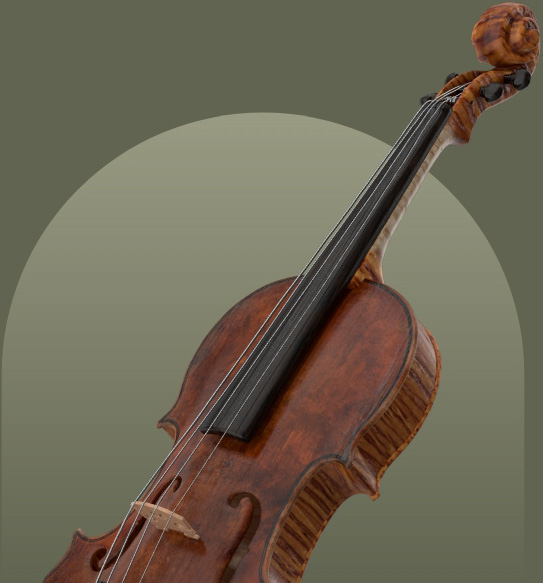
Giuseppe Guarneri (1666-1740), known as ‘Filius Andreae’, was the youngest son and successor to Andrea Guarneri’s workshop in Cremona. He initially worked in the Amatisé style but developed a distinct originality, influenced by Antonio Stradivari and earlier masters like Gasparo da Salo. His instruments are characterized by a well-proportioned outline, unique soundhole placement, and rich varnish, representing a crucial transitional period in Cremonese violin making. Despite facing challenges from contemporaries and later illness, he continued to contribute to his son del Gesù’s work. His instruments, including violins, violas, and rare violoncellos, are highly valued for their excellent tone and craftsmanship, with some having been exhibited in museums.
Auction Price History
Highest auction price
19 results
| Type | Details | Auction house | Sold | Price |
|---|---|---|---|---|
| Violin | Labelled Joseph Guarnerius fecit Cremone anno 1725 ..., varnish restored Lot 138 | Tarisio | June 2012 | £1,500,000 |
| Violin | Lot 62 | Bonhams | October 2011 | £39,650 |
| Violin | 35.5 cm Ascribed to | — | October 2011 | £39,650 |
| Violin | 35.9 cm Ascribed to | — | May 2011 | £142,027 |
| Violin | 35.4 cm 1710 c. | — | November 2007 | £24,000 |
| Viola | 40.8 cm Early 18th C. Ascribed to | — | May 2006 | £18,395 |
| Violin | Cremona, 1735 | — | July 2004 | £112,250 |
| Violin | Cremona, 1710 c. | — | April 2004 | £111,487 |
| Violin | 1703 | — | November 2003 | £162,400 |
| Violin | 1724 | — | November 2002 | £289,750 |
| Violin | 1714 (poor condition) | — | November 2002 | £75,250 |
| Violin | 1703 | — | November 1998 | £166,500 |
| Violin | 1705 c. | — | June 1998 | £91,700 |
| Violin | 1703 | — | November 1994 | £56,500 |
| Violin | 1705 c. | — | November 1990 | £180,400 |
| Cello | 1692 | — | March 1989 | £148,500 |
| Violin | 1706 | — | April 1985 | £135,000 |
| Violin | 1714 | — | April 1984 | £88,000 |
| Violin | 1698 | — | February 1982 | £9,514 |
No results match those filters.
Maker Overview
Life
Giuseppe Guarneri (1666-1740), born on November 25, 1666, in Cremona, Italy, was the
youngest son of the distinguished luthier Andrea Guarneri. Known as
‘Filius Andreae’, he assisted his father and subsequently inherited the
family workshop, located at the sign of St. Theresa in Piazza Domenico,
upon his father’s death., he continued
working in the Amatisé style of his father but was later influenced by
his close neighbor, Antonio Stradivari. On January 4, 1690, he married
Barbara Franchi, who passed away in 1738. Their marriage produced six
children, including three daughters and three sons. Of his sons, only
Pietro became a violin maker and
Cecie Stainer. In 1717, his elder son Pietro departed for Venice, and
his younger son, Bartolomeo Giuseppe (later known as ‘del Gesù’), left
the family home in 1722, as detailed by John Dilworth. Giuseppe Guarneri
became seriously ill and almost incapacitated around 1730. His last
known label, dated 1731, is found in a cello now attributed entirely to
del Gesù. Despite his illness, he continued to provide scrolls for his
son’s instruments almost until his death in 1740
Dilworth.
Characteristics
- Models and Outline
Giuseppe Guarneri’s instruments exhibit a variety of models,
representing a transition from the styles of Amati and Andrea Guarneri
to that of G. del Gesù.
George Hart notes his early works demonstrated significant originality,
leading to instruments distinct from his father’s. The outline is
particularly striking, with the waist of the instrument narrowed but
rapidly widening from the center, creating an elegant curve that
Giuseppe Guarneri del Gesù later adopted and perfected.- Workmanship
His work, while having a slight coarseness,
is characterized by a well-proportioned outline and beautifully
reflective varnish, maintaining distinctive Cremonese qualities. Cecie
Stainer highlights his good and carefully finished work, though she
notes that his violoncellos sometimes show rather careless workmanship.- Archings and Purfling
John Dilworth mentions that he made the purfling mitres in a more
conventional form, and the arching has a consistent hollowing outside
the upper part of the soundholes.- Soundholes
The sound-holes are often placed lower than usual and are widely opened
about the middle. George Hart describes
the sound-hole as a singular combination of Amati and Guarneri forms,
reviving the pointed shape originated by Gasparo da Salo. He also notes
that Guarneri placed the sound-hole a trifle nearer the edge of the
instrument than was customary.- Varnish
- The
varnish is described as gold-yellow or light brown by Willibald Leo
Lütgendorff, and brilliant reddish and of excellent quality by Cecie
Stainer. George Hart characterizes it as of the richest description,
sometimes applied so plentifully as to clot in places, yet its rare
qualities are never deadened. - Wood
- The wood
used for his violins and violas varies but is generally handsome, while
that for his violoncellos is chiefly plain.
Cecie Stainer notes the wood was well chosen for his violins. - Tone
His violins are known for a very full and rich tone
Stainer. His violoncellos, despite sometimes careless workmanship,
consistently possess an excellent tone.- Instruments Made
He made violins, violas, and violoncellos. His violoncellos are
considered very rare, and he seemed to prefer working on smaller
instruments, which are patterns of careful handiwork, according to
George Hart.
- Joseph Guarnerius filius Andreae fecit
Cremone sub titulo S. Teresiae 1704John Dilworth
Influence and legacy
- Training:
Giuseppe Guarneri was a pupil of his father, Andrea Guarneri, and
succeeded him in the workshop
and Cecie Stainer. - Stylistic Influences:
Initially, he continued in the Amatisé style of his father but was later
influenced by his close neighbor, Antonio Stradivari
Dilworth. His instruments show a transition from Amati and Andrea
Guarneri’s styles. George Hart
highlights his adoption of the pointed sound-hole form, which originated
with the Brescian master Gasparo da Salo. - Originality and Impact:
George Hart emphasizes Giuseppe’s greater originality compared to
Andrea, noting his ability to think for himself and create distinct
instruments. His elegant waist curve was admired, adopted, and perfected
by his cousin, Giuseppe Guarneri del Gesù. Carlo Bergonzi also followed
Giuseppe Guarneri in the lower placement of sound-holes and their
proximity to the instrument’s edge. - Family Continuity:
Of his three sons, Pietro was the only one who became a violin maker,
continuing the family tradition
Lütgendorff and Cecie Stainer. - Exhibitions: Two
beautiful instruments by Giuseppe Guarneri, dated 1684 and 1707, were
exhibited at the South Kensington Museum in 1872
Stainer. - Market Value: George Hart noted that his instruments were being rapidly acquired across Europe, significantly enhancing their value.
- Misattribution:
Many of his best violins have been given labels of Giuseppe del Gesù
due to the latter’s renown, and some of his good imitations of
Stradivari have been mislabeled with Stradivari’s name, as reported by
Cecie Stainer.
Further Information
- Workshop Location: His workshop was located at the sign of St. Theresa in Piazza Domenico, Cremona, Italy, as detailed by John Dilworth.
- Labels:
Examples of his labels include “Joseph Guarnerius filius Andreae fecit /
Cremone sub titulo S. Teresiae 1704” (John Dilworth) and “Joseph
Guarnerius, filius Andreae fecit Cremonse, sub titulo S. Teresiae, 16 —
“, with a similar one dated 1706 (Cecie Stainer).
Biographies
The overview above is drawn from the following published accounts. Read them in the original:
John Dilworth+
GUARNERI, Giuseppe Born 1666, died 1740 Cremona Italy. Youngest son of Andrea Guarneri, above. Known as ‘Filius Andreae’. Assisted his father and succeeded to the workshop at the sign of St Theresa in Piazza Domenico. Continued working in the Amatisé style of Andrea, but latterly was influenced by his close neighbour Antonio Stradivari. His work has a slight coarseness to it, but the well-proportioned outline and beautifully reflective varnish maintain the distinctive Cremonese qualities. He made the purfling mitres in a more conventional form and the arching has a consistent hollowing outside the upper part of the soundholes. Stradivari’s ascendency during his own working life presented difficulties for Guarneri, as did the establishment of another workshop in the city by Francesco Rugeri. His elder son Pietro departed for Venice in 1717 and his younger son Bartolomeo Giuseppe, later identified as ‘del Gesù’, left the family home in 1722. In 1730 Giuseppe became seriously ill and almost incapacitated. His last known label is found in a cello now attributed wholly to del Gesù dated 1731. Nevertheless, he continued to provide scrolls for his son’s instruments almost until his death nine years later. Joseph Guarnerius filius Andreae fecit / Cremone sub titulo S. Teresiae 1704
George Hart+
son of Andrea, 1680—1730. This maker possessed a greater amount of originality than Andrea. His earliest works evidence that power of thinking for himself which, later, led him to construct instruments entirely distinct from those produced by his father. The outline is particularly striking. The waist of the instrument is narrowed, rapidly widening, however, from the centre. The result is a curve of much elegance, one of the points which Giuseppe Guarneri del Gesu appears to have admired, as he adopted and perfected it. It is here, more particularly, that a resemblance between this maker and his famous kinsman is to be traced. There are also other features which will furnish matter for comment in their proper place. To return to the form given to the instruments of Guarneri, the son of Andrea : the sound-hole has a singular combination of the Amati and the Guarneri in its conception. We have here a reappearance of the pointed form which originated with the grand old Brescian master, Gasparo da Salo, and which was left by him to be revived and perfected by his followers. Andrea’s son, in adopting this long neglected form, showed much judgment. It must be admitted that he improved upon it, and left his cousin an easy task in completing and perfecting it. The method of this maker with regard to the setting of the sound-holes in his instruments is peculiar. In his plan they are set in a lower position than is customary. Carlo Bergonzi followed him in this particular, and also in placing the hole a trifle nearer the edge of the instrument than is seen in most instruments. How interesting is it to observe the salient points wherein each maker seems to have adopted some isolated feature from a predecessor! The varnish is of the richest description, and in numerous instances has been so plentifully used as to cause it to clot in some places; nevertheless, its rare qualities are never deadened. The instruments of this truly great maker are being rapidly bought up in all parts of Europe, and their value is, in consequence, much enhanced. He made Violins, Violas, and Violoncellos, the latter being very scarce. The wood used in his Violins and Violas varies, but may be pronounced as generally handsome ; that of his Violoncellos is, on the contrary, chiefly plain, and the workmanship somewhat careless, but the tone is always fine in quality. It would seem that he had no particular liking to work the larger instruments, and he devoted his time to the smaller specimens, which are, however, patterns of careful handiwork.
Cecie Stainer+
Second son of Andrea, b. Nov. 25, 1666, Cremona ; d. soon after 1738. Said to have been a pupil of his father, but showed much originality ; some of his instruments are very similar to those of his cousin, Giuseppe del Jesu, but the tone is not so powerful and round ; others follow the pattern of Stradivari.
His violins are numerous and show good work. They are generally made on a small pattern, the waist of the instrument narrow and rapidly widening from the centre ; the sound-holes, placed lower than usual, are widely opened about the middle; the brilliant reddish varnish is of excellent quality, the wood well chosen, the tone very full and rich, the work carefully finished; two beautiful instruments were exhibited at South Kensington Museum, 1872, dated respectively 1684 and 1707.
Many of his best violins have been given labels of Giuseppe del Jesu, since the latter’s name became well known, and some good imitations of Stradivari have been labelled with Stradivari’s name. He also made tenors and violoncellos ; the latter are very rare, the wood generally plain, workmanship rather careless, but the tone always excellent. A very fine violoncello, with back, sides, and neck of beautiful small-figured wood, belly of fine-grained wood, with rich red varnish, and of good tone, was dated 1713.
Label: “Joseph Guarnerius, filius Andreae fecit Cremonse, sub titulo S. Teresiae, 16 — “; a similar one dated 1706.
On Jan. 4, 1690, he married Barbara Franchi (d. 1738), and had six children. Of his three sons, Pietro was the only one who became a maker.
Willibald Leo Lütgendorff+
Jüngster Sohn von Andrea, dessen Schüler und Nachfolger er war, den er
aber weit übertroffen hat. 1690 vermählte er sich mit Barbara Franchi († 1738), aus
welcher Ehe sechs Kinder hervorgingen, drei Töchter und drei Söhne, von denen
nur einer, Pietro, Geigenbauer wurde. Seine Geigen zeigen sehr verschiedene
Modelle. Am besten charakterisirt man sie damit, dass man sagt, sie stellen
den Übergang von Amati und Andrea G. zu G. del Gesù dar. Seine Arbeit
ist äusserst sorgfältig, das Modell klein und die Brust ziemlich schmal. Der
Lack ist goldgelb oder hellbraun. Er ist nachst G. del Gesù der beste Meister
aus seiner Familie.
Sell your instrument with Amati
Get started by uploading photos of your instrument for our experts to review.
Sell your instrument with Amati
Get started by uploading photos of your instrument for our experts to review.