
London School
Thomas Kennedy
London, 1784–1870
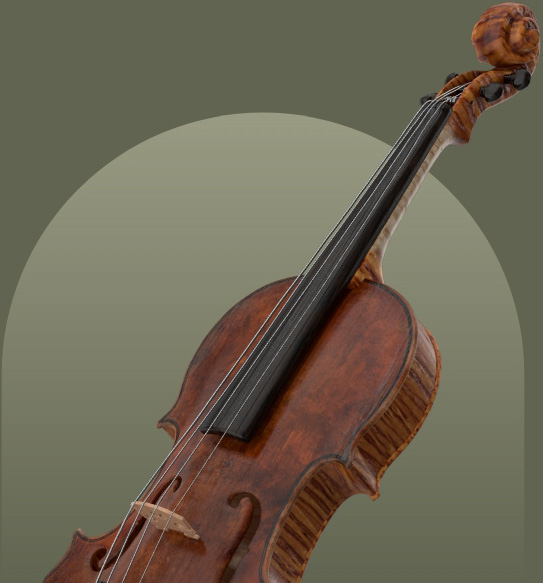
Thomas Kennedy (1784-1870) was a prominent English luthier, son and pupil of John Kennedy, and apprentice to Thomas Powell. He worked for William Forster (III) before establishing his own workshops in London, notably at 16 Princes Street, 16 Nassau Street, and 364 Oxford Street. Kennedy was a prolific maker, known particularly for his cellos, often crafted on a shortened Amati model. His work ranged in quality, from simpler pieces to well-finished examples with fine spirit varnish. He employed notable bow makers and supplied instruments to firms like Goulding, D'Almaine & Co, leaving a significant legacy in English instrument making.
Auction price history
Highest auction price
90 results
| Type | Details | Auction house | Sold | Price |
|---|---|---|---|---|
| Cello | Unlabelled Lot 10 | Tarisio | March 2024 | £37,400est. £ 30,000-50,000 |
| Viola | Lot 94 | Bonhams | May 2014 | £5,250 |
| Violin | 35.9 cm London, 1842 | — | October 2011 | £7,500 |
| Cello | 73.8 cm London, 1808 | — | October 2011 | £27,500 |
| Viola | 38.6 cm London, 1813 | — | March 2011 | £4,500 |
| Violin | 35.4 cm London, 1815 c. | — | March 2011 | £5,250 |
| Cello | 73.9 cm London, 1820 c. | — | October 2010 | £18,750 |
| Cello | 74 cm London, 1819 | — | October 2010 | £12,500 |
| Viola | 39.2 cm London, 1845 | — | December 2009 | £2,400 |
| Cello | 76.2 cm Early 19th C. Workshop of | — | October 2009 | £7,415 |
| Cello | 74.1 cm London, 1855 c. | — | October 2009 | £8,125 |
| Viola | 41.7 cm 1820, c. Attributed to | — | March 2009 | £7,020 |
| Violin | 35.1 cm London, 1830 c. | — | March 2009 | £5,890 |
| Cello | 73.3 cm England, 1830 c. | — | March 2008 | £11,875 |
| Viola | 39.1 cm London, 1836 | — | March 2008 | £8,400 |
| Cello | 74.1 cm London, 1810 c. | — | November 2007 | £21,600 |
| Violin | 35.5 cm London, 1813 | — | September 2007 | £2,400 |
| Violin | 35.8 cm London, 1831 | — | July 2007 | £4,485 |
| Cello | 73.7 cm London, 1820 c. Attributed to | — | July 2007 | £22,800 |
| Violin | 35.5 cm London, 1806 Possibly by | — | May 2007 | £2,592 |
| Cello | 74.1 cm London, 1820 c. | — | February 2007 | £12,000 |
| Viola | 39.5 cm London, 1800 c. | — | February 2007 | £2,880 |
| Violin | 35.9 cm London, 1846 | — | November 2006 | £7,200 |
| Cello | 73.3 cm Workshop | — | October 2006 | £10,104 |
| Violin | 35.5 cm London, 1806 Possibly by | — | October 2006 | £2,146 |
| Violin | 35.8 cm London, 1831 | — | July 2006 | £4,995 |
| Cello | 74.1 cm London, 1830 c. | — | February 2006 | £11,400 |
| Viola | 39.1 cm London, 1850 c. | — | November 2005 | £2,400 |
| Cello | 1920 c. Workshop | — | October 2005 | £5,021 |
| Cello | 1800 c. | — | May 2005 | £9,600 |
| Cello | London, 1804 | — | May 2005 | £6,000 |
| Viola | 38.3 cm London, 1810 c. | — | February 2005 | £2,880 |
| Violin | London, 1800 c. Ascribed to | — | November 2004 | £6,572 |
| Cello | London, 1810 c. Ascribed to | — | October 2004 | £15,269 |
| Viola | 40.1 cm London, 1820 c. | — | May 2004 | £7,170 |
| Cello | London, 1820 c. | — | March 2004 | £17,925 |
| Violin | London, 1810 c. | — | March 2004 | £8,365 |
| Violin | 1830 | — | July 2003 | £8,400 |
| Cello | 1810 | — | April 2003 | £7,469 |
| Cello | 1835 | — | April 2003 | £8,216 |
| Violin | 1831 | — | March 2003 | £7,800 |
| Violin | 1850 c. | — | June 2002 | £3,774 |
| Cello | 1827 | — | March 2002 | £17,000 |
| Cello | 1846 | — | June 2001 | £17,700 |
| Viola | 39.0 cm 1845 | — | June 2001 | £6,000 |
| Cello | 1830 | — | June 2001 | £12,500 |
| Violin | 1830 | — | March 2001 | £3,220 |
| Cello | 1818 c. | — | November 2000 | £13,800 |
| Cello | 1847 | — | November 2000 | £13,800 |
| Cello | 1814 | — | November 1999 | £13,800 |
| Violin | 1850 | — | November 1999 | £3,860 |
| Cello | 1843 | — | November 1999 | £8,280 |
| Cello | 1823 | — | June 1999 | £18,000 |
| Cello | 1830 | — | November 1998 | £27,600 |
| Violin | 1835 c. | — | June 1998 | £5,175 |
| Cello | 1812 | — | March 1997 | £17,250 |
| Cello | 1833 | — | June 1996 | £16,100 |
| Cello | 1860 | — | March 1996 | £13,800 |
| Cello | 18-- | — | November 1995 | £17,250 |
| Cello | 18-- | — | November 1995 | £8,625 |
| Violin | 18-- | — | November 1995 | £805 |
| Violin | 1860 c. | — | October 1995 | £3,450 |
| Cello | 18-- | — | December 1994 | £17,692 |
| Cello | 18-- | — | November 1994 | £16,100 |
| Cello | 1822 | — | November 1994 | £8,625 |
| Violin | 1844 | — | November 1994 | £4,025 |
| Cello | 1847 | — | June 1994 | £14,950 |
| Viola | 39.1 cm 1836 | — | June 1994 | £2,530 |
| Violin | 1831 | — | March 1994 | £5,750 |
| Cello | 1832 | — | November 1993 | £22,000 |
| Violin | 1840 c. | — | November 1993 | £3,105 |
| Cello | 18-- | — | October 1993 | £12,650 |
| Cello | 1846 | — | June 1993 | £16,500 |
| Violin | 1833 | — | November 1992 | £2,640 |
| Viola | 39.1 cm 1836 | — | November 1992 | £2,530 |
| Violin | 1844 | — | April 1991 | £4,400 |
| Violin | 1800 c. | — | June 1990 | £3,740 |
| Viola | 39.2 cm 18-- | — | June 1990 | £2,640 |
| Violin | 1844 | — | March 1989 | £3,520 |
| Violin | 1850 c. | — | March 1989 | £2,200 |
| Viola | 39.4 cm 18-- | — | October 1988 | £990 |
| Viola | 38.4 cm 18-- | — | April 1987 | £1,540 |
| Viola | 39.2 cm 1850 c. | — | May 1986 | £1,980 |
| Violin | 1831 | — | November 1985 | £2,750 |
| Violin | 1811 | — | September 1985 | £1,430 |
| Viola | 39.1 cm 1850-60 | — | July 1984 | £2,200 |
| Violin | 18-- | — | April 1983 | £1,650 |
| Violin | 18-- | — | April 1983 | £1,980 |
| Viola | 39.4 cm 1845 | — | March 1983 | £1,540 |
| Violin | 18-- | — | November 1982 | £2,640 |
No results match those filters.
Maker Overview
Life
Thomas Kennedy (1784-1870) was born on January 21, 1784, in London, UK, and passed away in 1870. He was the son and pupil of John Kennedy and was also apprenticed to Thomas Powell on June 17, 1795. For a period, he worked for William Forster (III) but established his own independent workshop from 1804 at 16 Princes Street, Westminster. Around 1813, Kennedy's shop relocated to 16 Nassau Street, and from 1816 to 1848, it was situated at 364 Oxford Street. He retired from business in June 1849, but continued to work from various addresses, including 4 Cummings Place, 4 King's Road, and 164 Pentonville Road. Thomas Kennedy was a prolific maker, and sources contain conflicting information regarding the total number of instruments produced; William Meredith Morris states he 'turned out at least two thousand instruments', while Willibald Leo Lütgendorff and Cecie Stainer indicate he 'had made 300 violoncelli und Geigen' or 'at least 300 violoncellos as well as other instruments' respectively. George Hart notes he 'probably made more instruments than any English maker, with the exception of Crask'. He continued to supply instruments to the firm of Goulding, D'Almaine & Co.
Characteristics
- Workmanship
- Thomas Kennedy's work varied in grade, ranging from unpurfled instruments with thin, dark varnish to distinguished and well-finished examples featuring a fine, transparent spirit varnish. William Meredith Morris notes that while the workmanship was generally good, the tone was not always of equal merit, sometimes being harsh and metallic.
- Cello Model
- His cellos are particularly well-known and are considered the most useful products of his workshop, typically made on a distinctive shortened Amati model with long middle bouts.
- Materials and Varnish
- An example cited by William Meredith Morris describes a violin with a birch back and yellow varnish.
- Signing Practices
- Most of his work is signed in pencil on the inner surface of the table, and occasionally in ink above the endpin on the lower ribs.
- Bows
- Bows originally featured open ivory frogs and were branded 'KENNEDY', 'Thos Kennedy / Maker / Nassau Street / Middlesex Hospital', or 'Thos. Kennedy Londini. 1860 Thos. Kennedy Maker 364 Oxford Street, London'.
- Bows originally with open ivory frogs, branded: KENNEDY Thos Kennedy
Maker
Nassau Street
Middlesex Hospital Thos. Kennedy Londini. 1860John Dilworth - Thos. Kennedy Maker 364 Oxford Street, LondonJohn Dilworth
Influence and legacy
- Training: Thomas Kennedy was the son and pupil of John Kennedy and was also apprenticed to Thomas Powell. He worked for a period for William Forster (III).
- Collaborators and Employees: In his independent workshop, he employed skilled individuals such as James Brown and later some of the best English bow makers, including Thomas Tubbs, James Dodd, and Edward Dodd. William Forster (IV) also made instruments for him around 1810, as did John Crowther.
- Family Significance: was the most significant maker from the Kennedy family.
- Prolific Output: George Hart suggests he made more instruments than any other English maker, with the exception of Crask, highlighting his substantial contribution to English instrument making.
Biographies
The overview above is drawn from the following published accounts. Read them in the original:
John Dilworth+
KENNEDY, Thomas Born 1784, died 1870 London UK. Son and pupil of John Kennedy, above. Also apprenticed to Thomas Powell. From 1802 working for William Forster (III), but established independently from 1804 at 16 Princes Street, employing James Brown and later some of the best English bow makers, including Thomas Tubbs, James Dodd, and Edward Dodd. William Forster (IV) also made instruments for him c.1810, as did John Crowther. In about 1813 Kennedy’s shop moved to 16 Nassau Street, and from 1816-1848 was at 364 Oxford Street. This shop then closed but Kennedy continued to work from various addresses: 4 Cummings Place, 4 King’s Road, and 164 Pentonville Road. Continued to supply instruments to the firm of Goulding, D’Almaine & Co, whose brand is sometimes found beneath the back button. Kennedy was a prolific maker, working in various grades, from quite poor unpurfled instruments with thin dark varnish to quite distinguished and well-finished examples with a fine transparent spirit varnish. His cellos are now best known, and the most useful products of his workshop, usually made on a distinctive shortened Amati model with long middle bouts. Most of his work is signed in pencil on the inner surface of the table, and occasionally in ink above the endpin on the lower ribs. Bows originally with open ivory frogs, branded: KENNEDY Thos Kennedy / Maker / Nassau Street / Middlesex Hospital Thos. Kennedy Londini. 1860 Thos. Kennedy Maker 364 Oxford Street, London [BVMA]
George Hart+
Son of the above. Probably made more instruments than any English maker, with the exception of Crask.
William Meredith Morris+
He was a prolific maker, and turned out at least two thousand instruments of all sizes. The workmanship is good all over, but the tone is not of equal merit, being often harsh and metallic. A violin with a birch back and yellow varnish had the following label : —
THOS. KENNEDY, LONDINI, 1860
Cecie Stainer+
b. Jan. 21, 1784, London ; d. 1870. Was a son of John Kennedy ; pupil of his father, also of Thomas Powell, to whom he was apprenticed June 17, 1795. He worked at times for William Forster (1764-1824), but his own workshop was first in Princes Street, Westminster, and then at 364, Oxford Street.
He retired from business in June, 1849, having made at least 300 violoncellos as well as other instruments; all his work was well and neatly finished.
Willibald Leo Lütgendorff+
Sohn von John K., erst Schüler seines Vaters, dann von Thomas Powell.
Eine Zeit lang arbeitete er bei William III. Forster und eröffnete hierauf in
der Princess Street, Westminster, seine eigene Werkstatt und verzog später
nach der Oxford Street No. 364. Als er sich 1849 zur Ruhe setzte, hatte er
300 Violoncelli und Geigen gemacht. Er war der Bedeutendste aus der Familie
Kennedy.
Sell your instrument with Amati
Get started by uploading photos of your instrument for our experts to review.
Sell your instrument with Amati
Get started by uploading photos of your instrument for our experts to review.
Working in London at the same time
A. Pretts worked 1851
Albert Henry Price worked 1850–1890
And Co. Astor worked 1800–1820
Arthur (III) Betts 1803–1869
Baines worked 1780
Benjamin (II) Banks 1758–1820
Bernhard Simon (II) Fendt 1801–1852
Bernhard Simon Fendt 1769–1832