
Paris School
Jean Nicolas Lambert
Paris, worked 1731–1761
Master of the Luthiers’ Guild 1745-1746. Premises on rue Michel-le-Comte, continued after his death by successors until 1789. All forms of stringed instruments, many preserved in European museums. Amatisé violins, fairly high arched with yellow-orange clear varnish recalling Guersan. Often branded i\u{2026} — John Dilworth
Auction price history
Highest auction price
| Type | Details | Sold | Price |
|---|---|---|---|
| Cello | Unlabelled, branded to the inside back and below the button Lambert A Paris | May 2024 | £14,827 |
| Cello | 75.7 cm Paris, 1770 c. | October 2010 | £18,750 |
| Violin | 35.8 cm Paris, 1780 [Workshop of] | December 2008 | £1,536 |
| Violin | 1760 | December 2003 | £1,484 |
| Violin Bow | N/E 53 g. | September 2002 | £575 |
| Viola | 38.9 cm 1770 | June 2002 | £2,041 |
| Violin | 1770 | June 1999 | £2,600 |
| Violin | 1770 | June 1999 | £4,887 |
| Cello | 1760 | December 1998 | £8,066 |
| Violin | 1790 c. | March 1998 | £2,433 |
| Cello | 1743 | March 1997 | £10,350 |
| Violin | 1780 | June 1995 | £1,725 |
| Violin | 1750-75 | June 1989 | £3,520 |
| Violin | 17-- | June 1983 | £484 |
Maker Overview
Life
Jean Nicolas Lambert (circa 1731-c.1785) was a luthier who worked in Paris, primarily on rue Michel-le-Comte. Sources contain conflicting information regarding his exact working dates; John Dilworth states he worked circa 1731-1761, while Cecie Stainer notes he was working in rue Michel-le-Comte about 1743-85. He was a sworn Master of the Luthiers' Guild for the year 1745, and John Dilworth specifies he was Master of the Luthiers' Guild from 1745-1746. His business was continued by his widow until 1788, and by successors until 1789. Willibald Leo Lütgendorff discusses a claim by Fétis that Lambert lived in Nancy in 1750 and was known as "Charpentier de la lutherie" for crudely assembled instruments; however, Lütgendorff refutes this, citing the fine workmanship of a violoncello in the Paris Conservatoire Museum and an alto from the Snoeck collection, and notes that Vidal could not find evidence of Lambert ever being in Nancy.
Characteristics
- Instrument Types
- Jean Nicolas Lambert was a versatile maker of lutes and violins (Lauten- und Geigenmacher), also producing zithers, hurdy-gurdies (Bauernleiern), and bagpipes (Sackpfeifen), as detailed by Willibald Leo Lütgendorff. He also made violoncellos, altos, cithers, guitars, and Liebesgeigen.
- Violins
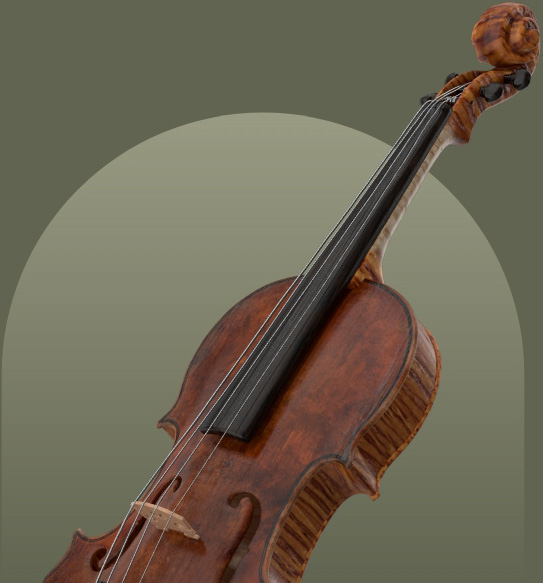
- His violins were often Amatisé, fairly high arched, and featured a yellow-orange clear varnish reminiscent of Guersan. Cecie Stainer observed a violin of flat pattern with badly cut sound-holes.
- Violas & Violoncellos
- Willibald Leo Lütgendorff notes that a violoncello in the Paris Conservatoire Collection and an alto from the Snoeck collection exhibit very fine workmanship. His violas typically have smooth backs and are well-made, with his Liebesgeigen being even better.
- Branding & Labels
- He often used a brand mark, "Lambert à Paris," applied internally and externally, in addition to printed labels such as "J. N. Lambert / rue Michel-le-Comte / À Paris. 1745" or "Lambert / à Paris.1783,".
- Lambert
rue Michel-le-Comte
À Paris. 1745John Dilworth - Lambert
à Paris.1783John Dilworth
Influence and legacy
- Family Connections: Cecie Stainer suggests he was possibly a brother of another maker in Nancy.
- Stylistic Influences: His varnish work on violins w as recalling Guersan.
- Museum Collections: Instruments by Jean Nicolas Lambert are preserved in several European museums, including a violoncello and hurdy-gurdies in the Paris Conservatoire Museum, an alto in the Snoeck collection, hurdy-gurdies in the Musikhistorisches Museum in Stockholm, a zither in Berlin, and a guitar from 1734 owned by Loup, as documented by Willibald Leo Lütgendorff and John Dilworth.
- Business Continuity: His workshop on rue Michel-le-Comte was continued by his widow until 1788 and by successors until 1789, ensuring the continuation of his legacy.
Biographies
The overview above is drawn from the following published accounts. Read them in the original:
John Dilworth+
LAMBERT, Jean Nicolas Worked circa. 1731-1761 Paris France. Master of the Luthiers’ Guild 1745-1746. Premises on rue Michel-le-Comte, continued after his death by successors until 1789. All forms of stringed instruments, many preserved in European museums. Amatisé violins, fairly high arched with yellow-orange clear varnish recalling Guersan. Often branded internally and externally: ‘Lambert à Paris’. Printed labels: J. N . Lambert / rue Michel-le-Comte / À Paris. 1745 Lambert / à Paris.1783
Cecie Stainer+
A maker in Paris. Was working in rue Michel-le-Comte about 1743-85. The date of his death is not known, but in 1788 the business was being carried on by his widow. He was possibly a brother of the maker in Nancy.
The label: “J. N. Lambert, rue Michel-le-Comte, Paris, 1750,” was in a violin of flat pattern, with badly cut sound-holes ; a similar label, dated 1759, is in a violoncello in the Paris Conservatoire Collection ; another violoncello is dated 1752 ; ” Lambert a Paris ” was branded on the inside of the back of an alto, and ” Lambert a Paris, 1782,” was inscribed in a cither; a guitar was dated 1784.
Willibald Leo Lütgendorff+
Ein vielseitiger Lauten- und Geigenmacher, der auch Zithern, Bauernleiern
(Viellen) und Sackpfeifen gemacht hat. Er wohnte bis 1745 in der Rue Michel-le-
Comte und war geschworner Zunftmeister für das Jahr 1745. Noch bis zum
Jahre 1788 hat seine Wittwe das Geschäft fortgeführt. Fétis behauptet von
ihm, dass er 1750 in Nancy gelebt und wegen roh zusammengezimmerter Instrumente
den Beinamen »Charpentier de la lutherie« gehabt habe. Spricht dagegen schon, dass ein Violoncello von ihm im Museum des Pariser Conservat. (No. 78) und ein Alto aus der Sammlung Snoeck (No. 572) sehr schöne Arbeit
zeigen, so hat auch Vidal trotz aller Nachforschungen nicht finden können,
dass Lambert je in Nancy gewesen sei. Seine Violen haben meist glatten
Boden und sind gut gemacht; besser aber noch sind seine Liebesgeigen. Ausser
seinem Zettel verwendet er auch oftmals eine Brandmarke, die er an verschiedenen Stellen anbringt. Das Museum des Pariser Conservatoriums und das musikhistorische Museum in Stockholm besitzen von ihm auch hübsche Bauernleiern, Berlin eine
Zither und Loup eine Guitarre von 1734.
Sell your instrument with Amati
Get started by uploading photos of your instrument for our experts to review.
Sell your instrument with Amati
Get started by uploading photos of your instrument for our experts to review.
Working in Paris at the same time
Ambroise worked 1750–1810
Andrea Castagneri worked 1730–1762
Barbey worked 1720–1748
Benoist Flette worked 1755–1788
Benoit Fleury worked 1750–1792