
Paris School
Louis Socquet
Paris, worked 1750–1780
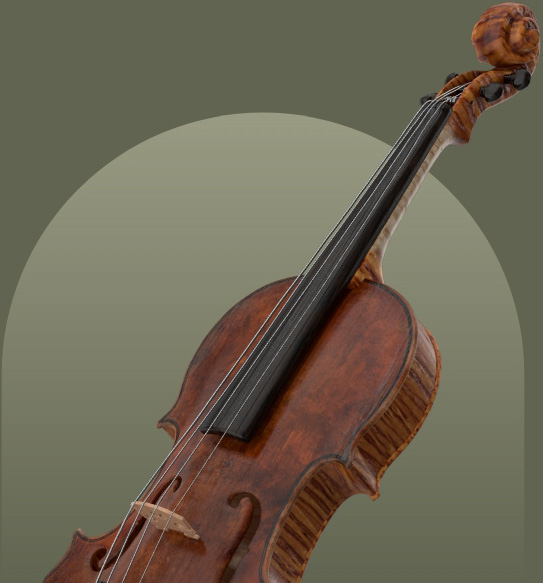
Louis SOCQUET was a luthier active in Paris from approximately 1750 to 1780, originally from Mirecourt. He operated under the sign 'Au Genie de l’Harmonie' at the Place du Vieux Louvre and served as luthier to the Académie Royale de Musique. His work quality is described as inconsistent, with early instruments showing better craftsmanship in the vieux Paris style, while later pieces were often commercial and less refined. He produced violins, violas, small cellos, and viols, branding his instruments on the back button. Descriptions of his varnish color vary among sources.
Auction price history
Highest auction price
| Type | Details | Sold | Price |
|---|---|---|---|
| Viola | Unlabelled, branded below the button Socquet A Paris | November 2024 | £8,012 |
| Violin | Inscribed Socquet à Paris 1767 internally on the back, branded Socquet à Paris by the button | October 2024 | £6,600 |
| Viola | 39.8 cm Paris, 1776 | June 2005 | £4,910 |
| Viola | 40.6 cm 17-- | November 1980 | £1,595 |
Maker Overview
Life
Louis SOCQUET (circa. 1750-1780) was born in Mirecourt and established himself in Paris, working from approximately 1750 to 1780. He operated at the sign 'Au Genie de l’Harmonie' (also rendered as 'Au Génie de l'Harmonie'), located at the Place du Vieux Louvre. He served as luthier to the orchestra of the Académie Royale de Musique., he was living in the Place du Louvre between 1775 and 1779. Willibald Leo Lütgendorff also notes his residence at Place du Louvre from 1775 to 1779.
Characteristics
- Workmanship
- Sources describe Louis SOCQUET's work as inconsistent. John Dilworth notes that his early period instruments were in the vieux Paris style, Amatisé in form with a medium arch and good golden-brown varnish. However, later work from about 1770 is described as commercial, likely originating from Mirecourt, lacking individuality and care, and made with plain materials and dark meagre varnish. Cecie Stainer states his instruments are not well made. Willibald Leo Lütgendorff characterizes him as a "second-rate violin maker" who worked in a factory-like manner, though not uncleanly, and mentions a derogatory saying in Mirecourt, "Das ist eine Socquet," for ordinary violins. In contrast, Henri Poidras describes his work as "Nice make, old Paris type." Lütgendorff also notes that his older works are preferable, suggesting a decline in craftsmanship later in his career, which led to speculation about the existence of two different makers named Socquet, though no proof exists for this theory.
- Varnish
- There are conflicting descriptions of his varnish. John Dilworth mentions "good golden-brown varnish" for early pieces and "dark meagre varnish" for later ones. Willibald Leo Lütgendorff describes his varnish as "dirty yellow," while Henri Poidras notes "Yellow varnish, slightly darkened."
- Instruments
- He provided violins, violas, small cellos, and viols of various forms. Known examples include a violin and a five-stringed viol dated 1755, and an alto of 1769. His violoncellos are noted to have a small pattern.
- Branding
- Instruments were branded on the back button.
- Labels
- Printed labels include "Fait par Socquet / à Paris en 1750" and "Socquet / Au Génie de l’Harmonie / Place du Vieux Louvre, à Paris, 1771." Other labels are known from 1765 and 1771.
- Fait par Socquet
à Paris en 1750John Dilworth - Socquet
Au Génie de l’Harmonie
Place du Vieux Louvre, à Paris, 1771John Dilworth
Biographies
The overview above is drawn from the following published accounts. Read them in the original:
John Dilworth+
SOCQUET, Louis Worked circa. 1750-1780 Paris France. Born in Mirecourt. Established in Paris at the sign ‘Au Genie de l’Harmonie’, Place du Vieux Louvre. Luthier to the orchestra of the Académie Royale de Musique. Very inconsistent work. Early period in the ‘vieux Paris’ style: Amatisé in form with medium arch and good golden-brown varnish. Later work from about 1770 is undoubtedly commercial work brought in from Mirecourt, lacking individuality and care. Plain materials and dark meagre varnish. Also provided violas, small cellos, and viols of various forms. Branded on back button. Printed labels: Fait par Socquet / à Paris en 1750 Socquet / Au Génie de l’Harmonie / Place du Vieux Louvre, à Paris, 1771
Cecie Stainer+
A maker in Paris about 1750-80; he worked at the sign of ‘ Au Genie de l’harmonie.” His instruments are not well made. A violin and a five-stringed viol dated 1755 are known, and an alto of 1769. Two other labels are dated 1765 and 1771 respectively. He was living in the place du Louvre 1775-79.
Willibald Leo Lütgendorff+
Ein Geigenmacher zweiten Ranges, der als Ladenschild: »Au Génie de l’Harmonie« führte und 1775—1779 Place du Louvre wohnte. Er arbeitete fabriksmässig, wenn auch nicht unsauber. Vidal erzählt, dass die Mirecourter, wenn sie eine recht gewöhnliche Geige in die Hand bekamen, geringschätzend sagten: »Das ist eine Socquet,« und dass diese Redensart sich als Sprichwort bis heute erhalten habe. Seine Violoncelli haben kleines Patron. Sein Lack ist schmutziggelb. Seine älteren Arbeiten sind durchaus vorzuziehen; er scheint übrigens erst in der zweiten Hälfte seines Lebens zur handwerksmässigen Arbeit herabgesunken zu sein. Man hat daher schon die Behauptung aufgestellt, dass es zwei Socquet’s gegeben haben müsse, einen guten und einen schlechten, wofür aber jeder Beweis fehlt.
Henri Poidras+
Paris circa 1770. « Au Genie de l’Harmonie ». Nice make, old Paris type. Yellow varnish, slightly darkened. Branded at the button.
Sell your instrument with Amati
Get started by uploading photos of your instrument for our experts to review.
Sell your instrument with Amati
Get started by uploading photos of your instrument for our experts to review.
Working in Paris at the same time
(Parisse) Claude Paris worked 1770–1814
(Perrault) Perault worked 1770–1790
(Prevot) Charles Prevost worked 1775–1789
Ambroise worked 1750–1810
Andrea Castagneri worked 1730–1762
Antoine Fouquet-Lecomte worked 1775–1800
Benoist Flette worked 1755–1788
Benoit Fleury worked 1750–1792