
Naples School
Giovanni (I) Gagliano
Naples, worked 1785–1819
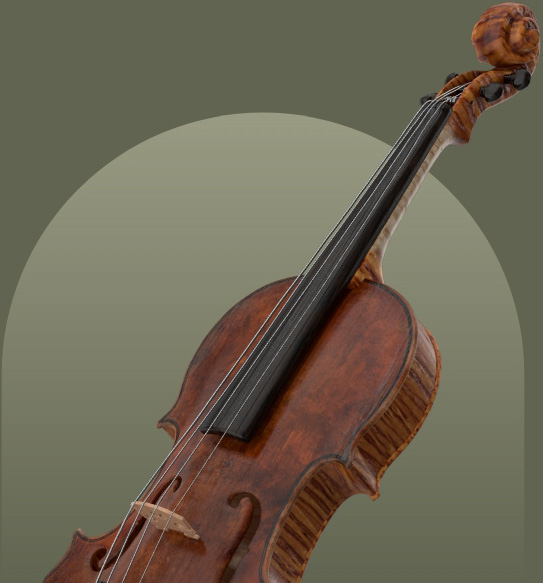
Giovanni (I) Gagliano, born circa 1740, was a Neapolitan violin maker, the fourth son of Nicola Gagliano and a nephew of Gennaro Gagliano. He worked in Naples, with sources indicating his active period between circa 1785 and 1819, though his death is also recorded as 1806. He initially collaborated with his brothers Giuseppe and Antonio and also worked in Venice around 1760. While he developed a distinct style, his instruments are often characterized by inferior varnish and, at times, poor or superficial workmanship, despite some featuring inlaid decoration in the style of Stradivari. He had two sons, Raffaele and Antonio, who continued the family's craft.
Auction price history
Highest auction price
6 results
| Type | Details | Auction house | Sold | Price |
|---|---|---|---|---|
| Violin | Ascribed to Genaro, Probably By Jos.& Ant. | — | November 2005 | £18,275 |
| Violin | Naples, 1800 c. | — | November 2004 | £26,290 |
| Violin | 1850 | — | July 2003 | £16,450 |
| Violin | 1806 | — | November 1984 | £20,900 |
| Violin | 1804 | — | May 1981 | £7,150 |
| Cello | 1800 | — | October 1980 | £12,650 |
No results match those filters.
Maker Overview
Life
Giovanni (I) Gagliano (circa 1740-1806/1819) was the fourth son of Nicola Gagliano and a grandson of Alessandro Gagliano, not Gennaro, despite his labels referring to him as 'Nepos Januari', which Lütgendorff clarifies as 'nephew'. He was born no later than 1740, the year his father Nicola died. Cecie Stainer states he died in 1806, while John Dilworth indicates he worked circa 1785-1819 in Naples, Italy, presenting conflicting information regarding his death or active period. Giovanni (I) Gagliano initially worked with his brothers Giuseppe and Antonio. During his travels around 1760, he also worked in Venice and appears to have eventually taken over his uncle's workshop with his brothers.
Characteristics
- Style and Varnish
- Giovanni (I) Gagliano developed a strong style of his own, though the quality of his varnish was often considered inferior, typically showing a slightly green tinge due to a dark stained ground beneath.
- Decoration
- Some of his instruments featured inlaid decoration, crafted in the manner of Stradivari.
- Labels
- An additional label with a religious dedication is frequently found fixed to the upper rib's inner surface. His labels include inscriptions such as 'Joannes Gagliano / Nepos Januari, fecit / Neapoli 18..', 'Joannes Gagliano fecit / sub Disciplina Januarius Gagliani / Neapoli. 17..', and 'Joannes Gagliani fecit sub Disciplina / Januari Gagliani Neapoli 18..'.
- Workmanship
- He did not produce many instruments, and Lütgendorff describes his work as often superficial and careless. Cecie Stainer also notes that some of his violins exhibit poor workmanship, although she states he was considered superior as a maker to his three brothers. George Hart critically remarks that the merit belonging to Giovanni (I) Gagliano and his family is of the slightest kind, suggesting that some English provincial makers have shown themselves to be superior.
- Joannes Gagliano
Nepos Januari, fecit
Neapoli 18..John Dilworth - Joannes Gagliano fecit
sub Disciplina Januarius Gagliani
Neapoli. 17..John Dilworth - Joannes Gagliani fecit sub Disciplina
Januari Gagliani Neapoli 18..John Dilworth
Influence and legacy
- Mentorship: Giovanni (I) Gagliano was a student of his uncle, Gennaro Gagliano, and worked within the traditions of his family's house.
- Family Reference: He referred to his uncle Gennaro on his labels, using the term 'Nepos Januari', which signifies his relationship as Gennaro's nephew.
- Family Continuity: Giovanni (I) Gagliano had two sons, Raffaele and Antonio, who continued the family's presence as instrument makers in Naples.
Biographies
The overview above is drawn from the following published accounts. Read them in the original:
John Dilworth+
GAGLIANO, Giovanni (I) Worked circa. 1785-1819 Naples Italy. Son of Nicola Gagliano, below. Worked initially with brothers Giuseppe and Antonio, but later developed a strong style of his own, though usually let down by the relatively inferior quality of varnish in general use by this time, showing a slightly green-tinge due to the dark stained ground beneath. Some instruments with inlaid decoration after the manner of Stradivari. Additional label with religious dedication often found fixed to upper rib inner surface. Joannes Gagliano / Nepos Januari, fecit / Neapoli 18.. Joannes Gagliano fecit / sub Disciplina Januarius Gagliani / Neapoli. 17.. Joannes Gagliani fecit sub Disciplina / Januari Gagliani Neapoli 18..
George Hart+
Th[is] maker bring the family down to a very recent date as residents in Naples. The merit belonging to them is of the slightest kind. Some of our English provincial makers have shown themselves superior.
Cecie Stainer+
Fourth son of Nicola, nephew of the great Gennaro, lived also in Naples ; b. date not known; d. 1806. He did not make many instruments, and is said to have been superior as a maker to his three brothers: but some violins are of poor workmanship.
He had two sons, Raffaele and Antonio.
Willibald Leo Lütgendorff+
Er war der vierte Sohn von Nicola und folglich ein Enkel von Alessandro
und nicht von Gennaro, was man nach seiner Angabe auf seinen Zetteln, wo
er sich »Nepos Januari« bezeichnet, meinen konnte. Er war Gennaro’s Neffe
und hat jedenfalls, wie auch seine Brüder, das Italienische »Nipote« in das lat.
»Nepos« verwandelt. Da Nicola 1740 gestorben ist, muss Giovanni spätestens
in diesem Jahre geboren sein. Er arbeitete in den Traditionen seines Hauses,
war ein Schüler seines Oheims Gennaro und arbeitete während seiner Wanderzeit
um 1760 auch in Venedig und scheint schliesslich mit seinen Brüdern die
Werkstatt seines Oheims übernommen zu haben, sonst wäre nicht einzusehen, warum
sie sich auf ihren Zetteln gerade auf diesen berufen. Giovanni ist übrigens kein
würdiger Nachfolger seiner Vorfahren. Er hat nicht allzuviel gemacht und das Wenige meist oberflächlich und liederlich.
Sell your instrument with Amati
Get started by uploading photos of your instrument for our experts to review.
Sell your instrument with Amati
Get started by uploading photos of your instrument for our experts to review.
Working in Naples at the same time
Antonio (I) Gagliano worked 1780–1800
Antonio Magnus worked 1780–1802
Carlo (II) Bergonzi 1757–1836
Carlo Follis worked 1798
Donato Filano worked 1760–1785
Ferdinando Gagliano worked 1770–1795
Filippo Galieri worked 1761
Gaetano Vinaccia 1758–1831